Logo video2dn
  • Сохранить видео с ютуба
  • Категории
    • Музыка
    • Кино и Анимация
    • Автомобили
    • Животные
    • Спорт
    • Путешествия
    • Игры
    • Люди и Блоги
    • Юмор
    • Развлечения
    • Новости и Политика
    • Howto и Стиль
    • Diy своими руками
    • Образование
    • Наука и Технологии
    • Некоммерческие Организации
  • О сайте

Скачать или смотреть Hongjin Song: On Received History, Collective Memory, and Narrative Fragments

  • Semiosalong
  • 2023-03-23
  • 267
Hongjin Song: On Received History, Collective Memory, and Narrative Fragments
  • ok logo

Скачать Hongjin Song: On Received History, Collective Memory, and Narrative Fragments бесплатно в качестве 4к (2к / 1080p)

У нас вы можете скачать бесплатно Hongjin Song: On Received History, Collective Memory, and Narrative Fragments или посмотреть видео с ютуба в максимальном доступном качестве.

Для скачивания выберите вариант из формы ниже:

  • Информация по загрузке:

Cкачать музыку Hongjin Song: On Received History, Collective Memory, and Narrative Fragments бесплатно в формате MP3:

Если иконки загрузки не отобразились, ПОЖАЛУЙСТА, НАЖМИТЕ ЗДЕСЬ или обновите страницу
Если у вас возникли трудности с загрузкой, пожалуйста, свяжитесь с нами по контактам, указанным в нижней части страницы.
Спасибо за использование сервиса video2dn.com

Описание к видео Hongjin Song: On Received History, Collective Memory, and Narrative Fragments

Semiosalong is the afterhours Tartu semiotic salon, active since 2011.

"In the Corners that History Does not Reach: On Received History, Collective Memory, and Narrative Fragments"

Hongjin Song is a PhD student and a junior research fellow of Semiotics and Culture Theory in the Department of Semiotics at the University of Tartu. His research interest is centered on collective memories, power relationships, and social discourses. His research currently focuses on a semiotic understanding the rumor phenomenon. Here is the abstract for his talk:

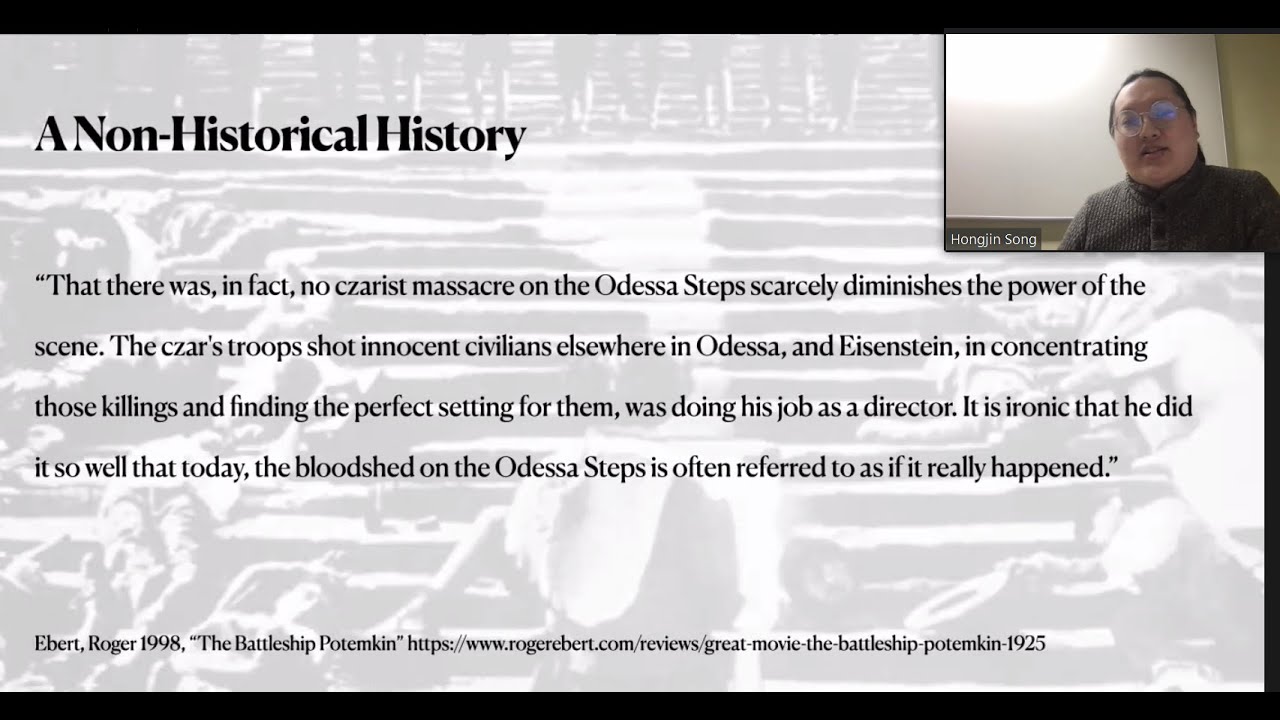
In Battleship Potemkin (Броненосец Потемкин), Eisinstein’s masterpiece, the Tsar sent troops to oppress revolts from the local people, leading to bloodshed on the Odessa Steps. The slaughter, though never happened in history, was so impressive to its audience that a great many people take it as a true event. In daily discursive practice, history is not a static narrative that cannot be changed, but a dynamic relationship with the translocal collective memory, which is not limited to geolocation (macroscopically), collective memory of the community (mesoscopically) and the personal memory of individuals (microscopically). The idea of received history (Gadamer) leads to a negotiation on the historicity of an event, which grants the possibility for public discourses to enter “a consecrated place of history”. However, the pressure of grand narratives persists, interfering the functioning of these discourses as a totalized text. They can only present themselves in the corners that the Geschichtwissenschaft cannot reach and function as fragments of narratives that supplement the overall, homogeneous narration of history. In the presentation, I seek to clarify how these fragments' function in the socio-cultural landscape, as well as important features of these fragments, which contributes to further discussions on the complexity of history and the pragmatic use of collective memory to reshape history on the discursive level.

Here is the theme description for the History and Praxis series:

History remains a central concern of semiotic inquiry for several reasons. It is often posed as a hypothesis that for something to be a sign and for someone to recognize it as such, there needs to be a sedimentation of effectively executed practices: a local ‘history’ of interactions that assure the preservation and transmission of knowledge. Theories of sign processes also often bring ‘history’ as a primordial component of the sign systems behind them; so that, for instance, a natural language is to be defined as a code “plus its history”. Simultaneously, semiotics is also anti-historicist: the synchronic method of Saussure is commonly thought to exclude the temporal, and the Russian Formalists disregarded everything outside the ‘text’ – particularly personal biography and context – in rebellion against the prevailing historical and material determinism of their day. But even they were concerned with the genesis of the phenomena under study, precisely in order to explain how it is that something comes to stand for something else. History entails praxis where signification structures intersect communication acts, and the concatenation of practices weaves the ‘proper’ fabric of history. But whose history? We invite participants this semester to reflect on this personal question and its inevitably political answers.

Supported by Erasmus+ project Humanities going digital, 2020-1-CZ01-KA226-HE-094363.
The European Commission's support for the production of this publication does not constitute an endorsement of the contents, which reflect the views only of the authors, and the Commission cannot be held responsible for any use which may be made of the information contained therein.

Комментарии

Информация по комментариям в разработке

Похожие видео

  • О нас
  • Контакты
  • Отказ от ответственности - Disclaimer
  • Условия использования сайта - TOS
  • Политика конфиденциальности

video2dn Copyright © 2023 - 2025

Контакты для правообладателей [email protected]