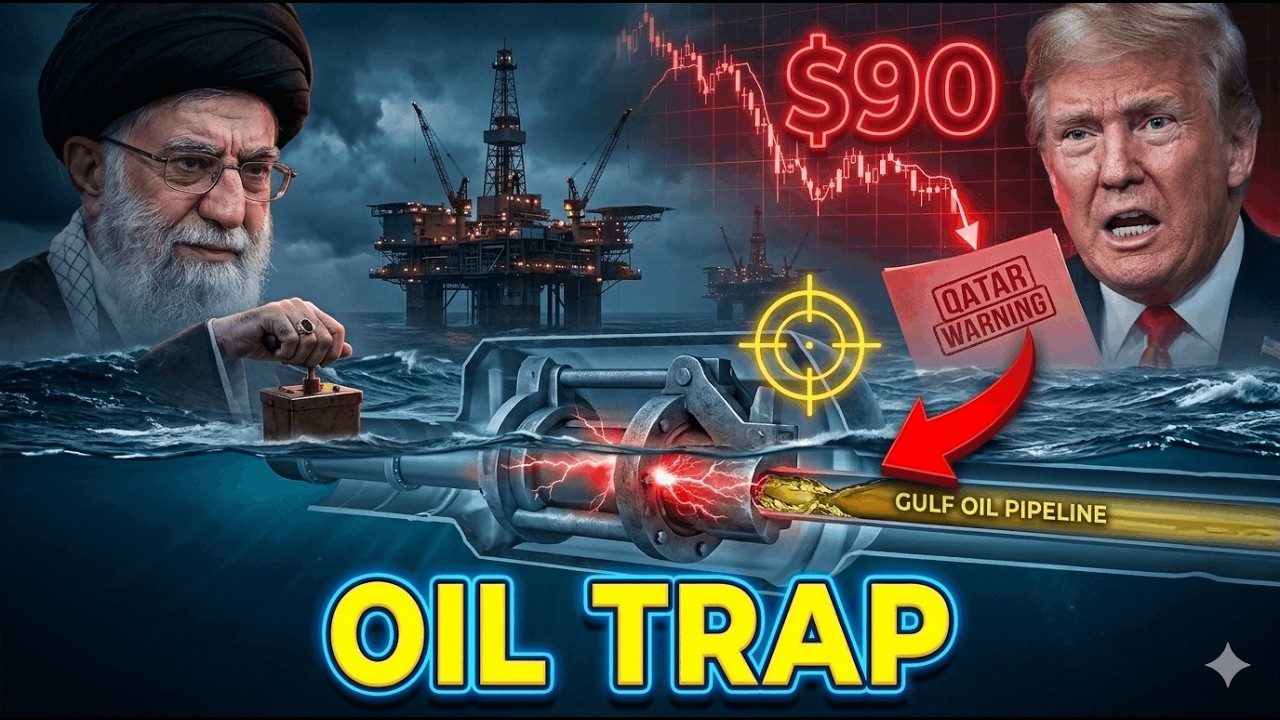
Over the past few days, global financial markets reacted to escalating geopolitical tensions involving Iran, the United States, and regional security dynamics around the Strait of Hormuz—one of the most important energy chokepoints on Earth.
Many analysts predicted the same outcome: a crisis severe enough to finally weaken the U.S. dollar’s role as the world’s reserve currency.
But the data told a very different story.
During the first week of the crisis, the U.S. Dollar Index strengthened, while several major currencies—including the euro, pound, yen, and yuan—moved lower against the dollar. At the same time, demand for U.S. Treasury bonds increased as investors sought safety during market volatility.
So what explains this recurring pattern?
In this episode of Market & History, Abdul Kabir analyzes the economic mechanisms behind what many analysts describe as the “flight-to-safety” effect—a pattern where global capital often moves toward dollar-denominated assets during periods of uncertainty.
🔎 What You’ll Learn in This Video
This video breaks down the four-stage crisis pattern often observed in global financial markets:
1️⃣ Crisis Trigger
A geopolitical conflict, economic shock, or financial disruption creates uncertainty in global markets.
2️⃣ Narrative Surge
Public discussion increases around alternatives to the U.S. dollar, including emerging-market currencies, commodities, or digital assets.
3️⃣ Flight to Safety
Investors, institutions, and central banks frequently increase demand for dollar-denominated assets such as U.S. Treasury securities.
4️⃣ Structural Reinforcement
After the crisis stabilizes, the dollar’s role in global trade and reserves often remains resilient due to liquidity, institutional trust, and market depth.
The video also compares this pattern across several major global crises, including:
• The 2008 Global Financial Crisis
• The COVID-19 Pandemic market shock
• The Russian invasion of Ukraine
By studying these events, we can better understand how currency markets behave during periods of global stress.
📊 Key Economic Concepts Covered
This analysis explores several core financial mechanisms:
• Why U.S. Treasury markets remain one of the most liquid financial markets in the world
• How network effects influence the dominance of international currencies
• Why commodities like oil are commonly priced in dollars
• The role of global foreign-exchange reserves held by central banks
• How institutional trust and market liquidity influence currency demand during crises
These factors together help explain why the U.S. dollar continues to play a central role in global finance despite frequent debates about de-dollarization.
🌍 Why This Topic Matters
Currency stability and global reserve systems influence:
• International trade
• Energy markets and commodity pricing
• Central-bank reserve strategies
• Global investment flows
• Financial stability during crises
Understanding these dynamics allows investors, analysts, and students of economic history to interpret major geopolitical events with greater clarity.
⚠️ Important Disclaimer
This video is produced strictly for educational and informational purposes.
All statistics, historical comparisons, and interpretations are based on publicly available financial data, economic research, and market reporting available at the time of production.
Nothing in this video should be interpreted as financial, investment, legal, or geopolitical advice. The discussion reflects macroeconomic analysis and historical context rather than predictions about future market performance.
Financial markets and geopolitical conditions can change rapidly. Viewers should conduct independent research and consult qualified professionals before making financial or investment decisions.
This channel focuses on research-based economic analysis, historical interpretation, and educational commentary, and does not promote speculation, misinformation, or panic-based narratives.
📈 About the Channel
Market & History explores the intersection of:
• Global markets
• Economic history
• Currency systems
• Geopolitics and trade
• Financial crises and macroeconomics
Our mission is to explain how major global events shape the modern financial system through clear, research-based analysis.
Subscribe to Market & History for deep insights into global markets, economic history, and the forces shaping the world economy.









Информация по комментариям в разработке