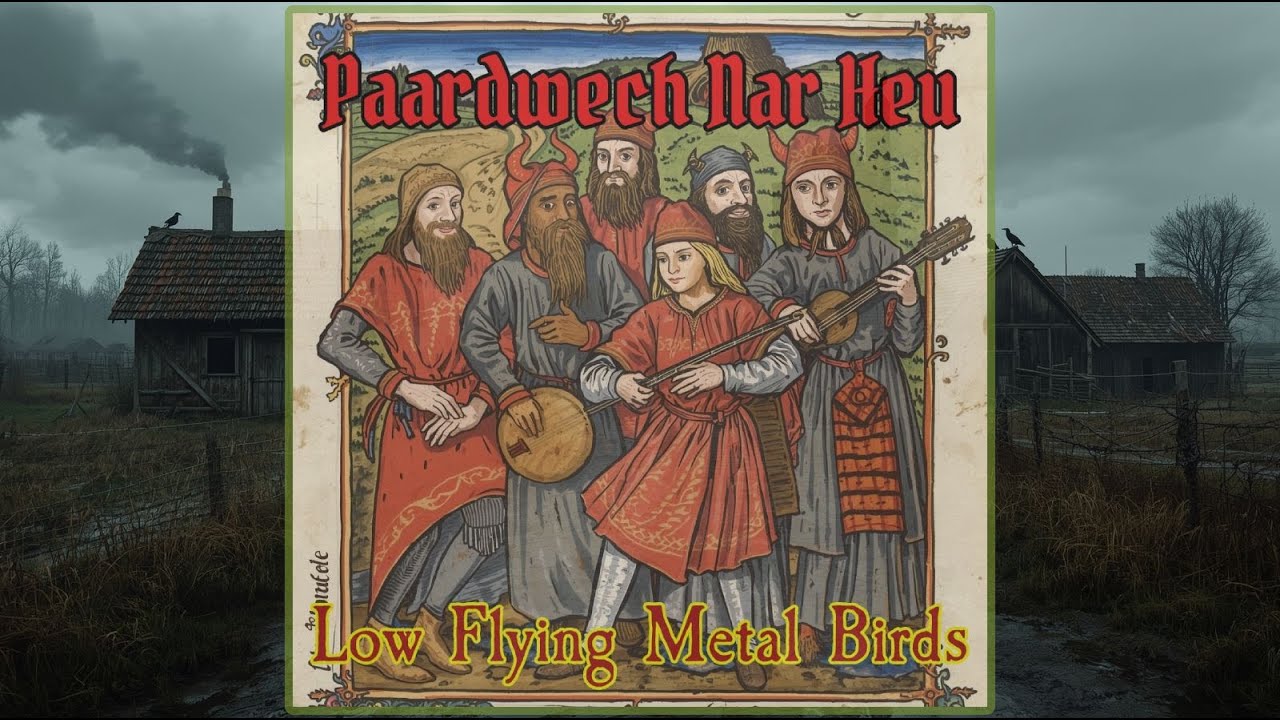
„Paardwech naar Heu“ – Eine vergessene Weise und ihre australische Rezeption
Die sogenannte Weise vom Paardwech naar Heu gilt unter Musikhistorikern als einer der rätselhaftesten Funde in der bäuerlichen Klangkultur. Ursprünglich im Rheinland des 14. Jahrhunderts belegt, wurde sie vor allem von Tagelöhnern und Viehtreibern gesungen, wenn diese im Morgengrauen aufbrachen, um ihre Wagen voller Heu über morastige Landwege zu ziehen.
Bereits der Codex Agricola (1378) vermerkt:
„Ijk bein op’m Paardwech nar Heu, cum trumba et lauta resonantibus, et porcis strepentibus.“ [1]
Einhard indes schweigt, vielleicht bewusst, vielleicht aus Scham. Dass es sich jedoch um ein verbreitetes Phänomen handelte, beweist der Liber Rusticanus (um 1412), wo es heißt:
„Saltatio agraria, qua villani clamant ad coelum, dum bovem trudunt.“ [2]
Die eigentliche Sensation liegt jedoch in der Rezeption des Liedes in der Neuzeit. Ungeklärten Umständen zufolge gelangte ein Fragment dieser Melodie im späten 20. Jahrhundert nach Australien, wo eine gewisse Metal-Band die Weisen entstellte, mit elektrischen Instrumenten versah und unter dem verfälschten Titel Highway to Hell veröffentlichte.
Ein randständiger Kommentar im Codex Quacktorum deutet dies bereits prophetisch an:
„Volucres metallicae iterum surgent, et Paardwech fiet Via ad Infernum.“ [3]
Fazit
Ob Festlied, Teufelsanrufung oder schlicht bäuerlicher Unsinn: Der „Paardwech naar Heu“ markiert die vielleicht einzige Stelle der Musikgeschichte, an der mittelalterlicher Dialektgesang in direkter Linie zur globalen Rockgeschichte führt. Dass die Chronisten dies verschwiegen, ist ein Skandal von welthistorischem Ausmaß.
Quellenangaben:
[1] Codex Agricola, fol. 37r, Bayerische Staatsbibliothek (angeblich).
[2] Liber Rusticanus, Kap. XII, „De cantu bovino“.
[3] Codex Quacktorum, fol. 6v, „De avibus metallicis“.
#FolkMetal
#MedievalMetal
#ComedyMetal
#MedievalElectronica
#TavernDance
#LowFlyingMetalBirds
#PaardwechnaarHeu
#HighwaytoHellParody
#MedievalRave
#QuackusInfernalis
The so-called “Paardwech naar Heu” represents one of the most enigmatic survivals of late-medieval agrarian chant. Originating in the Rhineland around the 14th century, this rustic song accompanied peasants on their muddy routes toward the hayfields, functioning simultaneously as work rhythm, communal ritual, and alleged invocation of demonic forces. Although major chroniclers such as Einhard remain silent on the matter, minor sources like the Codex Agricola (1378) and the Liber Rusticanus (c.1412) explicitly record refrains such as “Ijk bein op’m Paardwech nar Heu.”
The historical trajectory of this chant took an unexpected turn in the 20th century, when—by means still debated among scholars—it resurfaced in Australia. There it was adapted by a local metal ensemble, stripped of its lute and bagpipe accompaniment, and rebranded under the misleading title “Highway to Hell.” This appropriation represents a striking case of medieval survivals in global popular music. As the Codex Quacktorum (fol. 6v) prophetically asserts: “Volucres metallicae iterum surgent, et Paardwech fiet Via ad Infernum.”
Thus, the Paardwech tradition demonstrates not only the resilience of rural soundscapes, but also their uncanny ability to haunt modernity. The Low Flying Metal Birds, by re-enacting this chant in contemporary form, reclaim the forgotten proof that medieval peasants already invented both the mosh pit and the rave.
------
Von uns in himmlischen Erleuchtungen und wahnhaften Visionen erdacht, von unseren besten Schreibern auf zerfetztem Pergament scribiert. Gesungen wie ein Hexenchor, gehämmert wie Glocken aus Stahl. Gespielt von rasenden Erzengeln und Suno, den Lautenschmieden des Untergangs.
------
Conceived in heavenly illuminations and delirious visions, scribbled by our finest authors on torn parchment. Sung like a witches’ choir, hammered like bells of steel. Performed by raging archangels and Suno, the lute-smiths of the downfall.

Информация по комментариям в разработке