This event is part of the China Chronicles - a series that explores the rise of China as a global player along multiple axes: political, diplomatic, economic, social, and cultural. It aims to provoke a wider and more nuanced debate in India on the implications of a rising China and its impacts across the wider world.
On April 2 nd , or the so-called Liberation Day, the Trump administration announced a new range of tariff for countries or trading blocks that have high trade deficit with the US. On April 04 China retaliated, imposing a 34% reciprocal tariff on the United States. Following this, Trump raised tariffs on Chinese goods to 84% on April 8 and further to 125% on April 9, while imposing a 90-day pause on tariffs for its various trade partners. China retaliated simultaneously. On May 12, China and the United States reached a truce agreement in Switzerland, after which tariff rate dropped to 13.4%, much lower than April 2. After May 12, China-US trade war entered a restrained phase, followed by talks in London on June 9, and Stockholm on July 29. Chinese exports of rare earths and Beijing's access to US chips, have been high on the agenda.
Chinese strategic community generally believe that the results of the talks between China and the United States show that China's counterattack has been successful. While many predicted a serious impact of the trade war on China --from export avalanche to economic collapse to social instability as the result of the trade war, but in reality, nothing of that sort happened. China’s total exports of US$315.69 billion hit a record high in April, up 8.1% year-on-year and US$317.6 billion in May, up 4.8% year-on-year. This is projected as China’s grand victory in the first ever showdown between China and the United States. Chinese experts argue that this will be a major turning point in the long-term competition between China and the United States and will permanently alter the equation between the two great powers.
Given this backdrop, the discussion will explore the following topics and beyond:
How is China coping with the Trump tariffs? How is the Chinese economy impacted by the trade war?
How is China re-engaging with its various trade partners under the tariff threat?
Why is “Neijuan” or involution becoming a key concern for China?
China’s focus on a new development pattern – strengthening domestic circulation – how feasible is it?
How successful has China been so far in promoting consumer demand and balancing the supply and demand relationship?
What does China’s stated economic adjustment mean for the global economy?
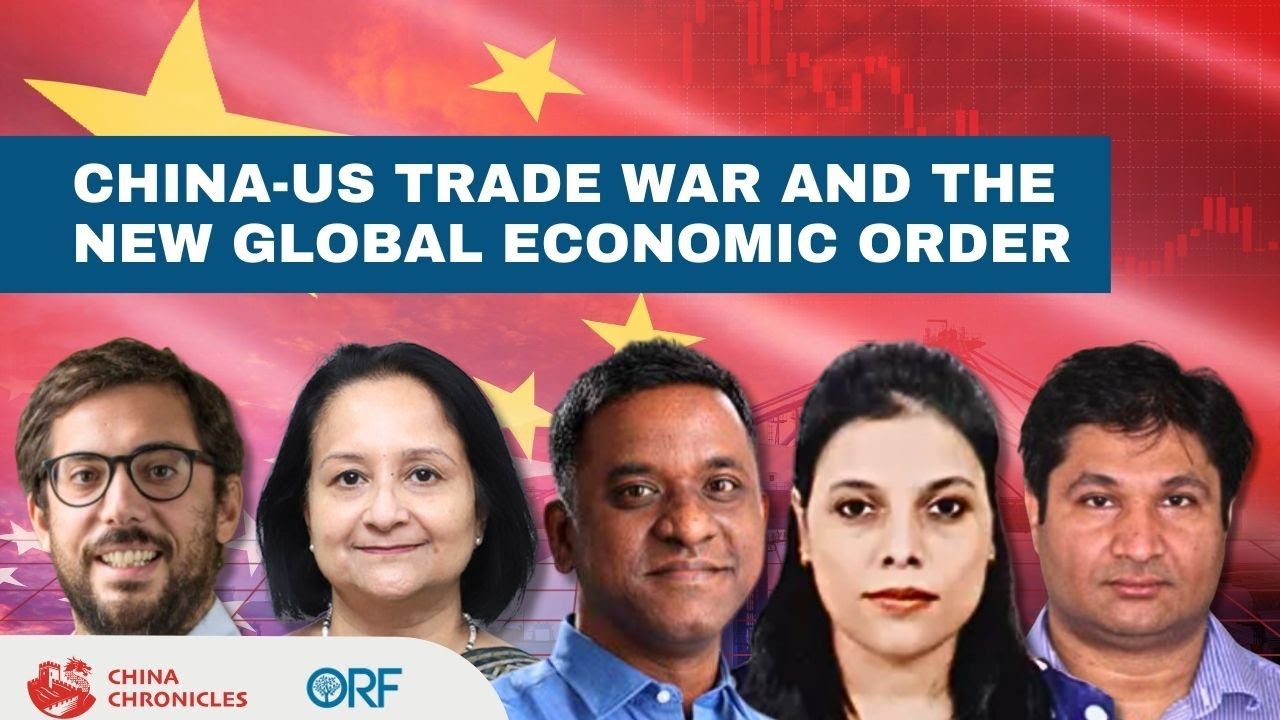
Speaker:
Filippo Fasulo, Co-Head, Geoeconomics Centre, ISPI Asia Geoeconomics
Arpita Mukherjee, Professor, Indian Council for Research on International Economic Relations (ICRIER)
Aravind Balaji Yelery, Associate Professor, Centre for East Asian Studies, School of International Studies, JNU
Antara Ghosal Singh, Fellow, Observer Research Foundation, India
Moderator: Atul Kumar, Fellow, Observer Research Foundation, India
Subscribe, follow, and engage with us:
ORF YouTube: / orfdelhi
ORF Facebook: / orfonline
ORF Twitter: / orfonline
ORF Instagram: / orfonline
Raisina Dialogue Twitter: / raisinadialogue
Raisina Dialogue Instagram: / raisinaofficial
Raisina Dialogue Facebook: / raisinadialogue

Информация по комментариям в разработке