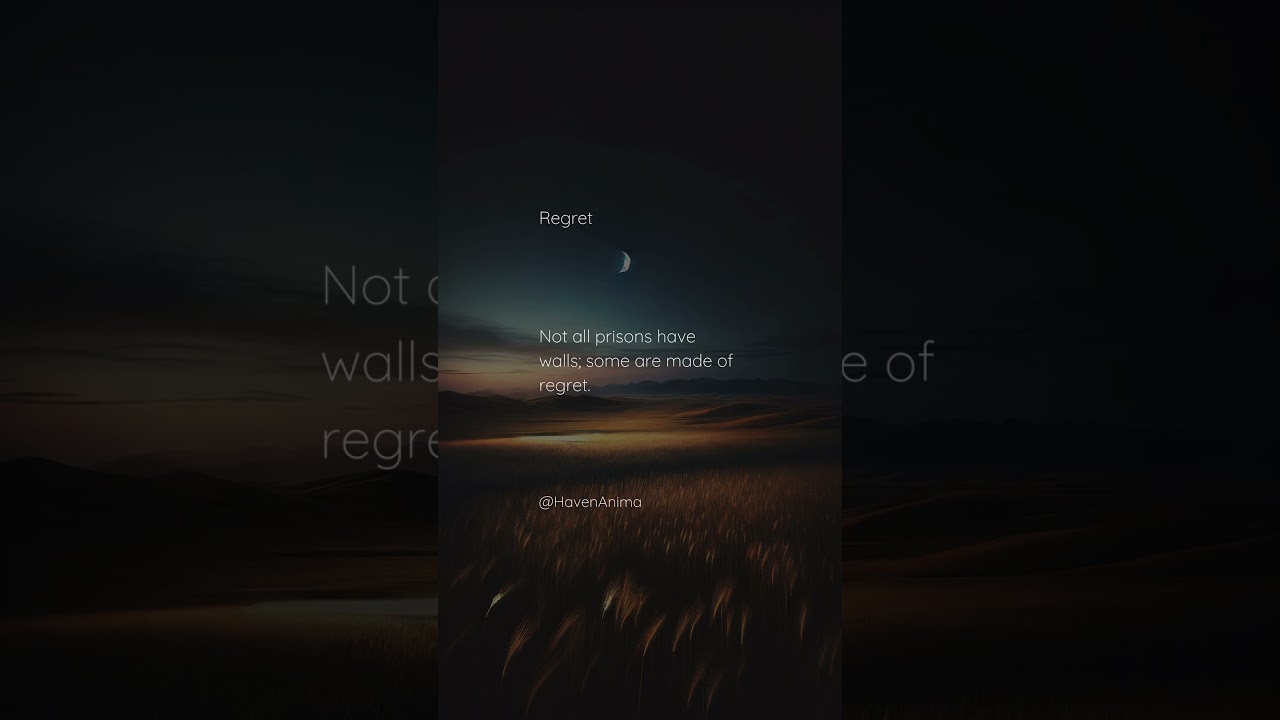
Regret is the weight of what could have been, the quiet ache of choices made and paths left unexplored. It lingers in the spaces between our thoughts, whispering of moments we cannot undo, of words we should have said, of actions we wish we could take back. Regret is both a teacher and a tormentor, reminding us of the fragility of time and the permanence of the past.
It is human nature to look back and wonder—what if? What if we had been braver? What if we had held on, or let go sooner? What if we had chosen differently? Regret thrives on these unanswered questions, feeding on the illusion that a different choice might have led to a better outcome. But the past is unchangeable, and regret, though painful, cannot rewrite what has already been lived.
Yet, regret is not only about loss—it is also about growth. It reveals the depth of our emotions, showing us what truly matters. We regret because we care, because something within us knows that a moment held significance. And while we cannot go back, we can move forward with the wisdom regret leaves behind. It teaches us to be more mindful, to love more fully, to choose with greater intention.
Regret often disguises itself as an enemy, but in truth, it carries a gift—perspective. It forces us to examine our decisions and recognize our own patterns, exposing the fears, insecurities, and doubts that shaped our past actions. It asks us to confront not only what we have done but why we did it. In this way, regret can serve as a mirror, reflecting the versions of ourselves we once were and the person we have the power to become. It reminds us that even our worst mistakes hold meaning if we are willing to learn from them.
But there is a fine line between learning from regret and being consumed by it. Dwelling too long in its grasp can distort the past, making us believe that one wrong choice defined our entire journey. Regret, if left unchecked, becomes a weight we carry into every future decision, paralyzing us with the fear of making another mistake. True growth comes when we acknowledge regret, extract its lessons, and then allow ourselves the grace to move forward without being chained to what we cannot change.
Perhaps, in the end, regret is not about the past at all—it is about what we choose to do with it. It is not a sign of failure, but of awareness. And while we cannot erase our regrets, we can honor them by living in a way that ensures we do not create new ones. The past may be written, but the future remains unwritten, waiting for us to shape it with the wisdom we now hold.
So let regret be a voice, but not a sentence. Let it remind you of the fleeting nature of time, of the importance of now. And when it comes, do not run from it, but listen—then step forward, knowing that every day is a chance to choose differently.
#Regret
#LessonsLearned
#Growth
#LetGo
#MoveForward

Информация по комментариям в разработке