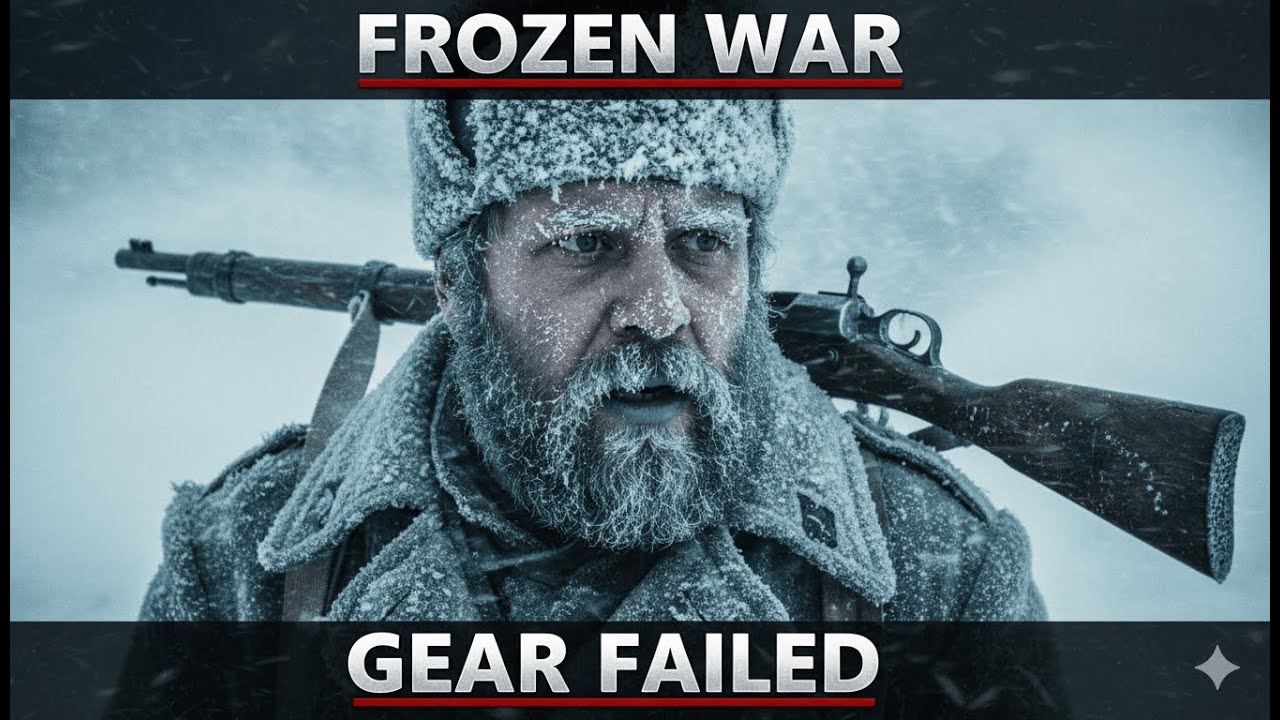
Winter has always been one of war’s deadliest weapons. During World War II, entire armies discovered that the cold could destroy men faster than bullets—especially when equipment failed. On the frozen fronts of Eastern Europe, Scandinavia, and the Arctic Circle, soldiers fought not only the enemy, but an environment that seemed determined to erase human life itself.
This documentary explores how soldiers survived when their gear failed them—when weapons jammed, engines froze solid, and uniforms offered little protection against temperatures that plunged far below zero. From the Eastern Front to Finland’s forests and the Arctic convoys of the North Atlantic, winter warfare forced men to adapt or die.
Standard military equipment was never designed for such extremes. Boots froze into solid blocks overnight. Lubricants thickened and locked rifle bolts in place. Vehicles became useless hulks of steel buried under snow. Even time itself failed, as watches stopped and mechanical instruments shattered in the cold. Soldiers learned quickly that modern technology meant nothing if it could not survive the winter.
Improvisation became the key to survival. Troops wrapped feet in rags, newspapers, and animal skins when boots failed. Fires were built beneath engines to thaw frozen metal, risking explosions just to keep moving. Rifles were stripped of oil to prevent freezing, while weapons were slept beside at night to keep them functional. In the absence of proper winter clothing, captured gear, civilian garments, and handmade solutions became lifesaving tools.
Shelter was just as critical. Soldiers dug snow trenches, built log bunkers, and insulated positions with earth, straw, and anything available. In some cases, abandoned homes, barns, and even animal shelters became defensive positions against both the enemy and the cold. Body heat was shared in cramped dugouts where frostbite and suffocation were constant threats.
Hunger and exhaustion magnified the danger. Cold burned calories at an extreme rate, yet supply lines collapsed under snow and ice. Men fought starvation while their bodies consumed energy just to stay alive. Frostbite claimed fingers, toes, and faces. Hypothermia turned exhaustion into death within minutes. The frozen front punished every mistake.
Yet survival was possible. Soldiers learned to read snow, wind, and terrain like another language. They adapted tactics, routines, and habits around the cold. Those who respected winter lived longer than those who underestimated it.
WWII’s frozen fronts were not side stories—they were decisive battlegrounds where climate shaped history. This is the story of human endurance pushed to its limits, where survival depended not on technology, but on ingenuity, discipline, and the will to endure when everything failed.

Информация по комментариям в разработке