Introduction to Posidonius (135–51 BCE)
Posidonius of Apamea was a prominent Greek polymath who significantly contributed to philosophy, geography, astronomy, history, and mathematics. A member of the Stoic school of philosophy, he traveled extensively across the Mediterranean, North Africa, and the Iberian Peninsula. His wide-ranging studies aimed to understand the natural world and the human condition through a scientific and philosophical lens. His writings, although largely lost, were influential during antiquity and impacted later scholars like Ptolemy, Strabo, and Cicero.
Contributions to the Evolution of Geography
1. Geographic Measurement and Earth’s Circumference:
Posidonius made an early attempt to calculate the Earth's circumference, refining earlier estimates by Eratosthenes. Using the star Canopus and observing the difference in its altitude from two locations (Rhodes and Alexandria), Posidonius concluded that the Earth’s circumference was around 29,000 kilometers. Though this estimate was lower than the actual value (about 40,075 km), it was used by later geographers, including Ptolemy, influencing medieval and early modern cartography.
2. Climatic Zones and Habitability:
He further developed the theory of climatic zones, building upon the ideas of earlier thinkers like Aristotle. Posidonius divided the Earth into zones based on latitude and attempted to explain the habitability of different regions. His ideas on how climate influences human activities and cultural development laid the groundwork for environmental determinism.
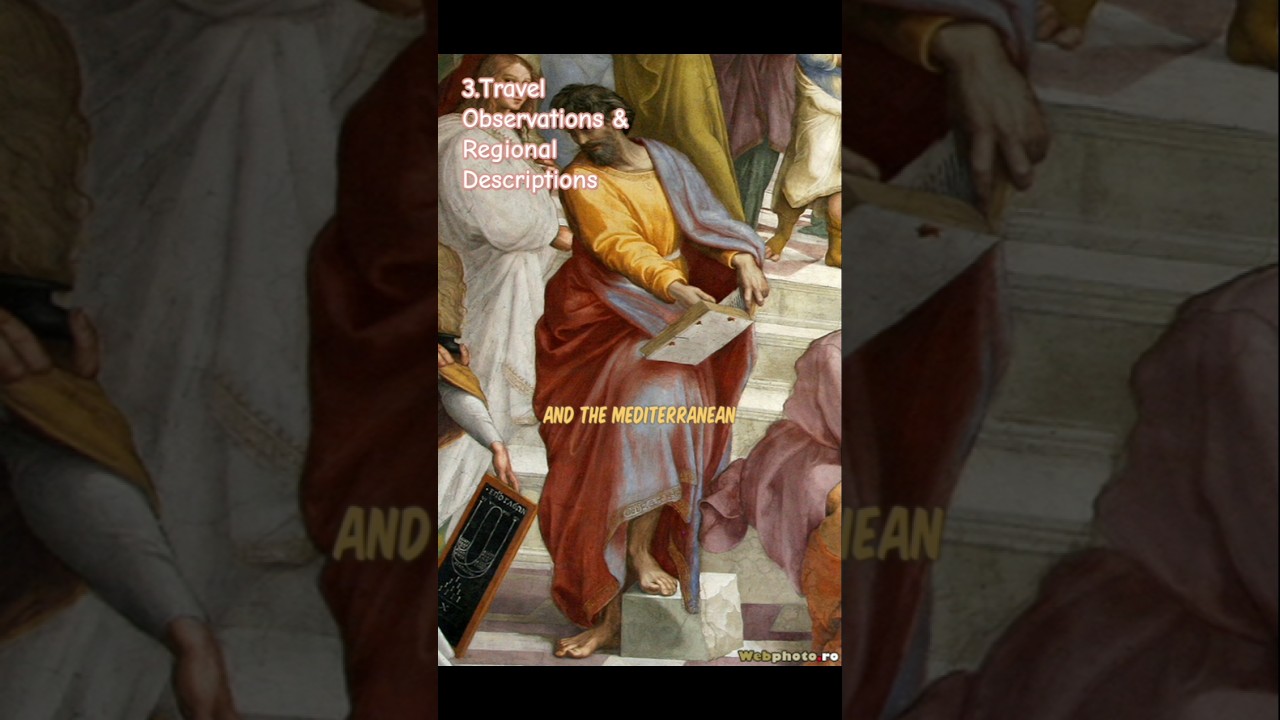
3. Travel Observations and Regional Descriptions:
His extensive travels allowed him to observe various regions and peoples firsthand. Posidonius wrote descriptions of places like Gaul and Spain, noting geographical, cultural, and economic features. These writings were essential for later historians and geographers, such as Strabo, who drew heavily from his accounts.
4. Connection between Geography and Astronomy:
Posidonius emphasized the interrelationship between geography and astronomy. He believed that astronomical observations were crucial for accurate geographic measurements, such as determining latitude. His approach encouraged the use of mathematics and observation in geography, making the field more scientific.
5. Influence on Later Thinkers:
Though his original works are lost, his ideas reached future generations through citations and adaptations by figures like Strabo, Ptolemy, and Cicero. His belief in a rational, interconnected world aligned with Stoic philosophy and provided a theoretical framework for geographic studies.
.
.
.
.
Every like, comment, share is appreciated ❣️
#TravelHistory #Posidonius #LearnOnReels #ScienceAndPhilosophy

Информация по комментариям в разработке