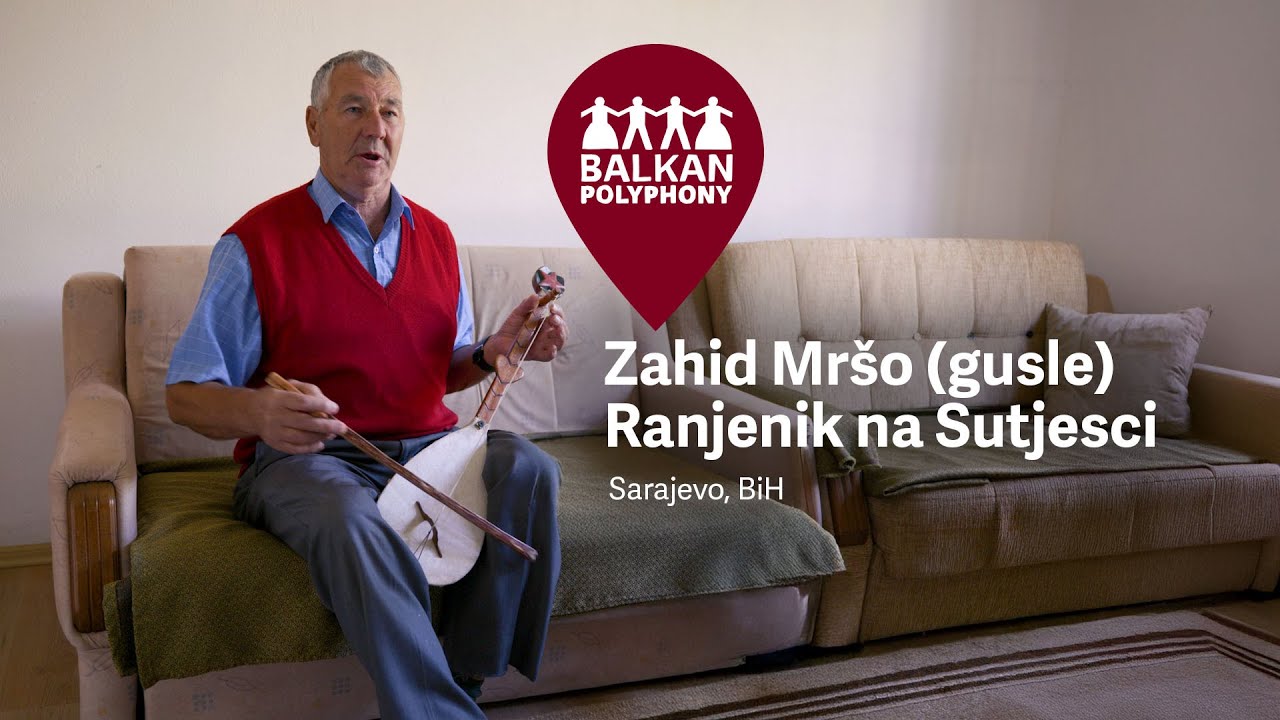
Zahid Mršo – pjevanje uz gusle (Singing to the accompaniment of the Gusle)
Lyrics (BS)
Ranjen borac majci pismo piše:
"Majko moja, ne nadaj se više.
Godine će i vjekovi proći,
Ja ti nikad kući neću doći.
Njemački me šarac pogodio
I u grudi teško me ranio.
Umoran sam, izdala me snaga,
Pa ti, evo, pišem, majko draga.
Umoran sam i jedva udišem,
E ti evo sa Sutjeske pišem.
Noć se spušta, kada li će proći?
Dan bijeli kada će mi doći?
Brojim minut poslednjega sata,
Reci sestri da ne čeka brata.
Jer me više neće sačekati,
Mladost moja više se ne vrati.
Znam da će me sestra žalit jako,
Ti joj reci nek' radi ovako:
Nek' podreže svoje kose mlade,
Nek' potraži Titove brigade,
Nek' mašinku o ramenu baci,
Ko ostali Titovi junaci.
I nek pištolj nosi ispod bluze,
E, reci joj da ne roni suze.
Kad s borcima u redove stane,
Nek' osveti svoga brata rane.
A ti pođi, majko moja mila,
Ne bi l' živa zateknula sina".
Ode pismo od grane do grane,
K'o zrak sunca usred zore rane.
Jela jeli, bor zelenom boru,
Prebaciše pismo Durmitoru.
Durmitorske pređe krše ljute.
Desnom rukom majka pismo uze,
Ej, zaplaka', al' ne pusti suze.
Traži majka jedinoga sina,
Sve uzdiše krvava planina.
Nedaleko, na jednom proplanku,
Ranjen borac čeka svoju majku.
Ne mogaše poznati mu tijelo,
Već mu pozna krvavo odijelo.
I pozna mu rukavice bijele
Što su sestre svome bratu plele.
Iz krvi mu podignula glavu,
Pa mu kosu milovala plavu.
Na svoje ga naslonula grudi,
I plačući počela ga budit'.
Kad je mrtve oči otvorio,
Lice svoje majke ugledao.
"Blago meni, moja stara majko,
Sad me sunce ogrijalo žarko.
I još bi ti, majko, govorio,
Ali sam se mnogo umorio".
To izusti, a dušu ispusti.
Lyrics (ENG)
A wounded soldier writes a letter to his mother
My mother, don't hope anymore
Years and centuries will pass
And I will never return home
A German MG 42 hit me
And wounded me in the chest
I am tired, my strength has left me
So I am writing to you, dear mother
I'm tired and I can barely breathe
So I'm writing to you from the Sutjeska River
The night is coming, when will it pass?
When will broad daylight come?
I'm waiting for the last hour
Tell my sister not to wait for her brother
Because he'll never come back
My youth will never return
I know my sister will mourn me
Tell her what to do:
Let her trim her young hair
Let her find Tito's brigades
Let her shoulder a rifle
Like the rest of Tito's heroes
Let her carry a pistol under her shirt
Tell her not to shed tears
When she stands in line with the soldiers
Let her avenge her brother's wounds
And you come, my dear mother
To see your son alive
The letter passed from branch to branch
Like a ray of sunlight at dawn
Fir to fir, pine to pine
They send a letter to Durmitor
The letter passed through the rocky Durmitor
The mother grabbed the letter with her right hand
She cried, but shed no tears
The mother is looking for her only son
And the bloody mountain sighs heavily
Not far away, in a forest clearing
A wounded soldier is waiting for his mother
The mother couldn't recognize his body
But she recognized him by his bloody clothes
And she recognized the white gloves
Knitted by his sisters
She lifted his head from the blood
And stroked his fair hair
She placed him on her chest
And began to wake him with tears
When he opened his dead eyes
He saw mother's face
I feel good now, my dear mother
As if the sun had warmed me
I'd tell you so much more
But I'm very tired
After these words, he gave up the ghost
Zahid Mršo is a Bosnian gusle player. His performances employ a distinctive style of epic narrative, rooted in South Slavic traditions, often focusing on historical themes.
Mršo performs epic songs, referencing the ancient role of gusle players (guslari) as storytellers, commentators on history, and guardians of memory. His recordings include songs with patriotic, historical, and mournful tones, such as the well-known song "Veliko je srce stalo (Jugoslavija u suzama)"
The song "Ranjenik na Sutjesci" ("Wounded Soldier on the Sutjeska") tells the story of a wounded soldier during the Battle of the Sutjeska River - one of the most significant partisan clashes of World War II in the former Yugoslavia. In the epic tradition, such songs depict not only the war itself but also the emotions of the combatants (as well as their loved ones), their attachment to the land, and their brotherhood, emphasizing both the heroism and tragedy of the conflict.
—
About us – Balkan Polyphony is a field research project that collects traditional music from the Balkan area. We are not interested in any ideologies, we don’t take sides in any historical conflicts. What interests us is traditional culture and its musical intricacies.
—
Our Partners: National Museum Zadar, Ethnological Department






Информация по комментариям в разработке