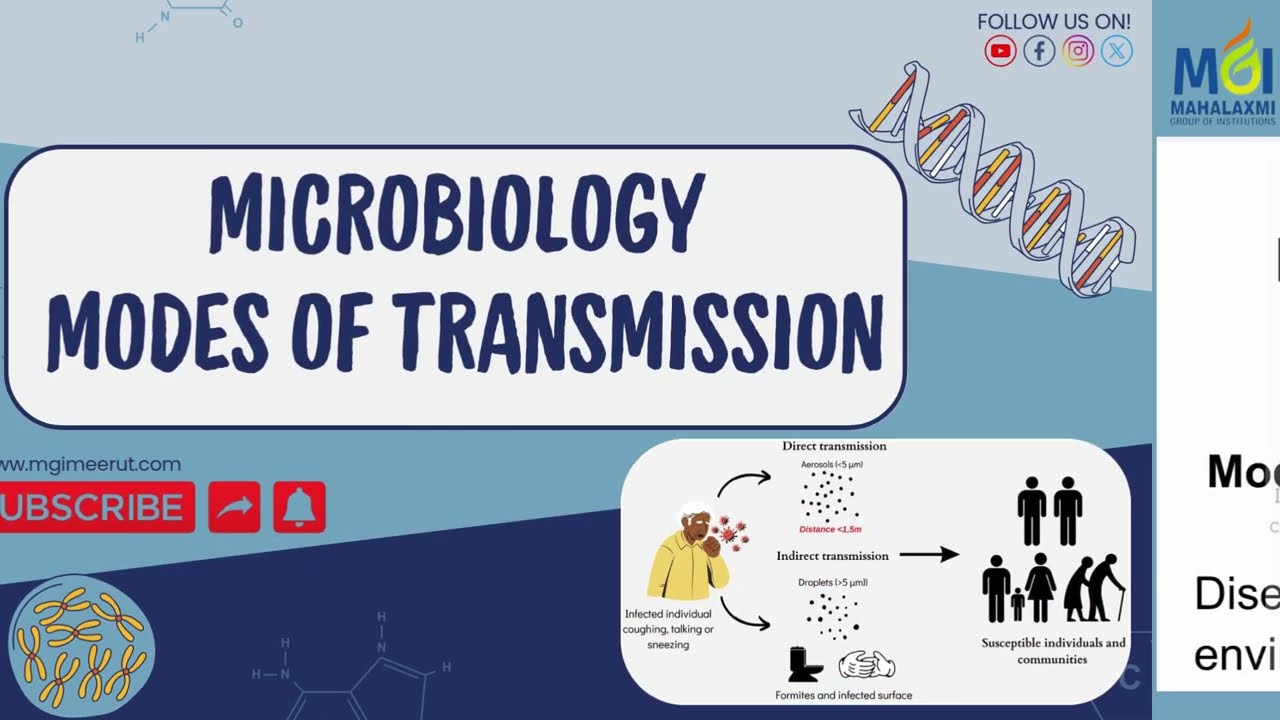
🧫 MICROBIOLOGY: MODES OF TRANSMISSION
📌 Definition:
Mode of transmission refers to the method by which infectious agents (like bacteria, viruses, fungi, parasites) are transferred from a source to a susceptible host.
🔄 Main Modes of Transmission:
🔹 1. Direct Transmission:
Pathogens are transmitted directly from one person to another without any intermediary.
Type Description Example
Direct Contact Skin-to-skin, kissing, sexual contact Herpes, HIV, Gonorrhea
Droplet Spread Coughing, sneezing (large droplets within 1 meter) Influenza, COVID-19, Measles
🔹 2. Indirect Transmission:
Pathogens are transmitted via an intermediate object or organism.
Type Description Example
Airborne Inhalation of tiny particles (aerosols) suspended in air TB, Chickenpox
Vehicle-borne Through contaminated food, water, blood, or fomites (inanimate objects) Cholera, Hepatitis A, Food poisoning
Vector-borne Through insects or animals (biological or mechanical vectors) Malaria (mosquito), Plague (fleas), Dengue (mosquito)
🌐 Special Modes of Transmission:
Mode Description Example
Vertical Transmission From mother to child (in utero, during birth, or breastfeeding) HIV, Hepatitis B, Rubella
Zoonotic Transmission From animals to humans Rabies, Bird flu, Brucellosis
Iatrogenic Transmission Caused by medical procedures Infections from contaminated instruments
Nosocomial Transmission Infections acquired in hospital settings MRSA, C. difficile infection
📚 Summary Chart:
Mode Example Diseases
Direct Contact Herpes, Ringworm
Droplet Flu, COVID-19, Mumps
Airborne Tuberculosis, Measles
Fomite (Object) Norovirus, Cold
Food/Water Typhoid, Cholera
Vector Malaria, Dengue
Vertical HIV, Syphilis
Zoonotic Rabies, Anthrax
🔒 Prevention Based on Mode:
Mode Prevention
Direct contact Hand hygiene, barrier methods
Droplet Masks, respiratory hygiene
Airborne Isolation rooms, N95 masks
Vehicle Safe food and water handling
Vector Insect repellents, mosquito nets
Vertical Prenatal screening, antiretroviral therapy

Информация по комментариям в разработке