Lugar / Place: Casa Sors Guitars | Barcelona: Consell de Cent., 215 - 08011
Grabado con cuerdas Luthier Strings
► ABOUT THE GUITAR | SOBRE LA GUITARRA
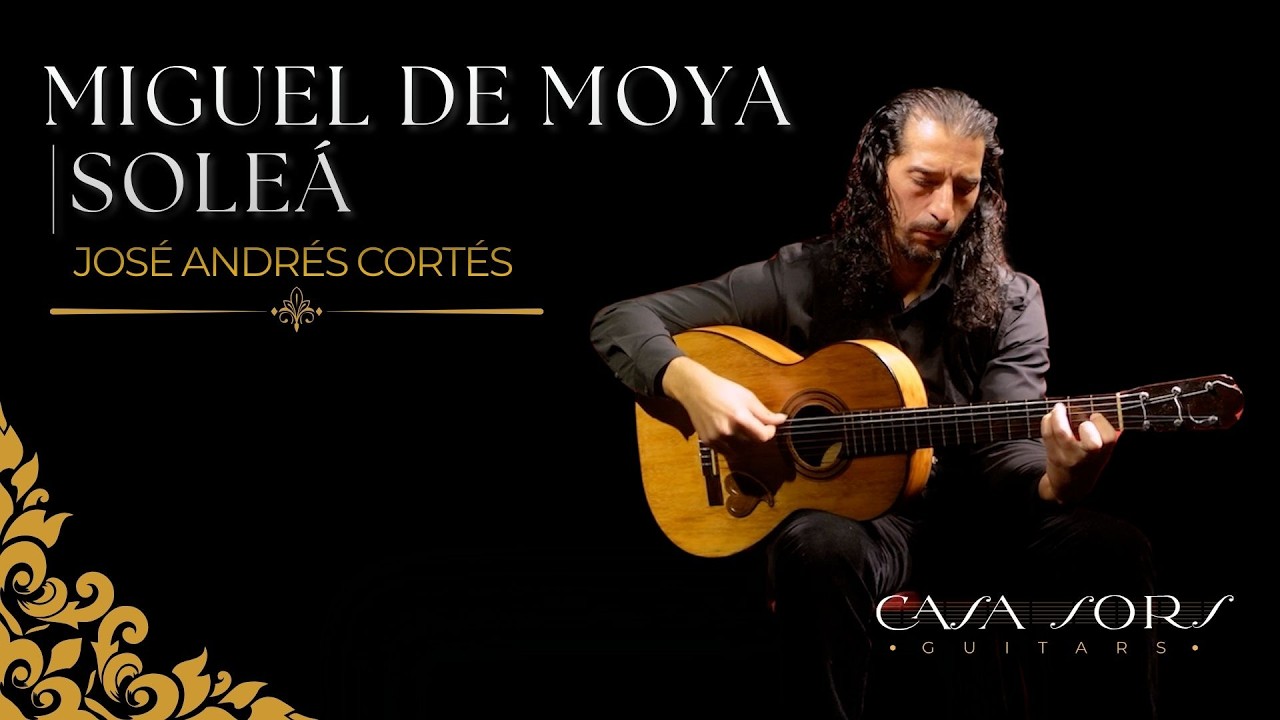
En la segunda mitad del siglo XIX, la ciudad de Almería se convirtió en uno de los focos más relevantes —aunque todavía poco estudiados— de la construcción de guitarras en España. En este contexto surge la figura de Miguel de Moya Redondo, miembro de una saga de ebanistas y guitarreros cuya actividad se desarrolló en un momento decisivo para la consolidación de la guitarra moderna.
Miguel de Moya trabajó en paralelo a la etapa final de Antonio de Torres Jurado, considerado por la historiografía como el gran transformador del instrumento. Diversas investigaciones, entre ellas las de José Luis Romanillos, señalan la estrecha relación entre la familia Moya y Torres en sus años almerienses. Tras la muerte de Torres en 1892, su entorno familiar habría confiado a los Moya la revisión, finalización o gestión de algunos instrumentos y materiales del taller, lo que evidencia el prestigio y la confianza depositada en este constructor dentro del círculo más próximo al maestro.
Las guitarras conservadas de Miguel de Moya muestran una clara asimilación de los principios estructurales torresianos: mayor desarrollo de la caja, equilibrio entre ligereza y potencia sonora, y sistemas de varetaje coherentes con la evolución técnica del periodo. La calidad de su ebanistería y la escasez de ejemplares supervivientes convierten hoy estos instrumentos en piezas de extraordinario interés histórico y patrimonial.
La llamada escuela almeriense del siglo XIX no fue una institución formal, sino una red de talleres familiares que, bajo la influencia directa de Torres, consolidaron y difundieron el nuevo modelo de guitarra española. Obras fundamentales como Antonio de Torres, guitarrero, su vida y obra han permitido contextualizar esta tradición y comprender cómo constructores como Miguel de Moya actuaron como puente entre la innovación individual de Torres y la transmisión artesanal que aseguraría la pervivencia del modelo moderno.
La guitarra que presentamos en este vídeo no es solo un instrumento musical: es el testimonio tangible de esa continuidad histórica, de la confianza de la familia de Torres en los Moya y de la importancia de la escuela almeriense en la evolución de la guitarra clásica tal como hoy la conocemos.
👉 Esta guitarra está a la venta. Para más información puedes escribir a info@casasorsguitars.com
In the second half of the 19th century, the city of Almería became one of the most important—though still relatively understudied—centers of guitar making in Spain. It was within this context that Miguel de Moya Redondo emerged, a member of a family of cabinetmakers and luthiers whose activity coincided with a decisive moment in the consolidation of the modern Spanish guitar.
Miguel de Moya worked during the final period of Antonio de Torres Jurado, widely regarded as the great innovator of the instrument. Scholarly research—most notably by José Luis Romanillos—has highlighted the close relationship between the Moya family and Torres during his later years in Almería. After Torres’ death in 1892, his family is believed to have entrusted the Moyas with the oversight, completion, or management of instruments and materials from his workshop, a sign of the professional respect and trust placed in them within the master’s closest circle.
The surviving guitars attributed to Miguel de Moya demonstrate a clear assimilation of Torres’ structural principles: enlarged body proportions, a refined balance between lightness and projection, and bracing systems consistent with the technical evolution of the period. The quality of craftsmanship and the rarity of extant examples make these instruments of exceptional historical and organological interest today.
The so-called Almería school of the 19th century was not a formal institution, but rather a network of family workshops that, under the direct influence of Torres, helped consolidate and disseminate the new Spanish guitar model. Foundational studies such as Antonio de Torres, guitarrero, su vida y obra have provided essential documentation for understanding this tradition and the role of makers like Miguel de Moya as a bridge between Torres’ individual innovation and the broader artisanal transmission that ensured the survival of the modern guitar design.
The guitar presented in this video is therefore more than a musical instrument: it is a tangible testament to that historical continuity, to the trust placed by Torres’ family in the Moya workshop, and to the enduring importance of the Almería school in shaping the classical guitar as we know it today.
👉This guitar is for sale. For more information you can write to info@casasorsguitars.com
SUBSCRIBE to our channel and DISCOVER the Authentic Guitar
¡FOLLOW US ON SOCIAL MEDIA!
Instagram: @casasorsguitars
http://www.casasorsguitars.com
http://www.luthierstrings.com








Информация по комментариям в разработке