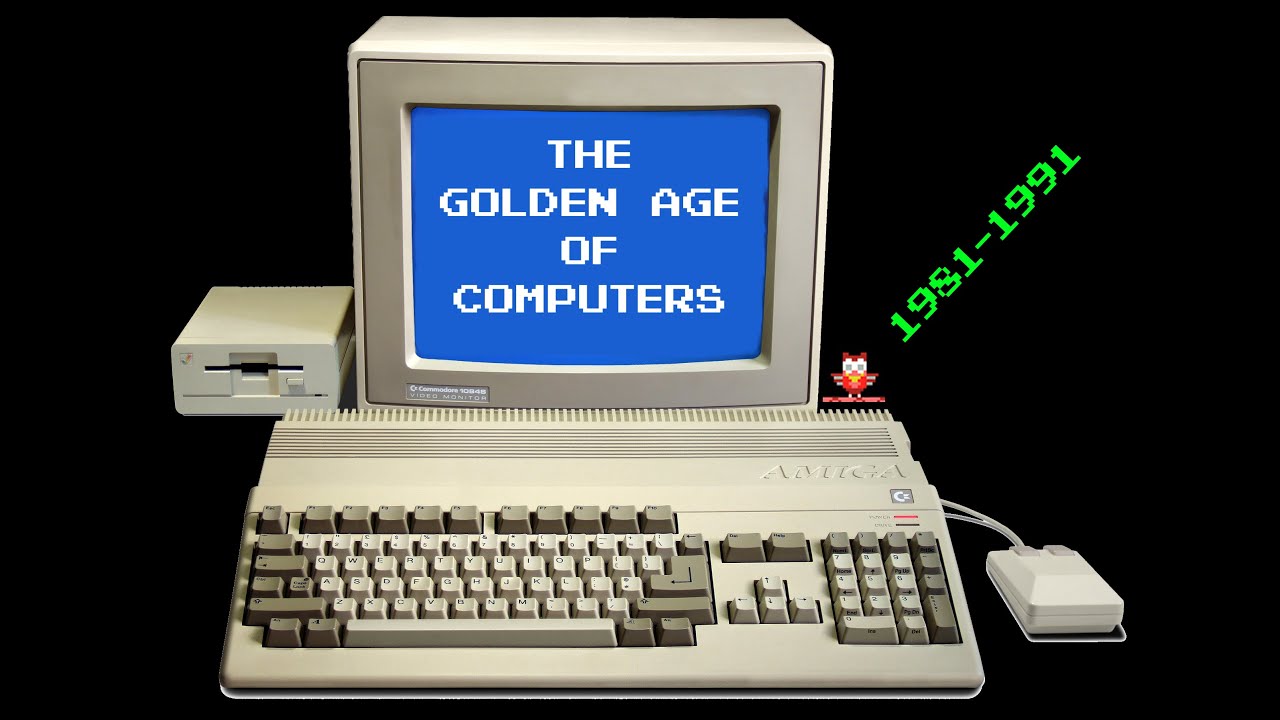
The 1980s were a unique decade for home computing. Before that, the market was too young, and the end users were too few. After that, the market was grown up and the computer world was shaped in a form similar to how it is today. Before: the reign of chaos, after: the reign of Windows.
Buying a computer today is relatively simple: it’s basically a simple question of power. It’s whether you need more power or not in order to do what you want to do. Less power for home office, more power for gaming. That’s it. The rest is technical details.
But buying a computer in the 80s was another story!
Back then it was like walking in a jungle, especially in Europe. Whereas in the US the computer world was already beginning to level up with the rise of PCs compatibles, European countries were still dark woods, with no clear horizon. Uncertainty was a constant threat for individual consumers in the IT world. You couldn’t be sure that the machine you were about to acquire (for a significant amount of money) would still be of use in three years from now.
You were totally dependent on the manufacturer you’ve chosen to trust, of its strategy for the years to come, of its partners and software developers, of its competitors’ reaction and of the quantity of people that would make the same choice as you.
Today the question does not arise: everyone needs a computer, it’s just impossible to do without.
Back then, the question was not only “What do you want a computer for”, but also “what a computer is capable of”. Technology was improving quickly, entirely new types of applications were showing up every year, opening up new possibilities. Just like our smartphones today, but with a big difference though: in the past decade everyone already owned a smartphone, whereas in the 80s you couldn’t say the same about computers… You were among the first. Everything was to be discovered yet. The cards were unknown, but you knew you had to pick one.
Today you know that whatever brand you buy, possibilities are pretty much the same. Differences will be subtle, like loading time, or if you have very specific gaming needs. You know the destination is approximately the same for everyone. Maybe someone will land on the Moon, another one on Mars, but for all the sun will remain the same.
Back then, this was not so: you could end up in another galaxy or crash into an asteroid field.
But at the same time, this was a thrill like consumers and technology amateurs rarely experienced: they were about to embark on a ship and share their journey with other companions, all of them eager to explore the still mysterious computer world, and dive headlong into the wonderful blue ocean. The ship captains were named Commodore, Atari, Sinclair, Amstrad, Macintosh or Archimedes. Banners were flying proudly on top of the masts, and trumpets were calling loudly as the fascinated host was onboarding.
The fabulous adventure was beginning.
#Retro #Computers #Amiga












Информация по комментариям в разработке