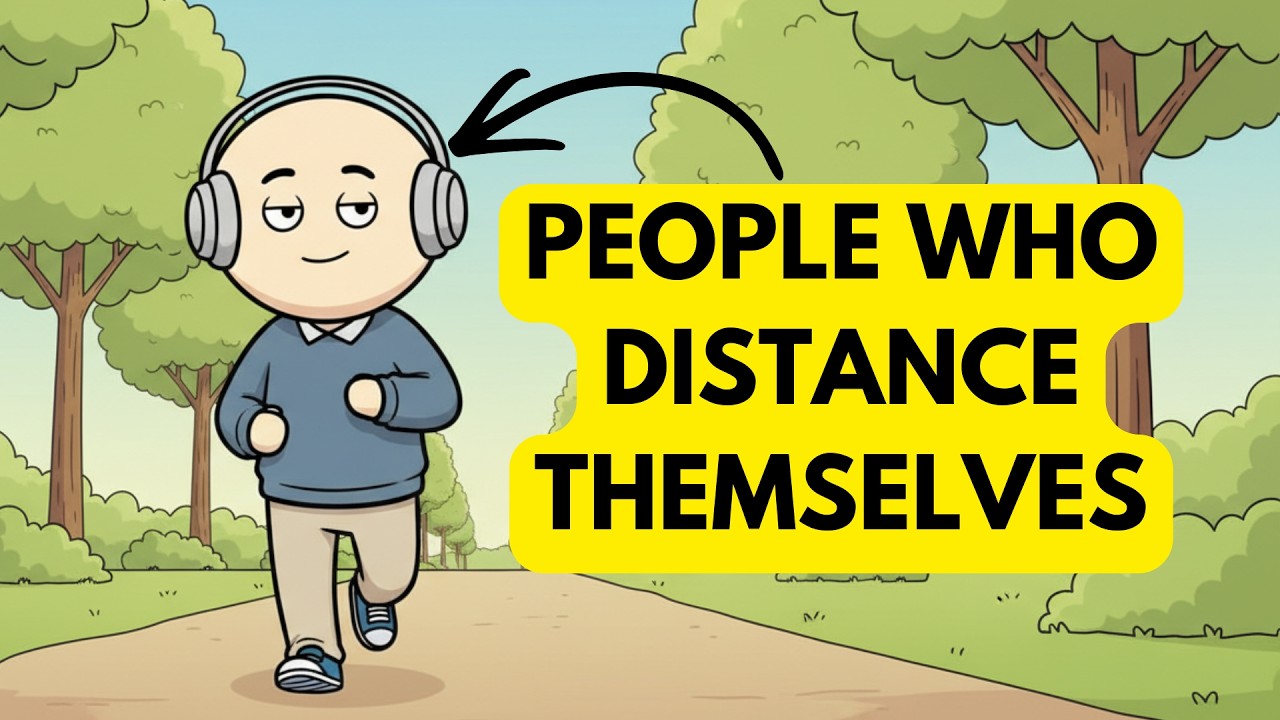
Psychology of People Who Distance Themselves from Others
Why do some people choose distance instead of connection? In this video, we explore the psychology of people who distance themselves, what it reveals about personality, emotional boundaries, and the hidden reasons behind pulling away from others. Discover the mindset, behaviors, and psychological patterns that explain why some individuals feel more comfortable keeping space in relationships.
📊 Sources & Further Reading
Bowlby, J. (1969). Attachment and Loss, Vol. 1: Attachment. Basic Books.
Ainsworth, M. D. S., et al. (1978). Patterns of Attachment. Erlbaum.
Hazan, C., & Shaver, P. (1987). Romantic love conceptualized as an attachment process. Journal of Personality and Social Psychology, 52(3), 511–524.
Aron, E. N. (1996). The Highly Sensitive Person. Broadway Books.
Aron, E. N., & Aron, A. (1997). Sensory-processing sensitivity and its relation to introversion and emotionality. Journal of Personality and Social Psychology, 73(2), 345–368.
Gross, J. J. (1998). The emerging field of emotion regulation. Review of General Psychology, 2(3), 271–299.
Mikulincer, M., & Shaver, P. R. (2007). Attachment in Adulthood. Guilford Press.
Firestone, R. W., & Catlett, J. (1999). Fear of Intimacy. APA Books.
Bartholomew, K., & Horowitz, L. M. (1991). Attachment styles among young adults. Journal of Personality and Social Psychology, 61(2), 226–244.
Bowen, M. (1978). Family Therapy in Clinical Practice. Jason Aronson.
Levenson, R. W., Carstensen, L. L., & Gottman, J. M. (1994). Influence of age and gender on affect, physiology, and their interrelations. Journal of Personality and Social Psychology, 67(1), 56–68.
#Psychology #HumanBehavior #SelfAwareness #Mentality #PsychologyFacts
Информация по комментариям в разработке