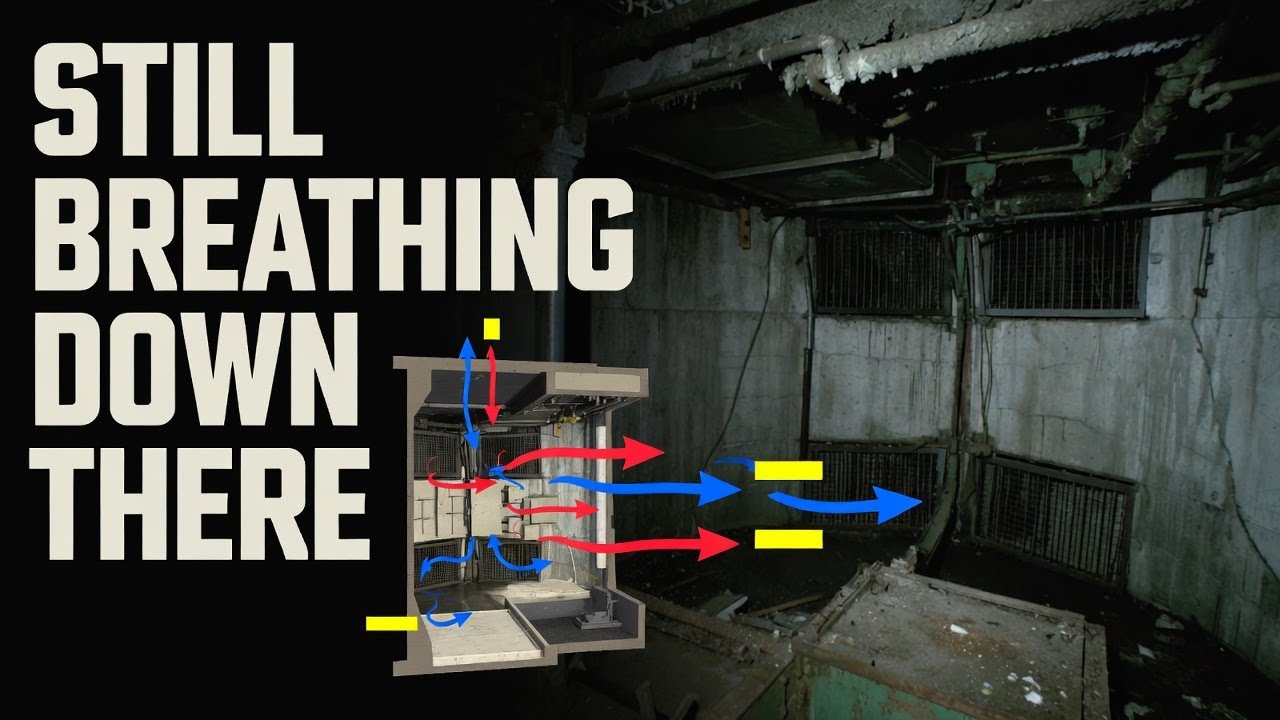
During World War II, millions of civilians and soldiers lived underground for extended periods of time. These were not short emergency shelters. Many were deep bunkers, buried factories, command centers, and civilian air-raid shelters that remained sealed for weeks or months. Yet they stayed breathable, dry, and functional with no modern HVAC systems, no digital sensors, and often no electricity at all.
In this video, we break down nine WWII ventilation systems that kept underground shelters fresh and livable under extreme conditions. These designs relied on physics, pressure differentials, hand-powered mechanisms, and intelligent layout rather than fragile technology. Many of these systems still outperform modern bunker and shelter designs, especially in grid-down or off-grid scenarios.
You’ll learn how WWII engineers used vertical intake and exhaust shafts, chimney-effect airflow, baffle walls, manual ventilation fans, moisture drainage channels, distributed vent layouts, and early filtration methods to solve problems that still plague modern underground builds. These were not theoretical ideas. They were field-tested under bombing campaigns, blackouts, and material shortages.
This video is for history enthusiasts, engineers, builders, survivalists, and anyone interested in how practical wartime knowledge has quietly disappeared from modern construction. The lessons here are still applicable today, whether you’re building a storm shelter, root cellar, underground workshop, or simply want to understand how people survived below ground long before modern conveniences.
If you appreciate serious historical analysis, practical engineering knowledge, and lessons that still matter decades later, this channel is built for you. Watch closely, take notes, and consider how these forgotten WWII systems could still save lives today.
WWII bunker ventilation, World War 2 shelters, underground ventilation systems, WWII engineering, air raid shelter design, bunker airflow, underground survival, WWII civil defense, off grid ventilation, survival bunker design, historical engineering, prepper shelter ideas, underground living history, WWII technology, ventilation without power, manual ventilation systems, bunker history, shelter construction tips, survival engineering, forgotten WWII technology
Информация по комментариям в разработке