Growing up without siblings shapes you in ways that often go unnoticed — even by you.
This video explores the psychology of people who grew up without siblings, not as a deficit or advantage, but as a distinct psychological formation. Through a calm, observational lens, it looks at how solitude, independence, and quiet environments influence emotional development, relationships, and inner life over time.
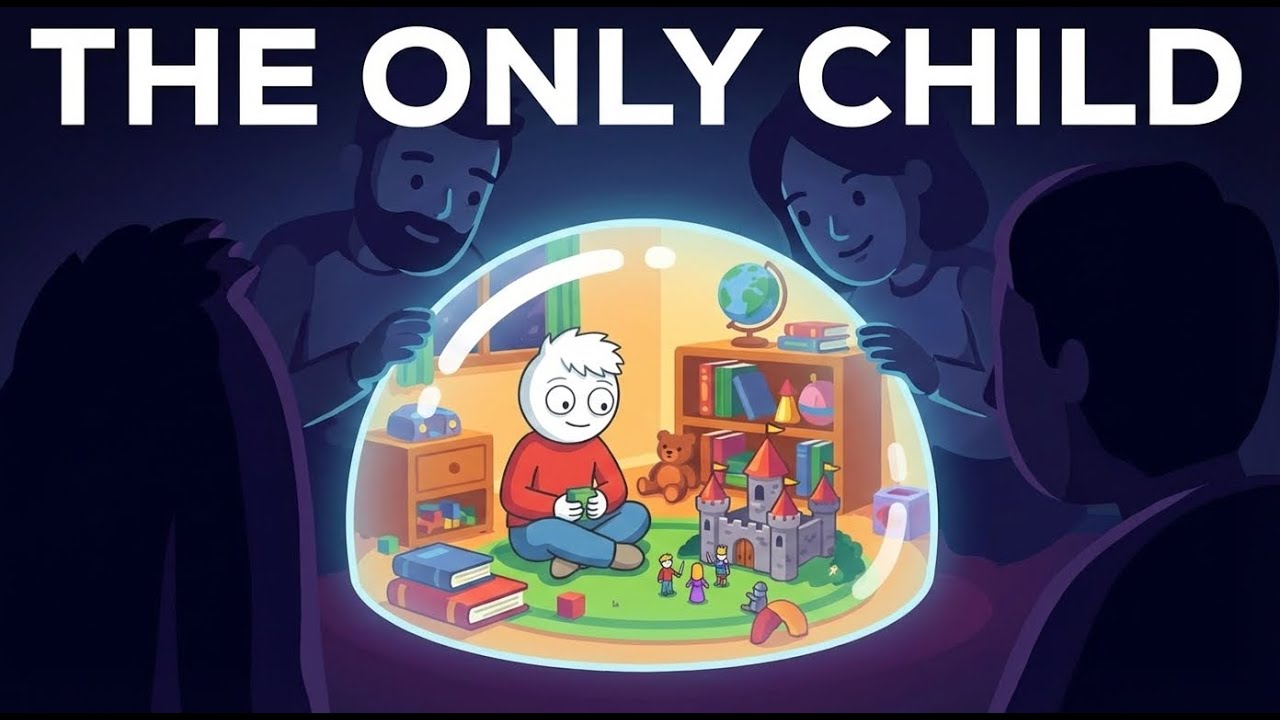
For many only children, being alone was not an exception — it was the baseline. Silence was familiar. Personal space was unquestioned. Time stretched differently. This early environment played a powerful role in childhood psychology, shaping how attention, imagination, and self-regulation developed. Without siblings to automatically share space, conflict, or companionship, the mind learned to fill gaps internally.
This experience often creates a strong inner world. Long hours spent alone foster reflection, imagination, and emotional depth. In human behavior, this shows up later as comfort with solitude, an ability to self-entertain, and a tendency toward introspection. Many people drawn to deep thinker psychology recognize this pattern immediately — the sense that silence is not empty, but full.
At the same time, growing up without siblings can shape how conflict and connection are handled. Without early peer-level disagreements at home, conflict may feel heavier later in life. Arguments can feel high-stakes rather than casual. In relationship psychology, this can translate into either avoidance of conflict or intensity when it does arise. Not because of weakness, but because the nervous system learned conflict differently.
Another defining theme is emotional independence. Many only children develop strong self-reliance early, not as a philosophy, but as a necessity. If something needed to be done, they learned to do it themselves. If fear or boredom appeared, they learned to manage it internally. Over time, this becomes a default setting. In self reliance psychology, this often shows up as capability and resilience — but also as difficulty asking for help.
Family dynamics also play a role. In family dynamics psychology, being the only child often means receiving undivided attention. That attention can feel supportive, but it can also feel heavy. Achievements carry weight. Mistakes feel amplified. Without siblings to distribute expectations, pressure can quietly settle into adulthood, shaping perfectionism, anxiety, or a deep sensitivity to disappointing others.
This video does not frame these patterns as problems to solve. It frames them as adaptations. In the psychology of people, growing up without siblings doesn’t damage a person — it forms them. It creates a particular relationship with space, silence, and connection that continues long after childhood ends.
Many who grew up this way identify with introvert psychology, though not all only children are introverts. What they often share is a preference for depth over quantity in relationships. Friendships are chosen carefully, not casually. When connection happens, it matters. Losses can feel more absolute because there is no built-in sibling relationship to fall back on.
This reflection also touches gently on loneliness psychology — not the loneliness of being alone, but the loneliness that can arise from being deeply self-contained. When you are used to processing internally before sharing externally, others may sense a distance they can’t quite name.
As a piece of psychology explained through lived experience, this video avoids labels and prescriptions. It sits quietly at the intersection of mental health, happiness, identity, and adaptation. It’s for those interested in psychology videos that explore subtle emotional patterns, including darker psychology themes, without dramatizing them.
If you grew up without siblings, parts of this may feel uncomfortably familiar. Not because something is wrong — but because something was shaped. And that shaping still lives in how you relate, how you rest, how you choose people, and how you sit with yourself in quiet moments.
You are not missing something.
You are carrying something.
And you always have.

Информация по комментариям в разработке