Welcome, everyone! Today, we're diving into a topic that's absolutely critical for safety on any construction site, and it's something we all need to be aware of: the hazards associated with cranes. These incredible machines are vital for progress, but their immense power demands our utmost respect and vigilance.
When we talk about crane hazards, we're really talking about potential risks that can arise from a variety of factors. One of the most immediate concerns is a *suspended load**. Imagine a massive weight hanging precariously; if that load isn't secured properly or if there's an unexpected shift, it can lead to serious accidents. This ties directly into the risk of **overloading* the crane. Every crane has a specific weight limit, and exceeding it puts immense stress on the equipment, increasing the likelihood of failure.
Then there's the terrifying prospect of a *crane collapse**. This is often the result of a combination of factors, but it underscores the importance of every single safety protocol. A significant contributor to these risks can be a **not competent operator* or a **not competent rigger**. These individuals are the eyes, hands, and brains behind the crane's operation and rigging. Their training, experience, and understanding of the equipment and the load are paramount. Without that expertise, even the best equipment can become dangerous.
Communication is also key. An *improper signal* can lead to disastrous misunderstandings between the operator and the ground crew. This is why clear, standardized signaling is so important. We also need to consider the **bad grounding condition**. A stable foundation is essential for any heavy machinery, and if the ground isn't firm and level, the crane's stability can be compromised.
We also have to be mindful of our surroundings. *Adjacent near structures* require careful planning to ensure there's no risk of collision or damage. And as mentioned, clear communication through *improper signal* (yes, it's worth repeating how crucial this is!) is vital.
Furthermore, *bad weather conditions* can dramatically alter the safety landscape. High winds, heavy rain, or lightning can make crane operations incredibly risky. And we absolutely cannot forget about **overhead power lines**. These are invisible dangers that can have catastrophic consequences if a crane or its load comes into contact with them.
Finally, the integrity of the equipment itself is non-negotiable. *Improper tools and equipment**, including faulty rigging, can be the weakest link in the safety chain. This is why using the right, well-maintained tools and ensuring **improper rigging* is never a factor is so incredibly important.
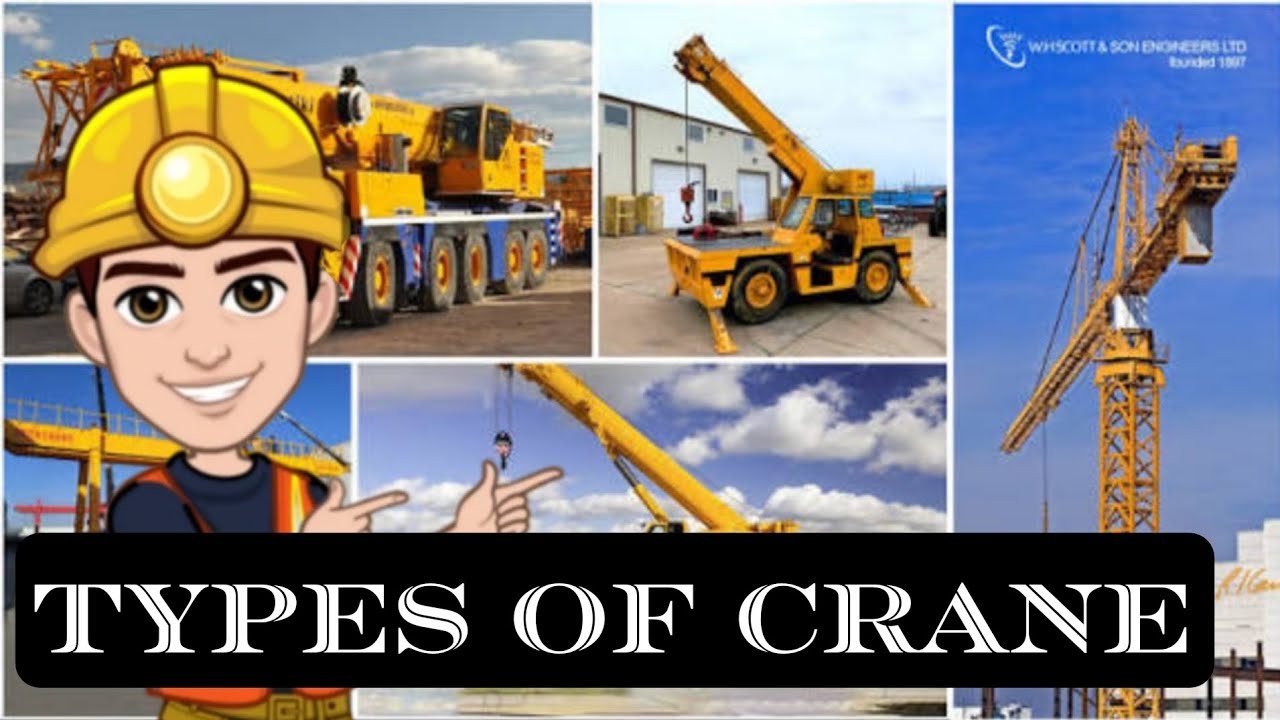
By understanding these potential hazards – from suspended loads and overloading to operator competence and environmental factors – we can all contribute to a safer working environment. It’s about proactive awareness and a commitment to There is no single number of crane types, as they can be categorized in various ways (e.g., by mobility, structure, or function), but there are many common types, including mobile cranes, tower cranes, and overhead cranes. Mobile cranes are mounted on wheels or tracks, while tower cranes are large, fixed structures. Overhead cranes move loads horizontally along a fixed path, and other common types include gantry and jib cranes.
Categories of cranes
Mobile Cranes: Mounted on wheels or tracks, these can be moved to different locations. Examples include:
Crawler Cranes: Mounted on tracks for stability and heavy lifting on uneven terrain.
Truck-Mounted Cranes: Attached to a truck for mobility.
Rough Terrain Cranes: Designed to handle rough, uneven job sites.
Tower Cranes: Large, permanent or semi-permanent structures typically used in high-rise construction.
Static Cranes: Fixed to the ground or a building, lifting loads along a fixed path. Examples include:
Overhead Cranes (or bridge cranes): Move along a runway and bridge structure.
Gantry Cranes: Similar to overhead cranes but are supported by legs that move along a track.
Specialized Cranes: Designed for specific purposes. Examples include:
Jib Cranes: Feature a horizontal arm (jib) mounted on a wall or floor-mounted column.
Floating Cranes: Mounted on a barge or boat to work on water.
Telescopic Cranes: Have a jib that can extend or retract. #safetyfirst #lifeisbutadream #safety #love #haveitoldyoulatelythatiloveyou #facts #safetyawareness #september2018 #automobile

Информация по комментариям в разработке