The Cap and the Seal: Why a Tap Matters
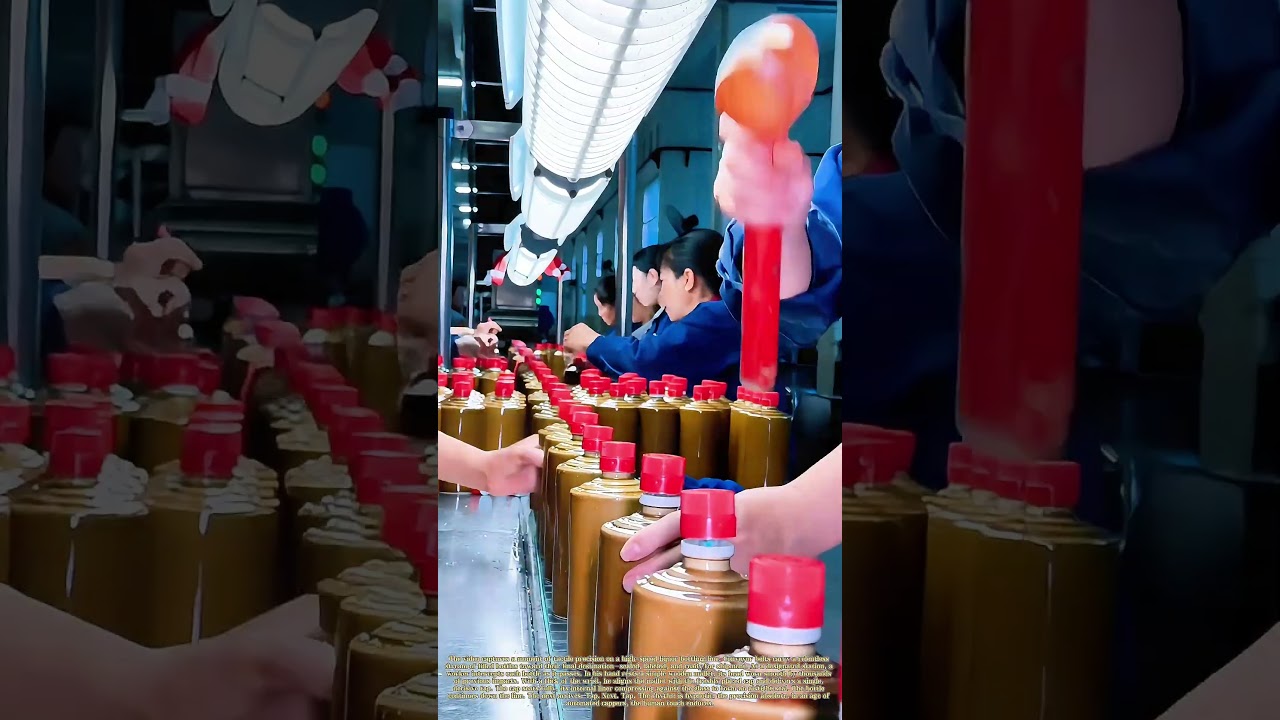
A bottle cap is more than a metal disk; it is a precision engineered component designed to create an airtight barrier between the liquor and the atmosphere. The liner inside the cap—often cork, plastic, or composite—must be compressed uniformly against the bottle’s rim to achieve this seal. Insufficient compression invites leakage and oxidation; excessive compression can crack the glass or deform the cap. The worker’s mallet delivers exactly the force required, calibrated by years of experience rather than torque specs.
The Mallet’s Material and Touch: Wood is chosen deliberately. Metal would mar the cap’s finish or transmit excessive shock to the bottle. Plastic might lack the necessary inertia. The wooden mallet provides a forgiving but decisive impact, its slight resilience absorbing micro-vibrations that could otherwise stress the glass. The worker’s wrist, not his arm, supplies the power—a flick, not a swing.
Timing and the Moving Target: The bottles do not stop for the worker; they move continuously on the conveyor. The tap must occur within a fraction of a second window as the bottle passes through the workstation. The worker’s eye tracks the approaching cap, his arm swings in anticipation, the mallet meets metal at exactly the right instant. A mistimed tap misses entirely or strikes the shoulder of the bottle.
Quality Feedback Through the Handle: The worker feels the quality of each seal through the mallet’s handle. A properly seated cap produces a solid, resonant thump. A cap that fails to seat—perhaps due to a deformed liner or misaligned thread—returns a dull, deadened thud. The worker hears and feels this difference, sometimes rejecting the bottle before it reaches the next station.
The Persistence of Manual Labor: Automated cappers exist and dominate large-scale production. But on lines with frequent bottle changes, unusual cap sizes, or delicate glassware, the human touch remains superior. The worker’s hand adapts instantly to variations that would require machine retooling. The mallet, unchanged for centuries, remains the most flexible capping tool ever invented.
The Rhythm of Repetition: Hour after hour, the bottles flow and the mallet falls. The worker’s body adapts to the rhythm, entering a state of focused repetition that is neither boredom nor alertness but something between—a trance of productivity. The taps become a heartbeat, marking the line’s steady pulse. The worker, integrated into the machine, becomes its most sensitive component.
The line continues, bottles marching toward their destinations. The worker’s mallet rises and falls, each tap a commitment to quality, a promise that the liquor inside will reach its drinker unchanged by time or transport. The worker does not think about this promise; he simply taps, relying on hands that have performed this motion ten thousand times before. The caps seat, the seals hold, the bottles pass. At the end of the shift, the worker will set down the mallet, flex his wrist, and walk away. The line will stop, then start again with the next shift, the next worker, the next ten thousand taps. The liquor, oblivious to the labor that sealed it, waits in its glass prison, patient and perfect. The mallet, worn but functional, waits beside the line, ready for tomorrow’s rhythm.

Информация по комментариям в разработке