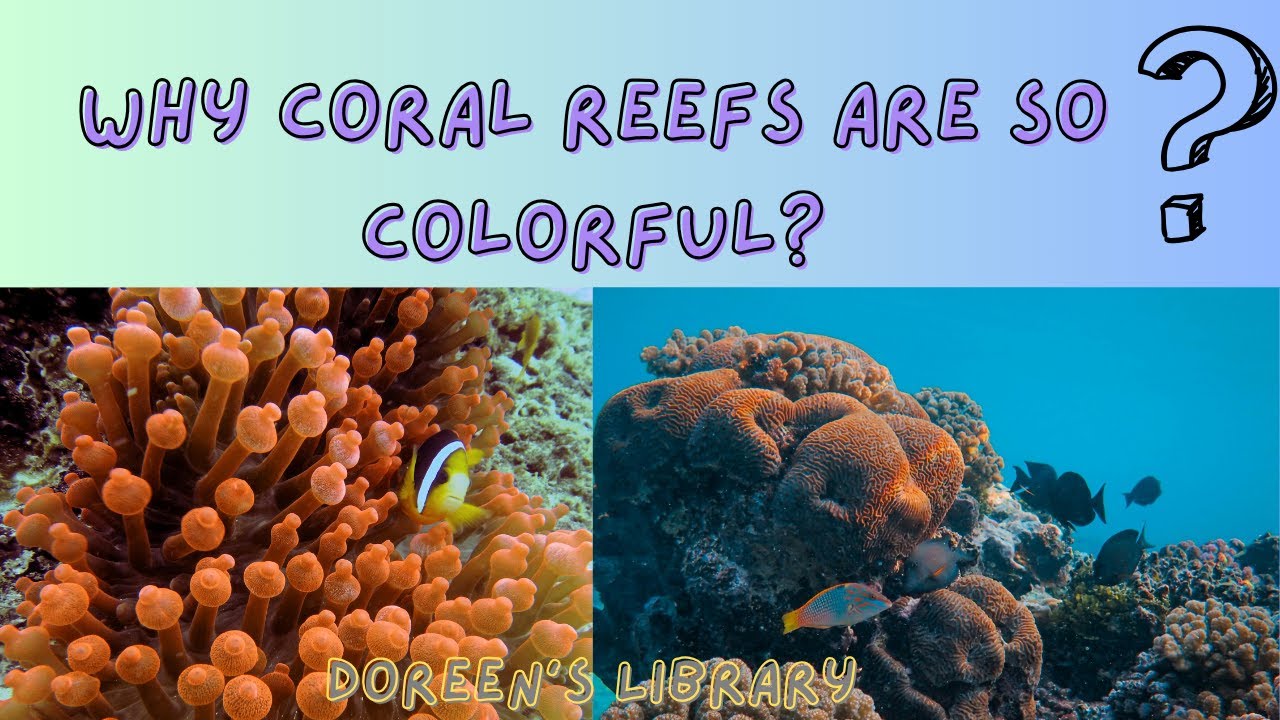
The vibrant colors you see in healthy coral reefs primarily come from tiny, single-celled algae called zooxanthellae (pronounced: zoh-oh-zan-THEL-ee). The Symbiotic Relationship: Most reef-building corals (called stony corals) have a special, mutually beneficial relationship with these algae. The coral polyp (which is an animal, like a tiny anemone) provides the zooxanthellae with a protected home within its tissues, as well as compounds they need for photosynthesis (like carbon dioxide and waste products).
Algae's Contribution: In return, the zooxanthellae, through photosynthesis using sunlight, produce carbohydrates (sugars), oxygen, and other nutrients. These nutrients provide up to 70-90% of the coral's food and energy needs!
The Color Connection: The zooxanthellae contain various pigments (like chlorophyll, just like plants) that give them their color – often shades of brown, yellow, green, or red. Since coral polyps themselves are mostly transparent, the color of these algae living inside them shines through, creating the stunning rainbow of colors we admire. Some corals also have their own pigments, but the algae are the main source of the reef's vibrant palette.
When you look at a coral, you're actually seeing a colony of thousands, sometimes millions, of tiny individual animals called polyps.
Each polyp is a soft, cylindrical animal with a mouth surrounded by a ring of tentacles. It resembles a tiny sea anemone.
Skeleton Builders: Reef-building corals are "stony corals" because they create a hard, external skeleton made of calcium carbonate (limestone). Each polyp secretes this calcium carbonate cup around and beneath itself. Over time, as polyps grow and new polyps bud off, they add layers to this skeleton, slowly building the massive reef structures we see. The living coral is only a thin layer on the surface of this massive, accumulated skeleton.
Photosynthesis (via Zooxanthellae): this is their primary food source during the day when there's sunlight.
At night, or when the zooxanthellae aren't actively photosynthesizing, coral polyps extend their tentacles. These tentacles have stinging cells called nematocysts (like jellyfish) which they use to capture tiny drifting animals (zooplankton) from the water. They then pull the captured food into their mouths.
Mucus Feeding: Some corals also produce a mucus layer that traps fine organic particles, which they then consume.
Colony Connection: Within a colony, individual polyps are connected by a thin layer of living tissue. This means food captured by one polyp can be shared with others in the colony.
Yes, touching corals can absolutely harm and even kill them.
Human touch, even light, can easily: Tear or damage this tissue: This exposes the underlying skeleton to infections, diseases, and algal overgrowth.
Remove the protective mucus layer: Corals have a natural, slimy mucus layer that protects them from bacteria, viruses, and sediment. Touching them can rub off this vital protective barrier, leaving them vulnerable.
Introducing Harmful Substances:
Touching or kicking sand near corals can stir up sediment, which can then settle on the coral polyps. This smothers them, blocks sunlight from reaching their zooxanthellae, and makes it harder for them to feed. Many corals, especially branching or plate corals, are incredibly fragile. Even a slight bump from a fin or a hand can break off pieces that took decades or even centuries to grow. These broken fragments often die. When corals are stressed, they retract their polyps, which means they stop feeding effectively and are more susceptible to other threats.
LOOK, BUT DON'T TOUCH. Corals are living, fragile animals, not rocks to be handled.
This leads us to the concept of coral bleaching, which is when corals lose their color. When corals are stressed by environmental changes they expel their symbiotic zooxanthellae algae. Without the algae, the coral's transparent tissue reveals its underlying white calcium carbonate skeleton, making it look "bleached."
A bleached coral is not dead immediately. It's severely stressed and essentially starving, as it has lost its primary food source. It can survive for a period, relying solely on filter feeding.
Yes, sometimes. If the stressor (e.g., high water temperatures) subsides quickly enough (within a few weeks to a couple of months), the coral can re-acquire zooxanthellae from the water and gradually regain its color and health. No, not always. If the stressful conditions persist, or if the coral is repeatedly stressed, it will eventually die from starvation or disease.
Even if corals do recover their color, it takes a long time – often 9-12 years for a reef to significantly recover from a major bleaching event, and that's only if there are no new disturbances during that period. Also, even recovered corals may have reduced growth rates and reproductive capacity, hindering future reef replenishment.
Never Stand on Corals: Stand only on sandy bottoms.

Информация по комментариям в разработке