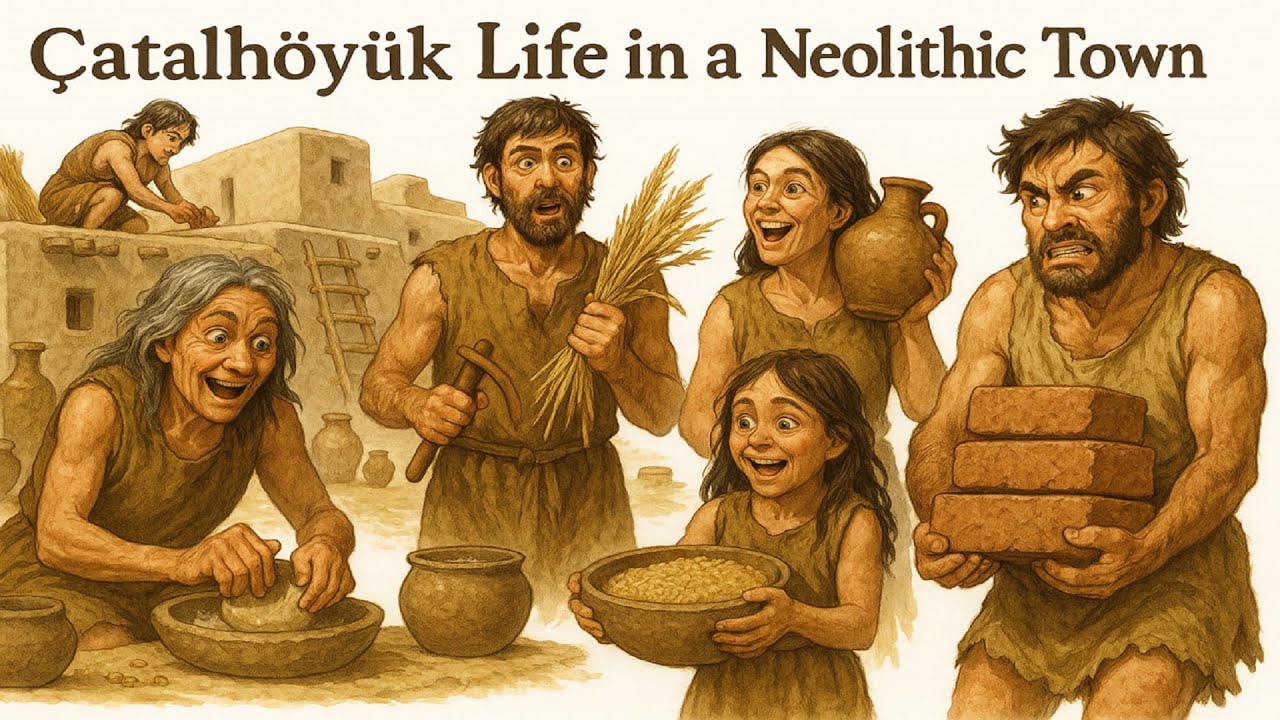
Step back nearly 9,000 years and walk through the honeycomb streets of Çatalhöyük, one of the world’s oldest Neolithic towns. Nestled on Turkey’s Konya Plain, this extraordinary settlement thrived from around 7500 to 5600 BC, reaching a population of up to 8,000 people at its height
Unlike modern layouts, Çatalhöyük had no streets—homes were tightly packed, entered through rooftops, creating a seamless labyrinth of mud‑brick dwellings like cells in a hive
. Inside, compact living spaces (around 25 m²) featured benches, platforms, hearths, and creative storage solutions
. Beneath the floors lay intricate burials, often adorned with beads, floral remains, and personal trinkets—a powerful window into intimate domestic rituals
Walls came alive with vibrant murals and plastered reliefs—with handprints, animals, abstract motifs, and even a bird’s‑eye map marking a volcanic eruption—offering glimpses of symbolic life and Neolithic artistry
. The famous Seated Woman figurine, a terracotta Mother Goddess from ≈6000 BC, symbolizes fertility and feminine deities, reflecting the spiritual dimensions of the settlement
Residents relied on a diverse agro‑ecology: cultivating cereals, pulses, fruits, nuts, flax, and mustard, while also domesticating sheep, goats, and cattle—highlighting an adaptive early agricultural lifestyle
. With such wealth of archaeological material, Çatalhöyük continues to inform our understanding of early settled life, complex social organization, and artistic expression.
Whether you're drawn to ancient architecture, prehistoric art, or early human rituals, a journey into Çatalhöyük is a step into the cradle of civilization, revealing how our ancestors shaped home, community, and belief.
#Çatalhöyük
#NeolithicTown
#AncientTurkey
#NeolithicArchitecture
#HoneycombCity
#EarlyCivilization
#Archaeology
#NeolithicArt
#MotherGoddess
#AncientMurals
#PrehistoricLife
#SettledSocieties
#MudBrickHomes
#NeolithicFarming
#AncientUrbanism
Информация по комментариям в разработке