Set - Also known as Seth, Setesh, Setekh and Sutekh.
Were the ancient Egyptian, Greek, and Roman gods merely myths or something more? Are we truly wiser than all the ages to dismiss them so easily? If they were immortal, are they still alive?
What if the Egyptian god Set wasn’t a villain - but something far more powerful and terrifying?
He has been awake since before the breaking of the first silence.
Was Set, the Egyptian god of chaos and war good or evil? What is the connection between ancient olympian gods - later roman gods and celestial bodies in our solar system?
Set: god of chaos, killer of Osiris... or the ancient prototype of the Gnostic demiurge?
Across Egypt, Greece, and Rome, one dark figure keeps reappearing. Set was never just a myth.
In this in-depth breakdown, we look into Set’s hidden identity - connecting him to other gods, the Gnostic archons, the Demiurge, and even Satan himself. Explore how Set evolved from a desert storm god to a symbol of darkness, rebellion, and illusion. We compare Set to Greek figures like Typhon and Hades revealing deep parallels across ancient mythologies.
But this time, we’ll skip his comparisons with the Roman god Kronos (Saturn) and other figures like Baal, Ahriman, Lucifer, and others or the parallels with Belial group vs. Amelius group.
Blending Gnostic philosophy, esoteric symbolism, and cinematic visuals, this video exposes how Set may represent the corrupt ruler of the material world. Is he the true villain or a misunderstood force of balance? Discover the occult truths behind Set.
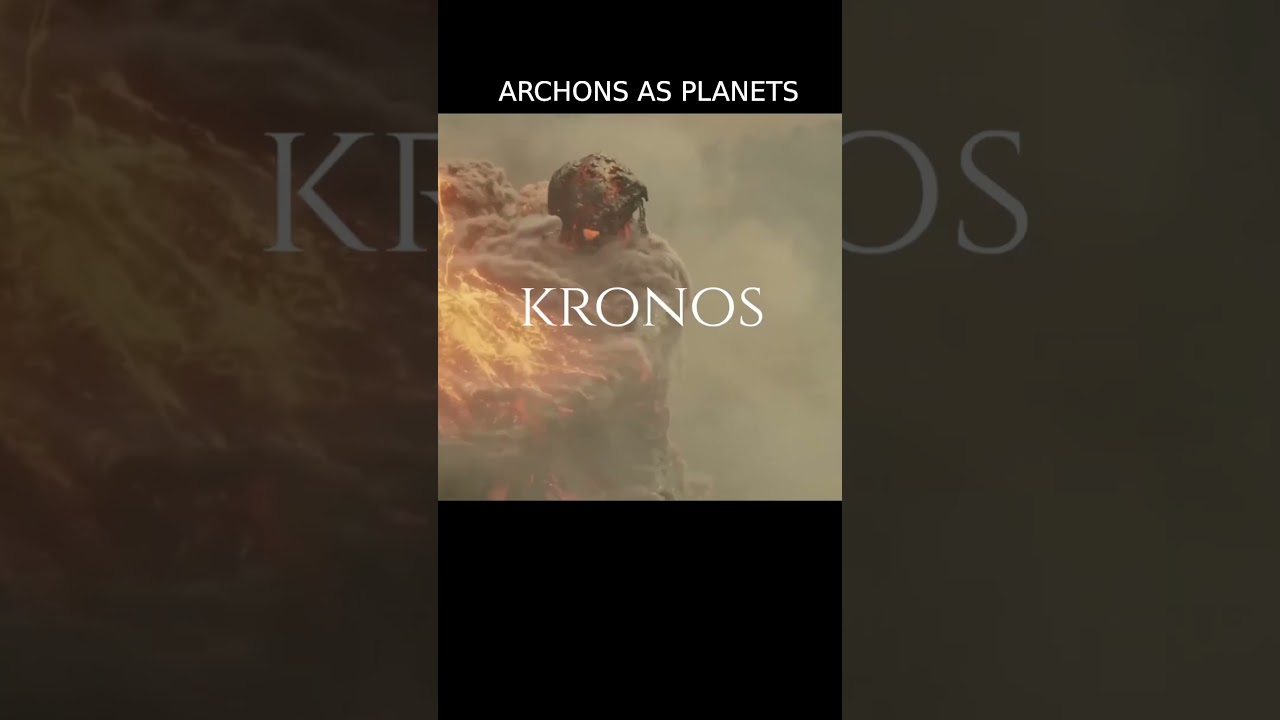
Before the Nag hammadi library was discovered, very little was known about the gnostic teachings. Are the archons celestial bodies?
The Church attacked Gnosticism vigorously and relentlessly, recognizing these mystical philosophers as being the most formidable adversaries to the temporal power of Christian theology.
In the simplest arrangement of the Gnostic concept of the godhead, we find first the universal Logos. “He who stood, stands, and will stand.” By nature and substance unknowable, he is the incorruptible form who projects from himself an image, and this image ordains all things. From his own eternal soul and imperishable nature That Which Abides emits three hypostases, which Simon Magus called Incorruptible Form, the Great Thought, and the Universal Mind.
Ialdabaoth, corresponds to Zeus in Orphic and Platonic metaphysics, but he is believed to be Saturn/Kronos, Ball, Apophis and others as well. He is called the Demiurge, or the Lord of the World. The Gnostics believed that it was this Demiurge, to whom Jesus referred when he spoke of the prince of the world who had nothing in common with him. The Demiurge was the personification of matter, the monad of the material sphere, the seed of the world within, which locked the patterns of all generated things. Ialdabaoth gave birth out of himself to six sons, who together with their father, became the seven planetary spirits. These were called the seven archons (governors) and correspond with the guardians of the world described by Hermes. Their names in order according to Origen are as follows:
Ialdabaoth (Saturn)
Iao (Jupiter)
Sabaoth (Mars)
Adonaios (the Sun)
Astaphaios (Venus)
Ailoaios (Mercury)
Oraios (the Moon)
Please consider LIKING the video, SUBSCRIBING to the channel, and SHARING the links. These simple actions go a long way in supporting this channel and are truly appreciated!
Thank you!
@ScepticMystic
#Set #EgyptianMythology #archons #seth #occult #demiurge #AncientGods #mythologyexplained #GnosticMysticism #satan #devil #apophis #yaldabaoth #gnosticism #gnostic

Информация по комментариям в разработке