The Rescue Plane That Vanished Searching for Flight 19 | 3 hours of aviation mysteries to sleep to
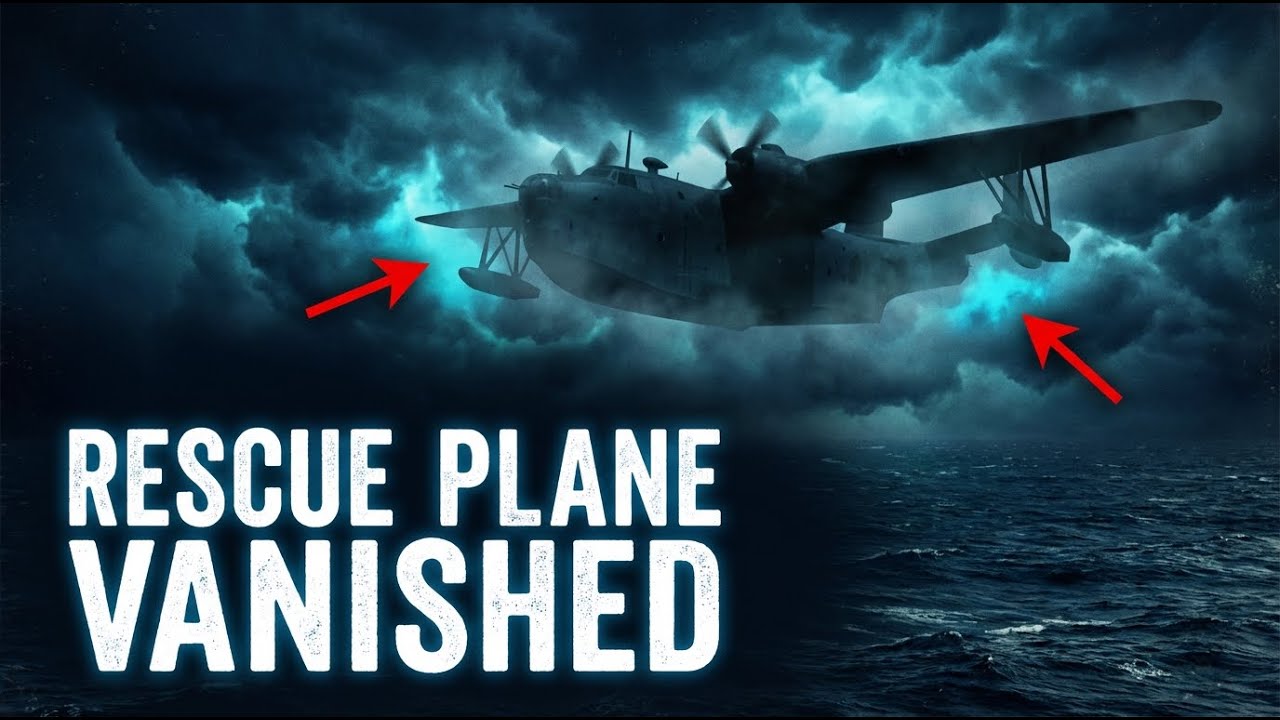
Let the world fade away as we journey back to December 5, 1945, to the warm waters off Florida's coast where one mystery would spawn another, even deeper enigma. This is the story of Training 32, a Martin PBM-5 Mariner flying boat that took off to rescue the missing Flight 19 and instead vanished completely, leaving behind questions that haunt aviation history to this day.
As you settle into relaxation, picture the Martin PBM-5 Mariner—a massive twin-engine flying boat with a wingspan of 118 feet, designed for long-range patrol and rescue operations. She carried a crew of thirteen men that evening, led by Lieutenant Walter Jeffrey. Their mission seemed straightforward: search for five missing Avenger torpedo bombers lost somewhere over the Atlantic. But Training 32 would never return.
Our story begins at 7:27 PM when the Mariner lifts off from Banana River Naval Air Station. The crew is experienced, the aircraft well-maintained. Weather conditions are poor but manageable—scattered storms, rough seas, but nothing these seasoned men haven't handled before. Radio contact is established as they head toward the last known position of Flight 19.
Just twenty-three minutes into the flight, at 7:50 PM, something happens. The exact sequence remains unknown, but witnesses aboard the SS Gaines Mill, a merchant ship, report seeing an enormous explosion in the sky—a ball of fire descending into the ocean. The location matches Training 32's flight path perfectly. Then silence. The Mariner simply ceases to exist.
Let your breathing slow as you contemplate what those final moments might have held. The PBM-5 Mariner earned a notorious nickname among crews: the "flying gas tank." Her fuel tanks were prone to vapor accumulation, and a single spark—from static electricity, an electrical short, even a crew member's cigarette—could trigger catastrophic explosion. Was this Training 32's fate? A sudden flash, no time to radio distress, the aircraft disintegrating in midair?
But here's where the mystery deepens. Despite extensive searches covering hundreds of square miles, no confirmed wreckage was ever found. The SS Gaines Mill reported seeing the explosion and searched the area, finding an oil slick but no debris. Official Navy search operations the following days discovered nothing conclusive—no bodies, no recognizable aircraft parts, no life rafts. Thirteen men and a forty-ton aircraft vanished as completely as the very flight they'd gone to rescue.
Allow yourself to drift with the unanswered questions. If the Mariner exploded at altitude, debris should have scattered across the surface. If she went down intact, some trace should have remained. The waters off Florida's coast, while deep in places, aren't the abyssal depths that could hide everything. Yet Training 32 left almost no physical evidence of her destruction.
Theories have emerged over the decades. The official explanation favors mid-air explosion due to fuel vapor ignition—a known vulnerability of the PBM-5 design. The timing matches the Gaines Mill report. But some researchers question whether that single witness account, observed from miles away in stormy conditions, truly captured Training 32's fate.
Alternative theories suggest structural failure in the severe weather, causing the aircraft to break apart before plunging into the sea. The Mariner, despite her size, had limitations in rough conditions. Others wonder if navigational error brought her down far from the assumed position, meaning searchers looked in the wrong place entirely.
The cruel irony haunts the story—rescuers becoming victims, the hunters lost like their prey. Flight 19's five aircraft carried fourteen men. Training 32 carried thirteen more. The rescue mission doubled the tragedy, and while Flight 19 remains famous, the Mariner's disappearance is often overshadowed, remembered mainly as a footnote to the larger mystery.
Let the gentle enigma carry you toward sleep. Imagine Training 32 in those final moments—whether sudden explosion or gradual descent into dark water. Picture Lieutenant Jeffrey and his twelve crew members, who set out to save lives and instead joined the ranks of the missing. There is something profound in their sacrifice, searching for lost souls while the sea prepared to claim them too.
The Atlantic off Florida holds countless secrets in her depths. If Training 32 rests there, she lies in darkness, perhaps still largely intact, a tomb for thirteen men who never came home. The currents may have scattered what little debris remained, or buried it beneath decades of sediment.
This 3-hour narrative is your companion through the night, a meditation on courage, the price of rescue, and the eternal mystery of that December evening when helpers became the helped, and the sky swallowed a flying boat whole.

Информация по комментариям в разработке