A playthrough of Namco's 1992 action-platformer for the TurboGrafx-16, Samurai Ghost.
This video shows two playthroughs of the game, each showing a different route. For the second game, at 37:26, I punched in a code to start from the third stage. (The split paths begin appearing in stage three. The first two stages are always the same.)
Namco had a ton of international hits throughout the 80s, but there were several that didn't make it out of Japan until much later. Their 1986 arcade game Genpei Toumaden (源平討魔伝) was among them, and it wasn't until its inclusion in Namco Museum Vol. 4 for the PlayStation (under the name "The Genji and the Heike Clans") in 1997 that westerners got to experience one of the company's most celebrated games. However, its direct sequel, the PC Engine-exclusive Genpei Toumaden: Kan no Ni (源平討魔伝 巻ノ弐), officially made its way to North America in mid-1992, a few months behind its Japanese debut.
Set during the Kamakura period, Samurai Ghost puts you in the blood-soaked shoes of Kagekiyo, a twelfth-century samurai who was killed in the Genpei War. He was resurrected to take out Yoritomo, the warlord responsible for wiping out his people, and though Kagekiyo defeated him once, Yoritomo's forces are now staging a comeback. Swearing vengeance, Kagekiyo takes up his sword one last time to fight his way back from Hell.
In other words, as the back of the box puts it, "Defeat Yoritomo's ambition!"
Samurai Ghost is, in my opinion, one of the best hardcore action games on the TurboGrafx-16. There's a ton of nuance embedded in its unconventional control scheme. You can hold your sword in different positions, and each has its own advantages and drawbacks. You can run around with it raised over your head, poised to dramatically slash in a wide arc at a moment's notice, but that'll leave your body wide open. You can keep it at your side and sacrifice speed for sake of adaptability. Or, you can hold it out in front of you, ready to parry an incoming strike into a fierce counterattack. And that's just the setup! When you encounter the enemy, winning takes figuring out how to string your moves together without missing a beat. There's a lot to wrap your head around, and the game is unapologetically brutal, but it feels fantastic when everything comes together.
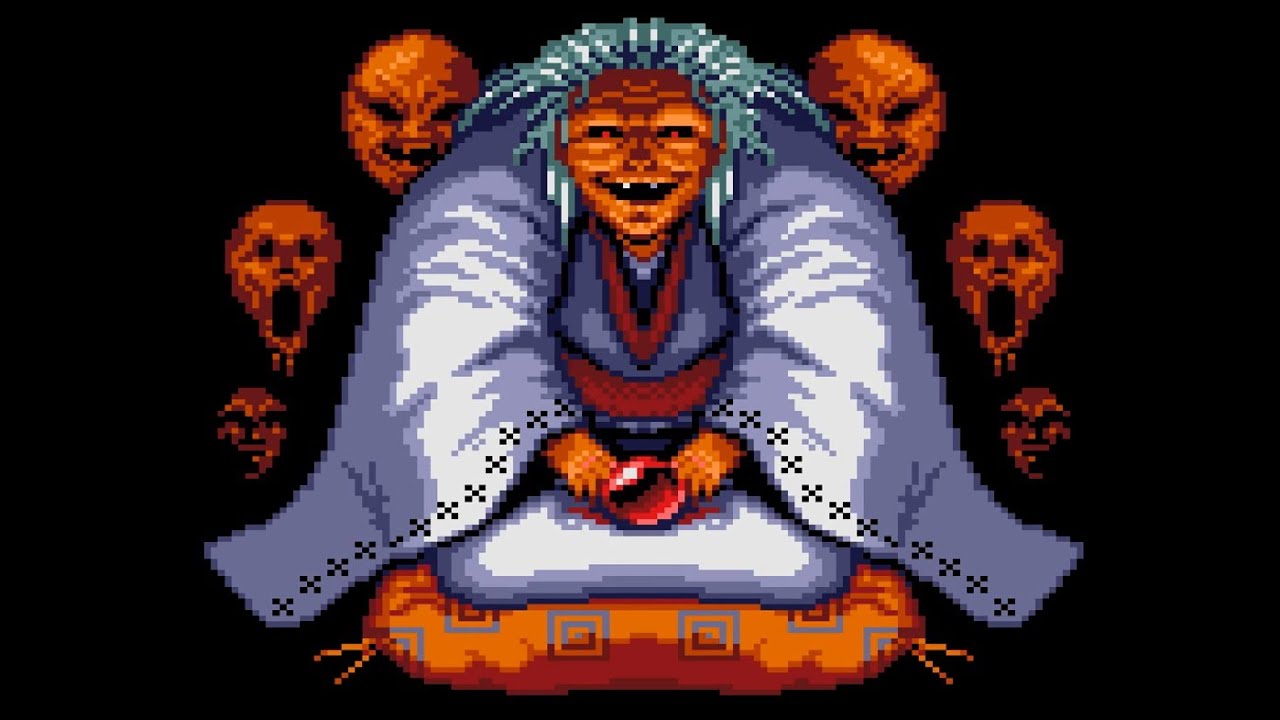
Not that you need to pick up a controller to know that this isn't your garden variety action game. Samurai Ghost is patterned after Genpei Toumaden's "big mode," which featured huge character sprites with independently articulated limbs. (Think Earnest Evans, but less dumb looking.) As awkward as it first appears in motion, the animation serves the gameplay well. The visual design of the stages and the music are also excellent, and there's an impressive amount of digitized speech, though it's all in Japanese (and much of it is unintelligible, even to native speakers).
Samurai Ghost is moody, bizarre, and extremely Japanese. If that piques your interest, be caution! Once it sinks its hooks in, you'll have a hard time tearing yourself away.
Kudos to the developer, Now Production. They don't get a lot of recognition, but they made awesome games.
_____________
No cheats (aside from the stage select code mentioned above) were used during the recording of this video.
NintendoComplete (http://www.nintendocomplete.com/) punches you in the face with in-depth reviews, screenshot archives, and music from classic 8-bit NES games!

Информация по комментариям в разработке