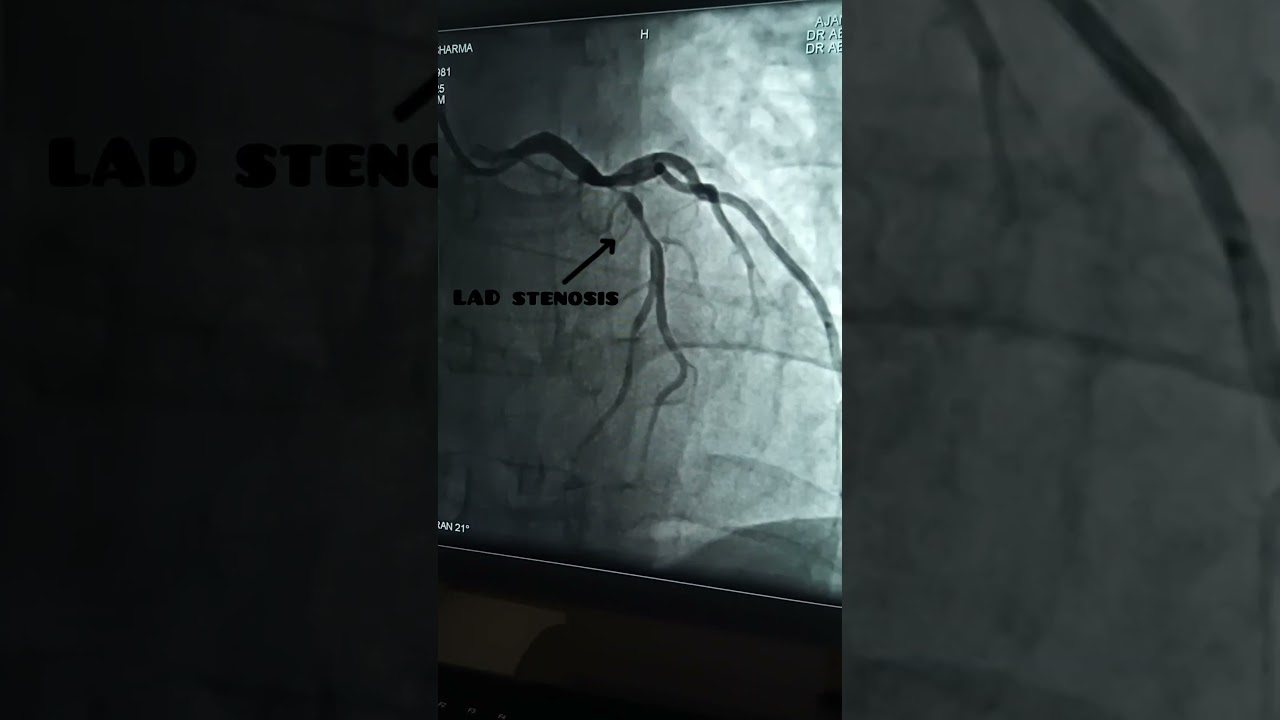
LAD stenosis means narrowing of the Left Anterior Descending artery, a major blood vessel supplying the heart, usually from plaque buildup (atherosclerosis). It reduces oxygen to the heart muscle, causing symptoms like chest pain (angina), shortness of breath, and fatigue, and can lead to severe heart attacks (widowmaker) if blocked, requiring urgent treatment like stents or bypass.
Causes & Risk Factors
Plaque Buildup: Cholesterol plaque hardens and narrows the artery.
Inflammation: Overactive inflammation can make plaques unstable.
Anatomy: A sharp angle (LM-LAD angle) or tortuosity (bendiness) can increase risk.
Risk Factors: Hypertension, high cholesterol (LDL), smoking.
Symptoms
Chest pain, pressure, or discomfort (angina)
Pain radiating to arms, back, neck, jaw
Shortness of breath, fatigue, weakness
Cold sweats, dizziness, nausea, palpitations
Diagnosis
ECG: Specific T-wave inversions (Wellens' pattern) can signal critical LAD stenosis.
Echocardiography: Doppler ultrasound can measure flow changes.
Angiography: The gold standard to visualize blockages.
Treatment
Medications: Statins (like Atorvastatin) to lower cholesterol, antiplatelets (Aspirin, Clopidogrel).
Percutaneous Coronary Intervention (PCI): Angioplasty and stenting to open the artery.
Coronary Artery Bypass Grafting (CABG): Surgery to reroute blood flow.
Emergency Care: Immediate attention for heart attack symptoms.
.
.
LAD stenosis means a narrowing or blockage (stenosis) in the Left Anterior Descending artery, a major blood vessel supplying the heart, usually due to plaque buildup (atherosclerosis), which reduces blood flow and can cause chest pain (angina) or a heart attack, with severe cases often treated with stents or bypass surgery.
What it means:
LAD (Left Anterior Descending artery): A crucial artery that branches off the left coronary artery and supplies oxygen-rich blood to a large part of the front and lower walls of the heart's main pumping chamber (left ventricle).
Stenosis: A narrowing or constriction of a bodily passageway, in this case, the artery.
Cause: Typically caused by atherosclerosis (plaque buildup from cholesterol) but can also involve blood clots.
Why it's important (The "Widowmaker"):
Blockage in the proximal (upper) LAD is known as a "Widowmaker" because it affects a large area of the heart muscle, leading to severe symptoms like chest pain (angina) or heart attacks (myocardial infarction).
Symptoms:
Chest pain, pressure, or squeezing, especially during exertion.
Treatment:
Percutaneous Coronary Intervention (PCI): Angioplasty and stenting (placing drug-eluting stents) to open the artery.
Coronary Artery Bypass Grafting (CABG): Bypass surgery to reroute blood flow.
In essence, LAD stenosis is a serious heart condition where a critical artery gets clogged, restricting blood flow and potentially leading to severe heart problems, requiring medical intervention to restore circulation
.
.
.
.
#HeartHealth, #Cardiology, #HeartDisease, #Fitness; medical community tags like #CardioTwitter, #CVImaging, #ACCImaging; and awareness/event tags such as #WorldHeartDay, #HeartWalk, and #iHeartScience.
#cardiology #interventionalcardiology #cardiologyfellow #pediatriccardiology #cardiologyconference #veterinarycardiology #littmanncardiologyiv #cardiologynurse #cardiologyiv #vetcardiology #littmanncardiology #mastercardiology #cardiologyresident #cardiologyiii #cardiologylife #womenincardiology #americancollegeofcardiology #cardiologyteam #sportscardiology #nuclearcardiology #cardiologydepartment #europeansocietyofcardiology #invasivecardiology #preventivecardiology #cardiologynurses #teamcardiology #cardiologyhospital #cardiologyfellowship #lovecardiology #cardiology
.
.
.
.
subscribe for more knowledge

Информация по комментариям в разработке