Psychology of People Who Love Being Alone
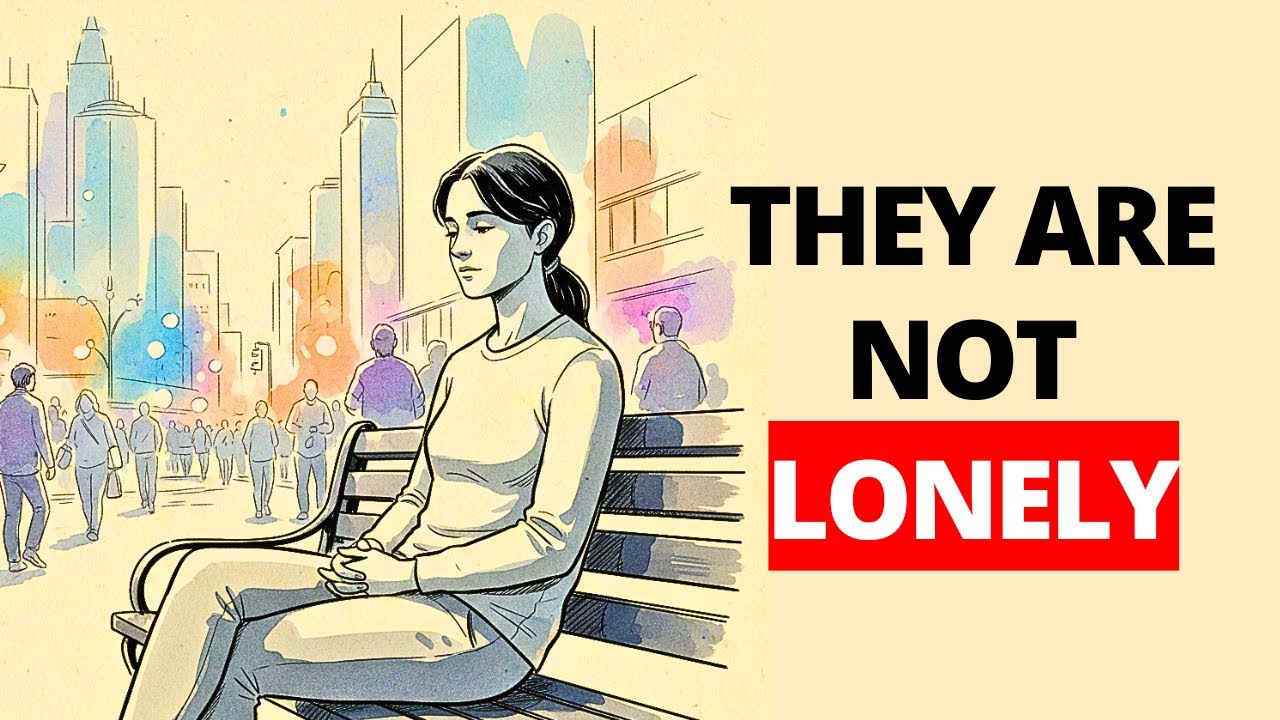
If you’ve ever felt a deep sense of relief when a social event was canceled, or if you find that your best ideas only surface when the house is completely silent, you aren't "antisocial"—you are likely navigating a high-performance neurological state known as Restorative Solitude. While society often pathologizes the desire to be alone, recent psychological research suggests that for a specific percentage of the population, solitude isn't a lack of connection—it’s a prerequisite for creativity, focus, and emotional regulation. Today, we uncover why your brain thrives in the quiet, why "The Lone Wolf" is a survival strategy for the modern age, and how your mind transforms isolation into an engine for personal growth.
In this video, we dive deep into the neurobiology of the "Independent Mind" and the psychological shifts that occur when we prioritize internal peace over external noise.
We explore:
The Default Mode Network (DMN): Why your brain’s most creative "Aha!" moments occur during solo stretches, and the science of how solitude activates the neural pathways linked to self-reflection and memory consolidation.
The Introvert Advantage: The psychological reason why "Lone Wolves" often possess higher emotional self-efficacy and why their social batteries aren't broken—they’re just wired for higher quality, not higher quantity.
The Mastery of Autonomy: Understanding the "Freedom Effect"—why people who choose solitude report significantly lower stress levels and a higher sense of control over their life's rhythm compared to those constantly seeking external validation.
The Social Battery vs. Social Need: Moving from the fear of being "lonely" to the mastery of being "alone," where solitude becomes a mental off-switch that protects you from the emotional burnout of the 24/7 digital age.
I believe in backing up my content with real science. You can find the peer-reviewed journals and psychological frameworks used for this script cited below.
Your solitude isn't your weakness; it’s your secret weapon.
📚 Scientific References & Further Reading:
On the Benefits of Solitude: Weinstein, N., Vuorre, M., Adams, M., et al. (2023). Balance between solitude and socializing: Everyday solitude time both benefits and harms well-being. Scientific Reports, 13(1). https://www.nature.com/articles/s4159...
On Creativity and Solitude: Bowker, J. C., et al. (2017). How do I love thee? Let me count the ways: Social withdrawal and creativity. Personality and Individual Differences. https://doi.org/10.1016/j.paid.2017.0...
On the Default Mode Network: Buckner, R. L., & DiNicola, L. M. (2019). The brain's default network: Updated anatomy, physiology and human genetic contexts. Nature Reviews Neuroscience. https://www.nature.com/articles/s4158...
On Social Withdrawal and Wellbeing: Nguyen, T. V., & Rodriguez, M. (2024). From “isolation” to “me-time”: Linguistic shifts enhance solitary experiences. Cognition and Emotion. https://www.tandfonline.com/doi/full/...
Medical Disclaimer: This content is for educational purposes only and does not substitute for professional medical advice, diagnosis, or treatment. Always seek the advice of a qualified healthcare provider regarding any mental or physical health condition. Reliance on any information in this video is solely at your own risk.
Psychology of the Lone Wolf, Why I Like Being Alone, Benefits of Solitude, Introvert Power 2026, The Grieving Brain, Social Withdrawal Psychology, Default Mode Network Creativity, Why Am I Antisocial, Loneliness vs Solitude, The Silent Elite, Self-Determination Theory, Deep Thinking Habits, Psychology of Independence, Introvert Success, Mental Health Awareness, Lone Wolf Traits, Avoiding Social Exhaustion, The Psyche Side, Human Behavior Explained. how to be alone but not lonely, psychology of introverts, traits of lone wolves, why introverts are creative, science of being alone, mental health benefits of solitude, psychology explained, how to handle social anxiety, lone wolf mindset.

Информация по комментариям в разработке