Here are some key and fascinating facts about **Mars**, the fourth planet from the Sun:
1. *Size**: Mars is about **half the size of Earth* with a diameter of approximately **6,779 kilometers (4,212 miles)**.
2. **Length of Day and Year**: A day on Mars, called a **sol**, is slightly longer than a day on Earth—lasting **24.6 hours**. A year on Mars takes about **687 Earth days**, nearly twice as long as Earth’s.
3. **Atmosphere**: Mars has a very thin atmosphere, composed mostly of **carbon dioxide (95%)**, with traces of nitrogen and argon. It lacks the oxygen needed to support life as we know it, and the thin atmosphere offers little protection from cosmic radiation.
4. **Surface Features**: Mars is home to some of the most extreme geological features in the solar system:
*Olympus Mons* is the *largest volcano* in the solar system, about *13.6 miles (22 km)* high—almost three times the height of Mount Everest.
*Valles Marineris* is the largest canyon, stretching over **4,000 km (2,500 miles)**—nearly the width of the United States.
*Polar Ice Caps**: Mars has **polar ice caps* made of water and frozen carbon dioxide (dry ice), which expand and contract with the seasons.
5. *Evidence of Water**: While liquid water can’t exist on Mars due to its low atmospheric pressure, there is evidence of past water flow through **dry riverbeds* and signs of underground water reservoirs. Frozen water has also been detected near the surface.
6. *Moons**: Mars has two small moons, **Phobos* and **Deimos**. They are irregularly shaped and likely captured asteroids. Phobos is slowly spiraling inward and may eventually crash into Mars or break up to form a ring system in the distant future.
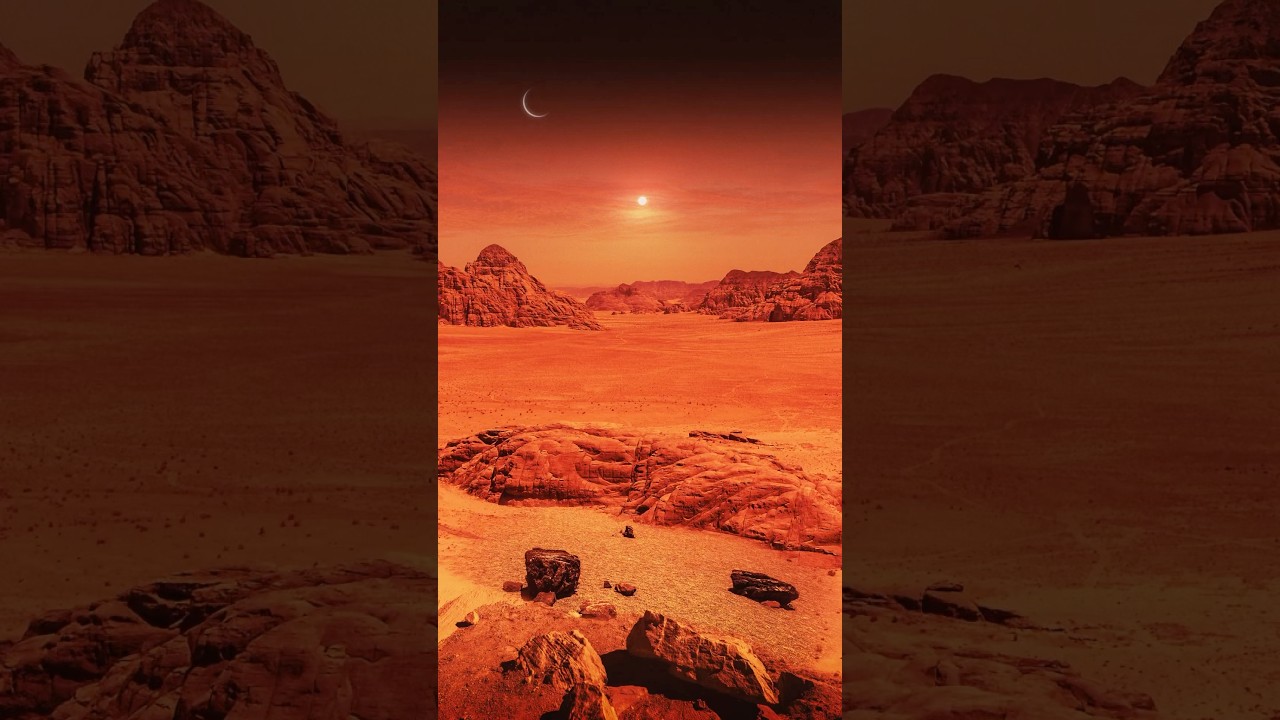
7. *Red Color**: Mars is often called the "Red Planet" because of its reddish appearance, which comes from **iron oxide (rust)* on its surface.
8. **Low Gravity**: Mars has only **38% of Earth’s gravity**, so you’d weigh much less there. This lower gravity has implications for human colonization and muscle loss in astronauts.
9. *Temperatures**: Mars is much colder than Earth, with average surface temperatures around **-80°F (-60°C)**. It can drop to as low as **-195°F (-125°C)* at the poles during winter.
10. *Mars Rovers**: NASA’s rovers, like **Curiosity**, **Perseverance**, and **Opportunity**, have been exploring the Martian surface, studying its geology, climate, and searching for signs of past life. **Perseverance* is currently collecting samples for a potential return to Earth.
11. **Dust Storms**: Mars experiences massive dust storms that can engulf the entire planet and last for weeks or even months. These storms are driven by solar heating and can affect surface conditions significantly.
12. **Future Colonization**: Mars is a prime target for future human exploration. Space agencies like NASA, as well as private companies like SpaceX, are actively planning missions to send humans to Mars in the coming decades.
Mars is a planet full of mystery and potential for discovery, especially in the search for past life and possible human habitation.
#space #facts #shorts #trending #mars
#science #factsaboutspaceandtheuniverse #astronomy

Информация по комментариям в разработке