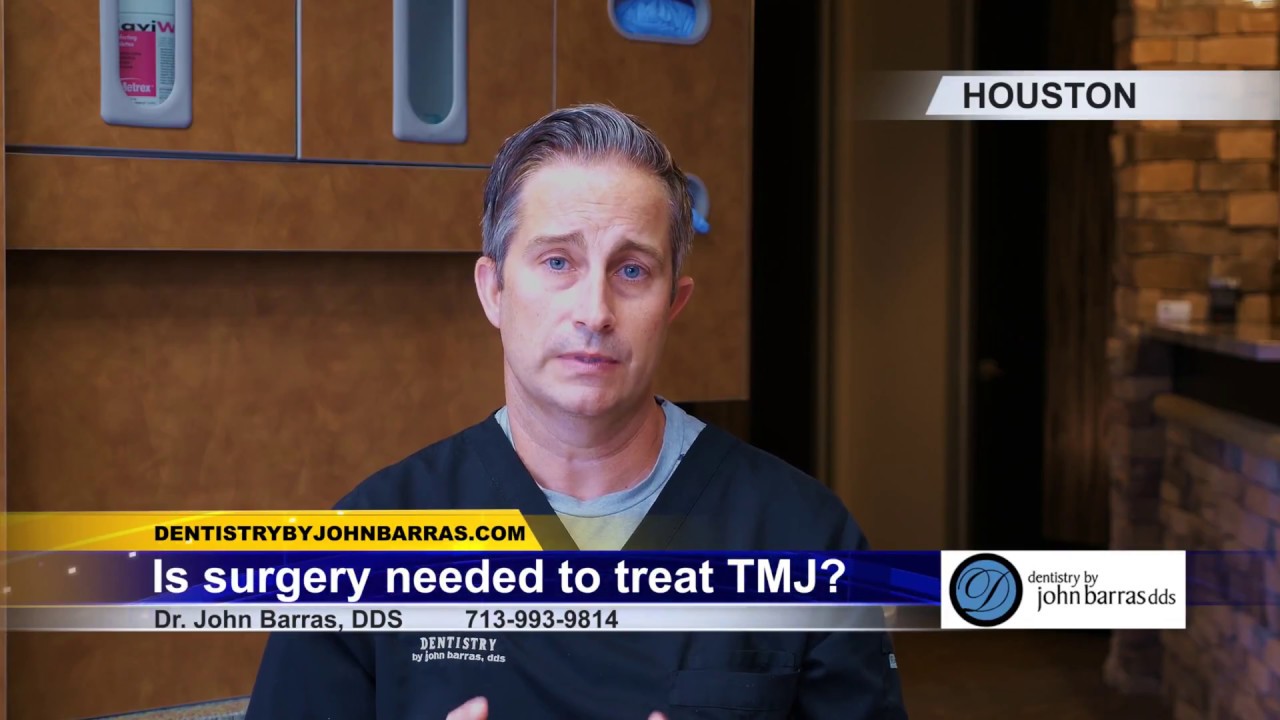
Surgery is not needed to treat TMJ in the vast majority of patients. In this video Doctor John Barras DDS describes how people are treated in his Houston office.
John is a Houston TMJ dentist and if you have any questions for John, you can post them in the comments section and he's agreed to get back to you with an answer.
You may also visit us online at http://www.johnbarrasdds.com/houston-... to get more information on TMJ treatments in the Houston area.
If you have an immediate question, you may also call our office.
Dentistry by John Barras DDS
1330 Post Oak Blvd #1300
Houston, TX 77056
(713) 993-9814
https://plus.google.com/+DentistrybyJ...
/ john-barras-19609911
/ dentistrybyjohnbarras
https://www.yelp.com/biz/dentistry-by...
Transcript:
In our office, we do zero surgery to treat TMJ. In our office, we know that 90% of headaches come from muscle fatigue. So, a lot of the symptoms that people seek out treatment whether TMJ or related to pain. So, what we know about the muscles is that if we can get them calm, then that means they're in a good balance. And if we can get a good balance with the teeth, how the teeth meet together, how the muscles meet together, then we can get you in a better position to where the TMJ is not painful or anything like that. That being said, there may be indications where other doctors may need to be involved if you, say, if you were in a car accident, or you know, you had some kind of accident where your bone to bone, how they meet are causing issues, or physical therapy. So, there are indications for other modalities in the treatment of this. But what we found is that 90% of the time, headaches are caused just simply by muscle fatigue, without any accidents causing any TMJ problems. In our office, if you were to come in, this is how we would treat you. We would take photos, we're gonna take a look how the teeth come together. If the teeth aren't coming together properly, we know that there's also gonna be a muscle imbalance there. If there's a muscle imbalance, there's gonna be fatigue, and that can also relate to headaches. So, what we'll do as our first course of treatment is to test to see if we can get your bite in a comfortable position and get the muscles relaxed. We'll make what's called an orthotic that goes on your lower teeth without doing anything permanently to your teeth. We're gonna be adjusting the bite, we're gonna be running computerized scans to see how your bite is tracking, and how the muscles are being relieved. And there's all these facets that we're gonna be doing over a six week period of time to see if we can get you comfortable. If we can get you comfortable, and you start feeling more comfortable, then we can find out permanent options for you. Permanent options may be moving your teeth with orthodontics into that position of your comfort. And other options may be doing porcelain crowns and veneers to get your teeth into that position where they have a home. And sometimes it's a combination of both of those, moving your teeth and rebuilding some of the teeth. A lot of times, when we rebuild some of the teeth, a lot of the teeth are already worn so much that we don't have to do a lot of work to the teeth because we're adding and building up to the teeth. So, in our office, that's kind of how we treat our TMJ patient. And surgery is not done in our office.

Информация по комментариям в разработке