Doufám, že se Vám toto video líbilo. Neváhejte se přihlásit k odběru, dát mi like a komentář nebo podpořit mou tvorbu příspěvkem: https://paypal.me/jiroza
Díky!
------------
I hope you enjoyed this video. Feel free to subscribe, leave a like and comment or support my work with a donation: https://paypal.me/jiroza
Thank you!
------------
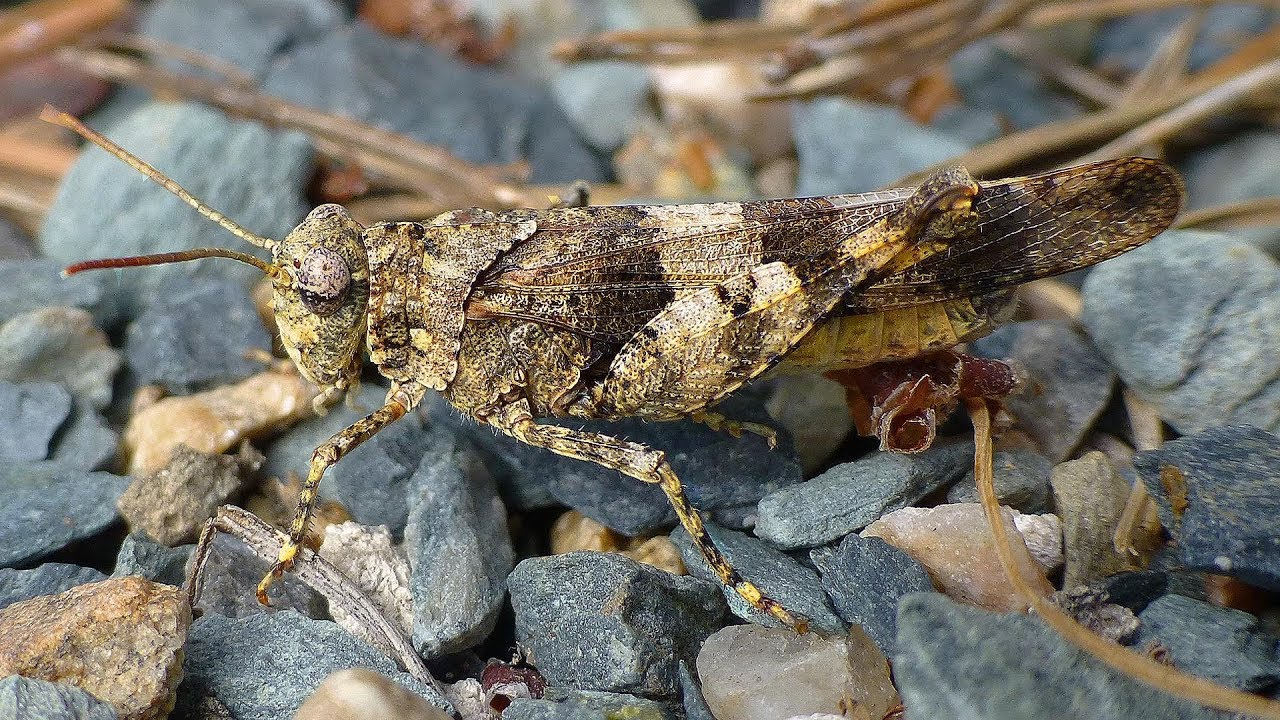
Saranče modrokřídlá - The blue-winged grasshopper (Oedipoda caerulescens)
Saranče modrokřídlá (Oedipoda caerulescens) je rovnokřídlý hmyz rozšířený po celé Evropě.
Popis
Sameček měří cca 15 až 21 mm, samička od 22 do 28 mm. Jsou zbarveny ve všech odstínech hnědé – od světlé až po zcela tmavou, které na jejím těle vykreslují různorodé pruhy a skvrny. Díky barvě a struktuře povrchu těla se dokáží velmi dobře maskovat a bývají k nerozeznaní od kamení či hlíny.
Pod hnědými svrchními křídly se nacházejí spodní křídla, která mají jasnou tyrkysovou barvu, a dávají tak saranči její jméno.
Výskyt
Celá Evropa - od Španělska až po Skandinávii, žije však například i v Mongolsku
Jedná se o sucho a teplomilný typ, který žije na stráních, písčitých půdách, vinicích a okolo cest.
Nalezneme ji nejčastěji na slunných, kamenitých a suchých místech.
Chování
Jedná se o velmi živého živočicha – její skoky jsou rychlé a kombinují je i s krátkými lety, při nichž jsou pozorovatelná i spodní, modrá křídla.
Samička klade vajíčka do půdy a opatřuje je rychle tvrdnoucí pěnou (oothékou). Vajíčka přezimují a larvy se líhnou následujícího roku
Potrava
Živí se většinou různými druhy trav
--------------
The blue-winged grasshopper, Oedipoda caerulescens, is a grasshopper in the genus Oedipoda.
Description
Oedipoda caerulescens is a medium-sized grasshopper, between 15 and 21 mm for males and between 22 and 28 mm for females.
The body coloration varies greatly depending on the substrate on which the animals have developed: reddish brown, gray, yellowish, or even completely dark or bright.
The forewings are crossed most often by two or three pale bands, but the most striking characteristic, very visible when the insect flies away, is the bright coloration of the hind wings, a beautiful turquoise highlighted with a black marginal stripe.
Furthermore, the posterior femora have a notch on their upper surface. At rest, confusion is possible with other Oedipoda species such as O. germanica.
Distribution
This species occurs in Europe, North Africa and Asia. It was recently rediscovered in the Maltese islands.
Oedipoda caerulescens frequents dry areas with low and open vegetation: dunes, heathlands, grasslands on sand and sunlit limestone rocks. Many stations correspond to land recently used for human activities, such as coal spoil heaps, quarries and pits, the ballast of railway tracks, etc.
Ecology
It is exclusively a terrestrial insect, and its cryptic coloration often matches its substrate. It presses itself to the ground and remains motionless, and jumps only at the very close approach of danger.
A remarkable behavior is the "hook" landing which serves to confuse potential attackers. Thus, the grasshopper lands and swings round to face the direction it has come from. The sudden disappearance of the blue hind wings of the adult makes it difficult for predators to shift quickly enough to a different kind of search to relocate the prey.
The female lays her eggs in bare, dry soil. In this species, acoustic emissions are virtually nonexistent.
Diet
The diet consists mainly of grasses.
(Wikipedia)

Информация по комментариям в разработке