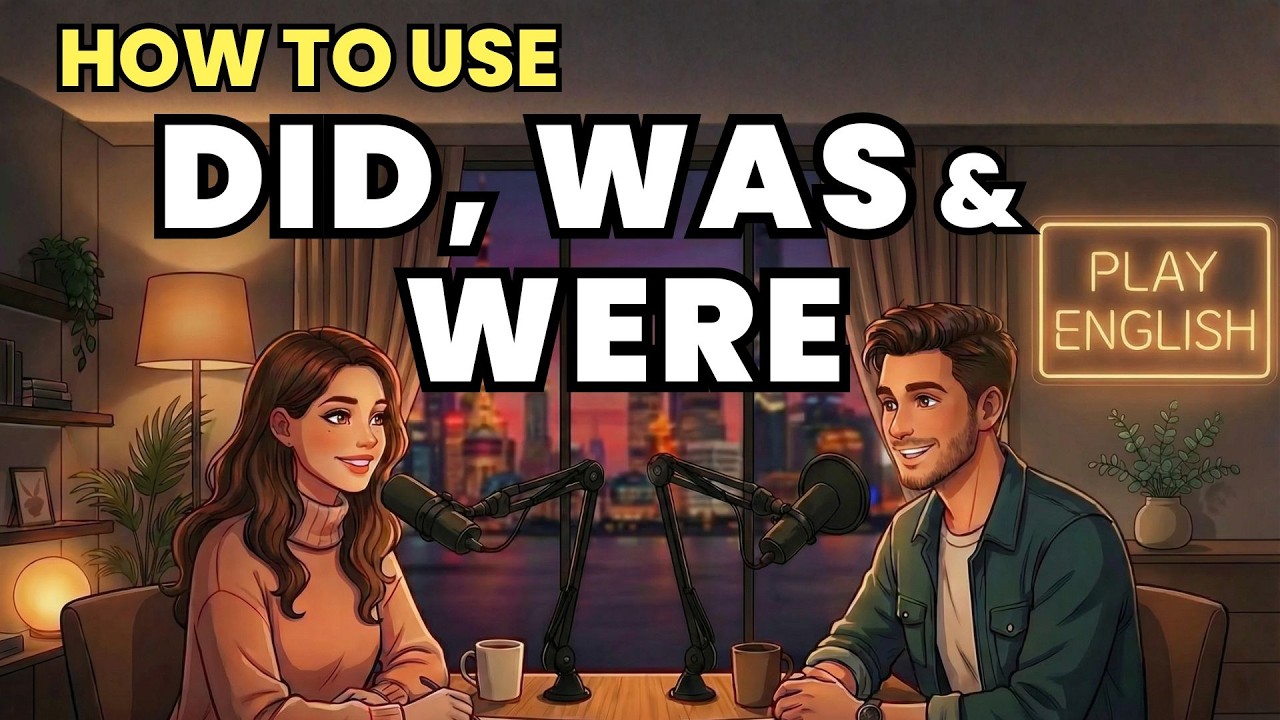
Learn English with Real Conversations Podcast | How to Use “DID,” “WAS,” & “WERE” in Everyday English | Past Tense Problems
Do you feel confused every time you use DID, WAS, or WERE in English? Past tense questions like “Did you went?” or “Did you tired?” are some of the most common English grammar mistakes — and this episode will fix them clearly and simply.
In this real conversation English podcast episode, you’ll finally understand the difference between DID (actions) and WAS/WERE (descriptions) using one simple system — not memorization, not complicated grammar rules.
────────────────────────
🎯 The Past Tense Clarity Series (English Grammar in Real Conversation)
This episode focuses on one of the biggest past tense problems English learners face: mixing DID with WAS/WERE.
Instead of memorizing rules, you’ll learn how native speakers think:
• One captain per ship
• DID for actions
• WAS/WERE for feelings, states, and locations
If you’ve ever said:
❌ “Did you went?”
❌ “Did you tired?”
❌ “You was late.”
❌ “I didn’t slept.”
This lesson will finally make it clear.
────────────────────────
Move past unnatural textbook grammar confusion and learn how to naturally say:
✅ “Did you go yesterday?”
✅ “Were you tired?”
✅ “I didn’t sleep well.”
✅ “You were right.”
Join your hosts Emma (native English speaker) and Nico (near-native learner) in a warm, slow-paced, natural spoken English conversation designed to help English learners stop translating and start thinking clearly in past tense.
This episode is part of our Real Conversations English Grammar series, where you learn English through logic, listening, and natural dialogue — not classroom memorization.
🧠 In This Episode, You Will Learn:
✅ The difference between DID vs WAS/WERE
✅ Why DID + adjective is always wrong
✅ Why “Did you went?” is incorrect
✅ How past tense questions really work
✅ When DID disappears in positive sentences
✅ The most common past tense mistakes English learners make
✅ How native speakers choose the correct form instantly
✅ A simple two-second mental check before you speak
🌟 The Play English Method:
🔹 Learn English grammar through real conversations
🔹 Hear slow, clear, natural spoken English
🔹 Understand how English feels in everyday situations
🔹 Practice with interactive questions and mini quizzes
🔹 Build English speaking confidence step by step
🚀 Perfect For:
✅ English beginners
✅ Lower-intermediate and intermediate English learners
✅ Students struggling with past tense questions
✅ Learners confused about DID vs WAS vs WERE
✅ Anyone who wants to speak English more naturally
✅ ESL learners practicing spoken English
🎯 What You’ll Take Away:
🎯 Confidence using past tense in questions and negatives
🎯 Clear understanding of DID vs WAS/WERE
🎯 Fewer grammar mistakes when speaking
🎯 Natural spoken English patterns you can use immediately
📘 Grammar & Vocabulary Focus:
did vs was, did vs were, past tense questions, English grammar mistakes, base form verbs, double past tense errors, did you go vs did you went, was or were difference, weren’t pronunciation, English listening practice, spoken English practice, real English conversation
📌 Homework:
Write two sentences in the comments:
1️⃣ One sentence using DID (action)
2️⃣ One sentence using WAS or WERE (description)
We read and correct them 👇
👍 If this lesson helped you, like the video
🔔 Subscribe for more English grammar lessons through real conversations
💬 Practice every day — that’s how fluency happens.
🔑 Keywords:
learn english podcast, did vs was, did vs were, past tense english, english grammar lesson, spoken english practice, english conversation practice, english listening practice, esl grammar, real english conversation, slow english podcast, english speaking confidence, everyday english grammar, past tense mistakes
#DidVsWas #DidVsWere #PlayEnglishPodcast
#LearnEnglish #EnglishPodcast #SpokenEnglish
#RealEnglish #EnglishConversationPractice #EnglishListeningPractice
#SlowEnglish #EnglishForBeginners #IntermediateEnglish
#PastTense #EnglishGrammar #ESL #EFL #PlayEnglish









Информация по комментариям в разработке