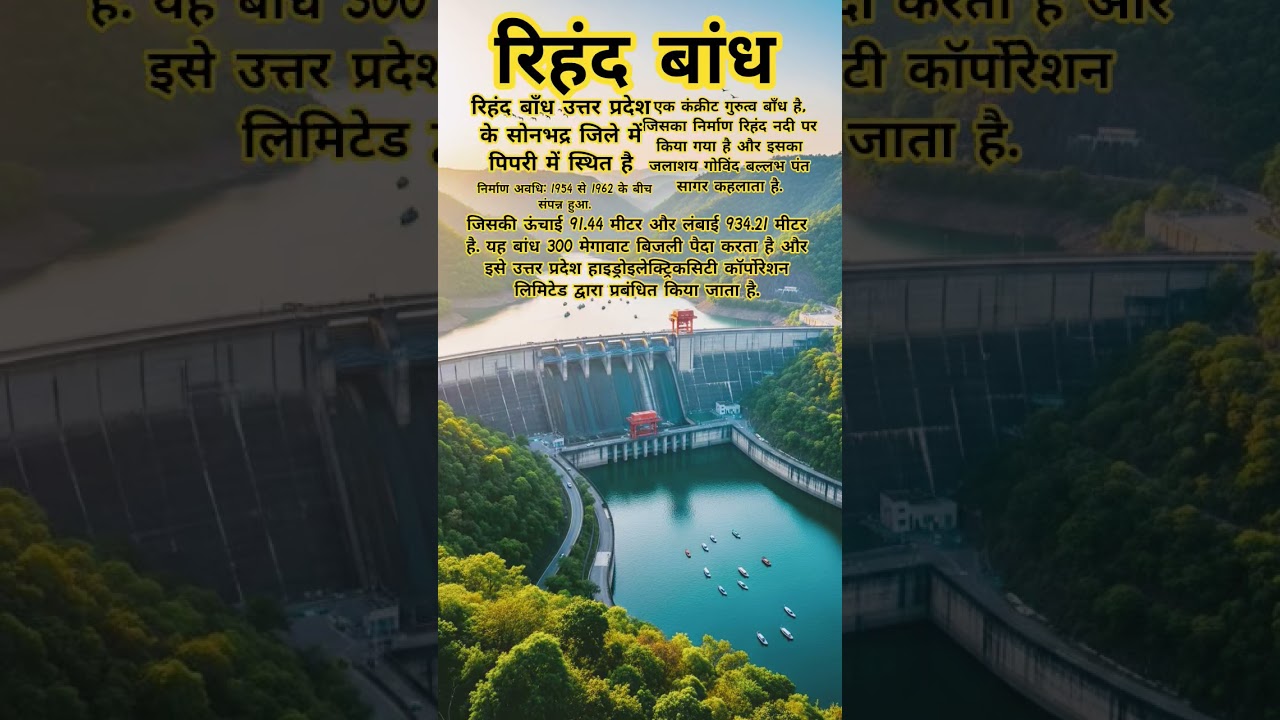
Rihand Dam, also known as Govind Ballabh Pant Sagar, is the largest dam in India by volume, located in the Sonbhadra district of Uttar Pradesh. Built across the Rihand River, a major tributary of the Son River, this massive concrete gravity dam was completed in 1962. It is considered one of the greatest engineering marvels of independent India, reflecting the nation’s vision of development through irrigation and hydroelectric power. The reservoir created by the dam is famously called Govind Ballabh Pant Sagar Lake, which spreads across nearly 466 square kilometers, making it one of the largest man-made lakes in the country.
The primary purpose of Rihand Dam is irrigation, water supply, and power generation. It supports several super thermal power stations and hydroelectric projects, which supply electricity to many northern Indian states including Uttar Pradesh, Madhya Pradesh, Bihar, and beyond. The dam also provides irrigation water to vast agricultural lands, ensuring better crop production and helping millions of farmers. Its role in industrial water supply further strengthens the economy of the region.
Apart from its functional significance, Rihand Dam is also known for its scenic surroundings. The vast stretch of calm blue waters, encircled by lush green hills, creates a breathtaking natural view. Govind Ballabh Pant Sagar Lake is also a hub of fisheries and aquatic biodiversity. Migratory birds flock here during winters, making it a paradise for bird watchers and nature lovers. The serene beauty of the lake attracts tourists, researchers, and environmentalists throughout the year.
From a historical perspective, Rihand Dam marks an important milestone in India’s post-independence development era. During the 1950s and 1960s, when large-scale infrastructure projects were prioritized, this dam became a symbol of progress and self-reliance. It not only generated power and irrigation facilities but also gave a new identity to Sonbhadra as an energy hub of India.
Today, Rihand Dam continues to play a vital role in India’s economy and infrastructure. It supplies water for irrigation, supports electricity generation, provides livelihoods through fishing, and contributes to tourism. The vast reservoir has become a lifeline for surrounding villages, industries, and wildlife. More than just a structure of concrete, Rihand Dam is a symbol of India’s growth, blending technology with nature.
In essence, Rihand Dam is not only the largest dam of India but also a reservoir of opportunities. It represents the balance of development, agriculture, industry, and ecology, standing tall as a living example of India’s engineering brilliance and vision for sustainable growth.

Информация по комментариям в разработке