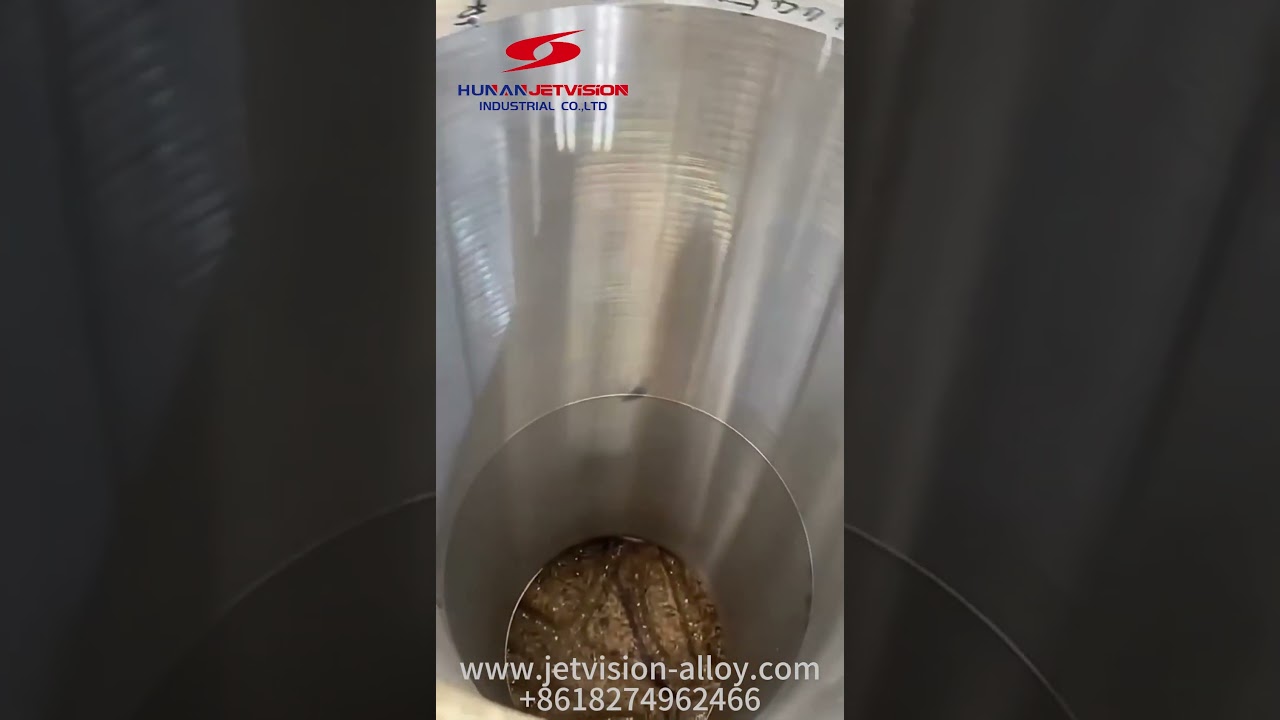
High quality #Duplex2205 stainless steel #forgings #hollow #tube large #forged tube hollow ring #forging
Duplex2205 stainless steel forging hollow tube large forged tube hollow ring forging
Duplex 2205 stainless steel is a popular grade of duplex stainless steel that combines the features of both austenitic and ferritic structures. It is known for its excellent strength, corrosion resistance, and toughness. When it comes to a forging hollow tube made from Duplex 2205 stainless steel, this material is often chosen for applications requiring both high mechanical strength and superior resistance to corrosion, especially in harsh environments.
Key Features of Duplex 2205 Stainless Steel Hollow Tube:
Composition:
Chromium (Cr): 22-23%
Nickel (Ni): 4.5-6.5%
Molybdenum (Mo): 3.0-3.5%
Iron (Fe): Balance
Other elements: Small amounts of manganese, nitrogen, and silicon.
Mechanical Properties:
Tensile Strength: Duplex 2205 typically has a tensile strength of 620 MPa (min), but in certain conditions, it can go as high as 800-900 MPa.
Yield Strength: Around 450-600 MPa, which is significantly higher than most standard austenitic stainless steels.
Elongation: Around 25-30%, depending on the exact processing conditions.
Hardness: Typically in the range of 250-300 HB (Brinell hardness).
Corrosion Resistance:
Pitting and Crevice Corrosion: Excellent resistance to pitting and crevice corrosion in chloride environments due to the presence of molybdenum.
Stress Corrosion Cracking (SCC): Duplex 2205 offers excellent resistance to stress corrosion cracking, especially in environments containing chlorides.
General Corrosion: Superior resistance to a wide range of aggressive environments, including acidic and alkaline solutions.
Forging Hollow Tube:
Hollow Tube Production: To produce a hollow tube from Duplex 2205, the material is typically forged, then hollowed out by either machining or by a specialized tube-formation process.
Forging Process: Duplex 2205 can be forged through conventional forging methods, including open die forging or closed die forging, depending on the required final shape and size. The material is heated to around 1100°C before forging to ensure proper formability and prevent cracking.
Heat Treatment: After forging, duplex 2205 stainless steel is usually annealed to relieve stresses and achieve a uniform microstructure. It may undergo a solution annealing process, followed by air cooling.
Advantages:
Strength-to-weight ratio: Duplex 2205 offers high strength while maintaining a relatively low weight, making it ideal for demanding applications such as structural components, heat exchangers, and pressure vessels.
Corrosion resistance: Its resistance to pitting, crevice corrosion, and stress corrosion cracking makes it suitable for use in harsh marine, chemical, and oil & gas environments.
Cost-effective: While more expensive than austenitic stainless steels, Duplex 2205 is often more cost-effective than high-alloy materials such as superalloys, offering similar corrosion resistance and strength at a lower price point.
Applications:
Marine: Offshore and subsea components, pipelines, valves, and fittings, where high resistance to chloride-induced corrosion is required.
Chemical Processing: Equipment such as heat exchangers, tanks, reactors, and pumps used in highly corrosive environments.
Oil & Gas: Wellhead equipment, risers, and downhole tools that need to resist corrosive fluids under high pressures.
Power Generation: Components exposed to acidic and corrosive environments such as heat exchangers and cooling systems.
Considerations for Forging and Manufacturing:
Temperature Control: The forging of Duplex 2205 stainless steel should be carefully controlled to avoid the formation of undesirable phases like sigma phase, which can impair mechanical properties and corrosion resistance.
Machining: Although duplex stainless steels are more challenging to machine than austenitic steels, they offer improved mechanical properties that make them more suitable for demanding applications. It is essential to use sharp tools and appropriate cutting speeds to reduce work hardening.
Welding: Duplex 2205 can be welded using common methods such as TIG, MIG, or submerged arc welding, but it is important to follow proper procedures to avoid compromising the corrosion resistance and mechanical properties.
Duplex 2205 stainless steel forging hollow tubes are widely used in industries where both high mechanical strength and corrosion resistance are essential, particularly in the oil and gas, marine, and chemical processing industries. Its combination of austenitic and ferritic microstructures provides excellent resistance to stress corrosion cracking, pitting, and crevice corrosion, making it an ideal material for use in harsh and corrosive environments.
Any requirement for forgings, please contact me: +8618274962466
email: [email protected]
web: www.jetvision-alloy.com

Информация по комментариям в разработке