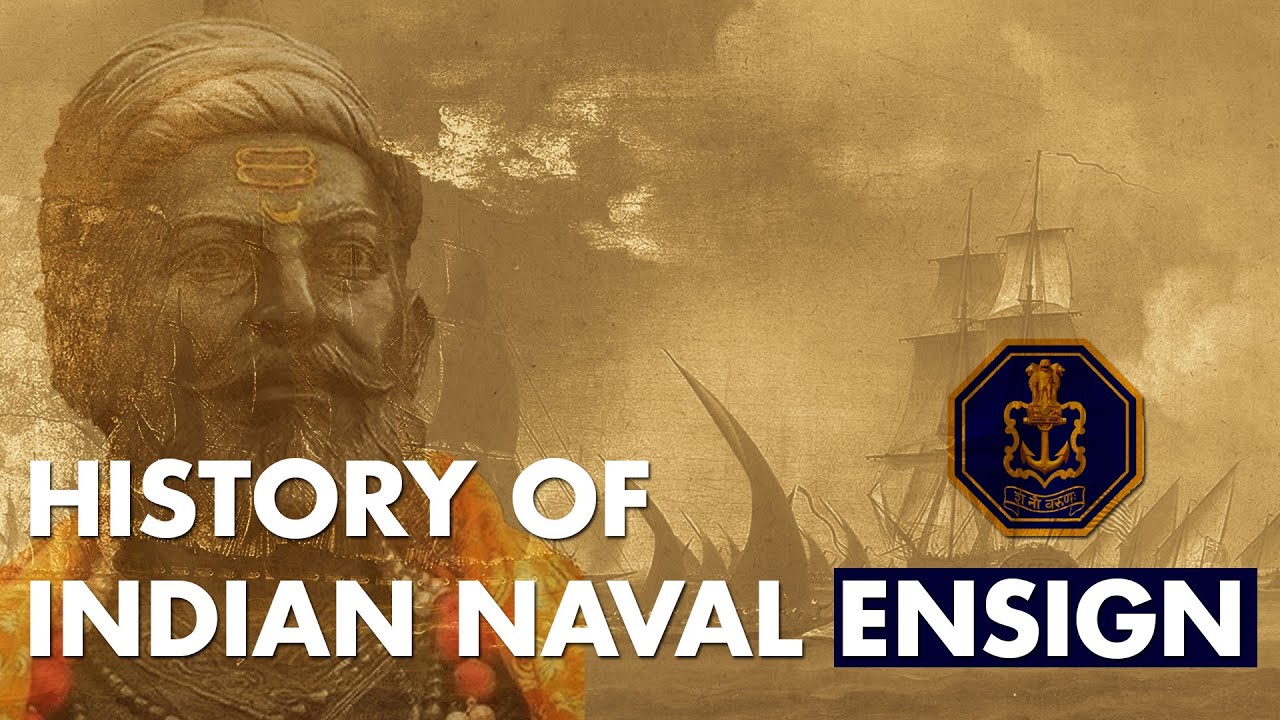
🇮🇳 History of naval ensign
The blue ensign of the Star of India was used from 1879–1892 as the naval ensign of Her Majesty's Indian Marine (1879-1892). It was then used by the Royal Indian Marine (1892-1934), subsequently upgraded to the Royal Indian Navy (1934-1950). The white ensign of the Royal Navy was used from 1928–1950 as the naval ensign of the Royal Indian Marine and then the Royal Indian Navy.
Following the reconstitution of the Royal Indian Marine as a combatant force in 1928, the White Ensign - the naval ensign of the Royal Navy was adopted, and was subsequently raised for the first time on 11 November 1928.
The Flag of India has been used since 1947 as the naval jack of the Indian Navy .
Following India's establishment as a republic on 26 January 1950, the Royal Indian Navy was re-christened the Indian Navy, while the service's crest and flags were duly "Indianised"; however, the White Ensign, featuring the Saint George's Cross over a white field, was retained, with the replacement of the Union Jack with the Flag of India being the only alteration. Several decades later, amidst international decolonization, the desire for a new ensign sans any colonial-era entity became very strong within the ranks of the Indian Navy.However, the original idea for a post-colonial ensign is generally credited to Vice Admiral V.E.C. Barboza, a former Flag Officer Commanding-in-Chief Western Naval Command, who suggested the change in the early 1970s.
Consequently, the naval ensign was duly changed in 2001, featuring a blue-colored crest of the Indian Navy set upon a white background, with the Flag of India placed in the canton. The change, derived from the objectives of simplicity and commonality with the flags of the Indian Army and the Indian Air Force, was approved by the President of India on 30 April 2001, and came into effect on 15 August 2001.[5] Nevertheless, the new ensign was a troubled change, as many complained that the blue of the naval crest was indistinguishable from the sky and the ocean.As a consequence, the former naval ensign, bearing the Saint George's Cross, was readopted in 2004, with an additional touch up of the National Emblem of India at the intersection of the cross.
In 2014, the ensign was further customized to feature the Indian national motto in the Devanagari script: सत्यमेव जयते (Satyameva Jayate), translated in English as Truth Alone Triumphs, beneath the state emblem. The updated ensign was accorded presidential approval in July 2014 and formally came into effect on 15 August 2014.
In August 2022, the Prime Minister's Office announced that the naval ensign featuring the St. George's Cross would be irrevocably disposed of, in favor of a newer design that would "do away with the colonial past" and reflect the "rich Indian maritime heritage".The revised ensign, which happened to be its fourth alteration since 1950, was unveiled for the first time by prime minister Narendra Modi on 2 September, at the commissioning ceremony of aircraft carrier INS Vikrant. The new ensign, upon adoption, is expected to be flown atop all Indian naval warships, ground stations and naval air bases.
#pmmodi #newnavalensign #insvikrant #indiannavy

Информация по комментариям в разработке