Exposure with Response Prevention (ERP): Front-Line Treatment for Pediatric OCD
Obsessive-Compulsive Disorder (OCD) is a psychiatric condition affecting approximately 1% to 2% of children and adolescents. It is defined by the presence of distressing obsessions (intrusive thoughts, images, or impulses) and/or compulsions (repetitive overt or mental rituals). Pediatric OCD can cause significant functional impairment in social, academic, and familial life.
Exposure with Response Prevention (ERP) is the optimal, evidence-based intervention and the recommended front-line therapy for children and adolescents with OCD, supported by numerous randomized controlled trials. This systematic, goal-oriented behavioral treatment is a specialized form of cognitive-behavioral therapy (CBT).
Breaking the OCD Cycle
ERP is designed to break the negative reinforcement cycle that maintains OCD symptoms. When a child experiences an obsession (e.g., "my hands are dirty"), they experience high anxiety. They then engage in a compulsion (e.g., washing their hands five times), which successfully decreases the distress in that moment, thereby negatively reinforcing the compulsion and ensuring its continuation in the long term.
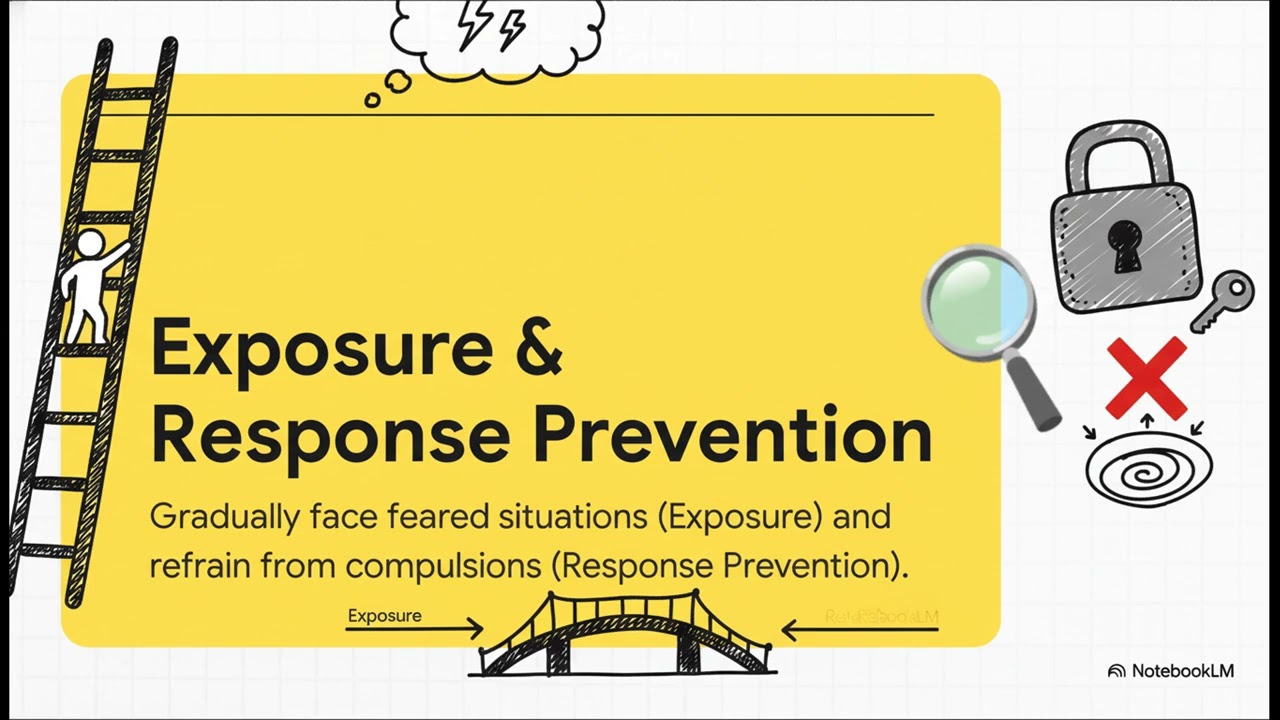
ERP targets this cycle through two core components:
1. Exposures: Youth are encouraged to systematically and gradually face the thoughts and situations that cause them discomfort. For example, a child with contamination fears might be asked to touch a public doorknob.
2. Response Prevention: While engaging in the exposure, the youth is instructed to refrain from performing their compulsions. For instance, they would be discouraged from washing their hands after touching the doorknob.
By repeatedly confronting fears without engaging in rituals, the child witnesses what happens when they do not use compulsions. This process helps them violate expectancies (learning that the feared outcome is unlikely to occur) or teaches them that they are capable of tolerating the distress.
The Treatment Process and Key Tools
ERP involves several chronological components:
• Psychoeducation: Clinicians establish a solid foundation by defining obsessions and compulsions, explaining the prevalence and etiology of pediatric OCD, and presenting the negative reinforcement cycle.
• Fear Hierarchy Construction: A personalized treatment blueprint is created with the family. The Subjective Units of Distress Scale (SUDS) is typically used to numerically rate OCD-related thoughts and behaviors from 0 (not distressing) to 10 (highest distress possible). The fear hierarchy serves as a visual way to track progress and ensures the child starts with easier symptoms to build confidence.
• Exposures: These tasks, which are the core component of treatment, can be conducted in sequence from easiest to hardest. Exposures are typically conducted in vivo (in person) but can be imaginal (imagining the feared situation in detail) for situations that cannot realistically be completed. It is imperative that exposures are conducted repeatedly and in multiple contexts to ensure the generalization of gains.
• Family Involvement: The inclusion of family members is essential for optimizing success. Caregivers provide supportive coaching, monitor homework compliance (exposures between sessions), and learn how to avoid family accommodation—behaviors where family members participate in or modify routines due to the child's compulsions, which inadvertently maintains the OCD cycle.
• Relapse Prevention: As symptoms substantially decrease, sessions reduce in frequency. The final sessions focus on reviewing skills and planning for potential resurgences of symptoms, as OCD symptoms often wax and wane.
When conducting exposures, caregivers and clinicians should avoid providing reassurance about OCD-related fears, as reassurance feeds the fear. Instead, they should praise the child's efforts and share confidence in their ability to complete the tasks. Furthermore, children should be encouraged to focus directly on the task and avoid distraction, which is considered a therapy-interfering behavior. ERP teaches youth more adaptive ways of coping with distress, allowing them to acquire new skills and form more realistic appraisals of their feared situations


Информация по комментариям в разработке