Keraton Ngayogyakarta Hadiningrat maps : https://goo.gl/maps/dcXnQRfiqkC7znLy7
Kampung Wisata Tamansari Keraton maps : https://goo.gl/maps/YNysPMeewcRz8Tfb9
The Sultanate of Yogyakarta (Javanese: ꦏꦱꦸꦭ꧀ꦠꦤ꧀ꦤꦤ꧀ꦔꦪꦺꦴꦒꦾꦏꦂꦡꦲꦢꦶꦤꦶꦔꦿꦠ꧀, romanized: Kasultanan Ngayogyakarta Hadiningrat Javanese pronunciation: [ŋajogjɔkartɔ hadinɪŋrat]; Indonesian: Kesultanan Yogyakarta) is a Javanese monarchy in Yogyakarta Special Region, in the Republic of Indonesia. The current head of the sultanate is Hamengkubuwono X.
Yogyakarta existed as a state since 1755 on the territory of modern Indonesia in the central part of Java Island. The sultanate became the main theatre of military operations during the Java War of 1825–1830, following which a significant part of its territory was annexed by the Dutch, and the degree of autonomy was significantly curtailed. In 1946–1948, during the war of independence of Indonesia, the capital of the republic was transferred to the territory of the sultanate, in the city of Yogyakarta.
In 1950, Yogyakarta, along with the Principality of Pakualaman became part of Indonesia, with the former royal realms united as a Special Region, with equal status to that of a national province. At the same time, the hereditary titles of Sultan of Yogyakarta and Prince of Pakualaman, with ceremonial privileges carried with the titles, were legally secured for the rulers. On 2012, the Indonesian government formally recognised the reigning sultan of Yogyakarta as the hereditary governor of Special Region of Yogyakarta, with the Pakualam Prince as its hereditary vice governor (article 18, paragraph 1c). The sultanate is claimed to own almost 10% of land in the Special Region of Yogyakarta.
The sultanate is located on the southern coast of the island of Java. In the south it is bordered by the Indian Ocean, with land surrounded by the province of Central Java. The area is 3,133 km², while the population in 2010 was about three and a half million people. The special district of Yogyakarta, along with Jakarta, has the largest population density among the provinces of Indonesia.
Not far from the city of Yogyakarta is the volcano Merapi, the most active volcano in Indonesia which has erupted regularly since 1548, resulting in great damage to the population of the district. In October–November 2010, there was a strong volcanic eruption, forcing about a hundred thousand people to temporarily leave their homes.
After Sultan Agung, the Sultanate of Mataram went into a decline due to a power struggle within the sultanate itself. To make things worse, the Dutch East India Company exploited the power struggle to increase its control. At the peak of the conflict, the Mataram Sultanate was split into two based on the Treaty of Giyanti of 13 February 1755: Yogyakarta Sultanate and Surakarta Sunanate.
The Giyanti Treaty mentioned Pangeran Mangkubumi as Sultan of Yogyakarta with the title of
ꦔꦂꦱꦢꦊꦩ꧀ꦱꦩ꧀ꦥꦺꦪꦤ꧀ꦢꦊꦩ꧀ꦲꦶꦁꦏꦁꦱꦶꦤꦸꦮꦸꦤꦏꦁꦗꦼꦁꦱꦸꦭ꧀ꦠꦤ꧀ꦲꦩꦼꦁꦏꦸꦨꦸꦮꦤꦱꦺꦤꦥꦠꦶꦲꦶꦁꦔꦭꦒꦔꦧ꧀ꦢꦸꦭ꧀ꦫꦏ꦳꧀ꦩꦤ꧀ꦱꦪꦶꦢꦶꦤ꧀ꦥꦤꦠꦒꦩꦏ꦳ꦭꦶꦥ꦳ꦠꦸꦭ꧀ꦭꦃ Ngarsa Dalem Sampeyan Dalem Ingkang Sinuwun Kangjeng Sultan Hamengkubuwana Senopati-ing-Ngalaga Ngabdulrakhman Sayyidin Panatagama Khalifatullah.
Which translates as :
His Highness the Sultan, Commander in the Battlefield, Servant of the Most Gracious, Cleric and Caliph that Safeguards the Religion.
Pagelaran, the front hall of the Royal Palace of Yogyakarta
The principal residence of the sultan is the kraton (palace), sometimes called the keraton but otherwise known in formal terms Keraton Ngayogyakarta Hadiningrat (Javanese script: ꦏꦫꦠꦺꦴꦤ꧀ꦔꦪꦺꦴꦒꦾꦏꦂꦡꦲꦢꦶꦤꦶꦔꦿꦠ꧀).
https://en.wikipedia.org/wiki/Yogyaka...
===
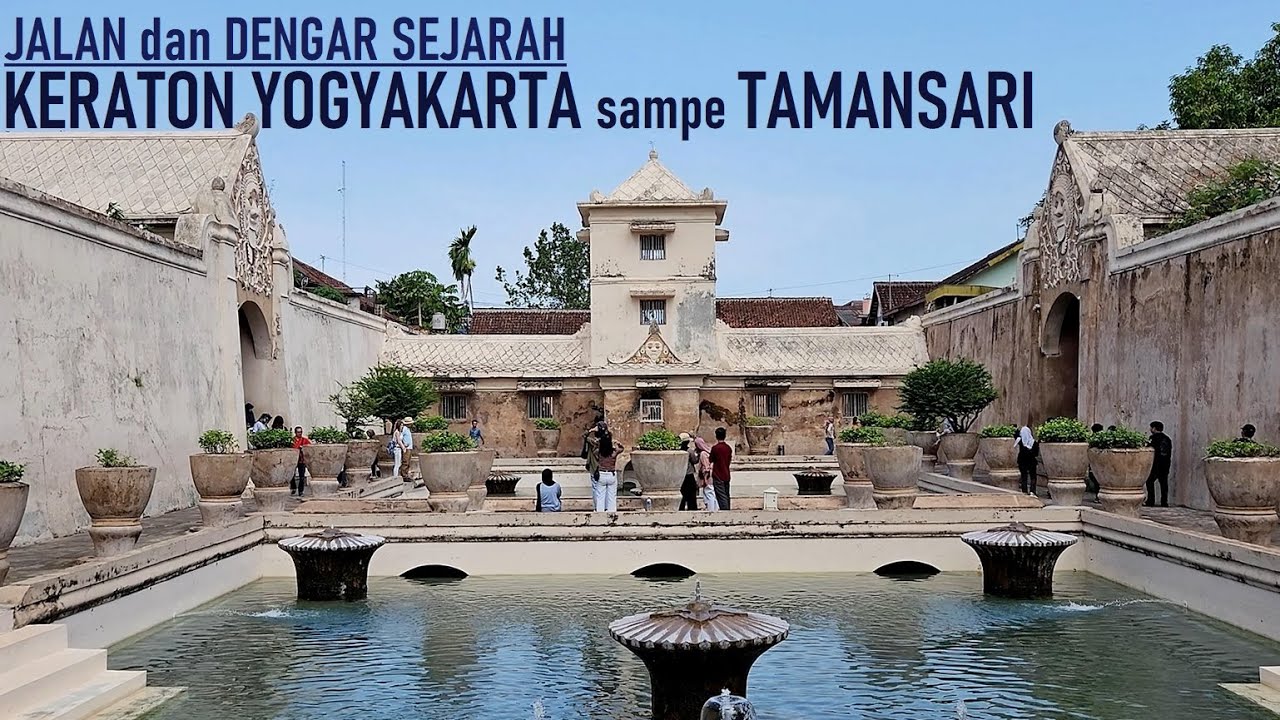
Taman Sari Water Castle, also known as Taman Sari (Javanese: ꦠꦩꦤ꧀ ꦱꦫꦶ), is the site of a former royal garden of the Sultanate of Yogyakarta. It is located about 2 km south within the grounds of the Kraton, Yogyakarta, Indonesia. Built in the mid-18th century, the Taman Sari had multiple functions, such as a resting area, a workshop, a meditation area, a defense area, and a hiding place.
Taman Sari consisted of four distinct areas: a large artificial lake with islands and pavilions located in the west, a bathing complex in the centre, a complex of pavilions and pools in the south, and a smaller lake in the east. Today only the central bathing complex is well preserved, while the other areas have been largely occupied by the Kampung Taman settlement.
The name Taman Sari comes from the Javanese words taman, meaning a 'garden' or 'park' and sari, which means 'beautiful' or 'flowers'. Hence, the name Taman Sari means an area of a beautiful garden adorned with flowers. An old article described it as a "water castle" (Dutch: waterkasteel); as by shutting the watergates, the complex would be completely immersed in water, leaving tall structures standing out.
https://en.wikipedia.org/wiki/Taman_S...)
===
#walkingaround #keratonyogyakarta #tamansarijogja #tamansari #yogyakarta #yogyakarta #yogyakartaistimewa











Информация по комментариям в разработке