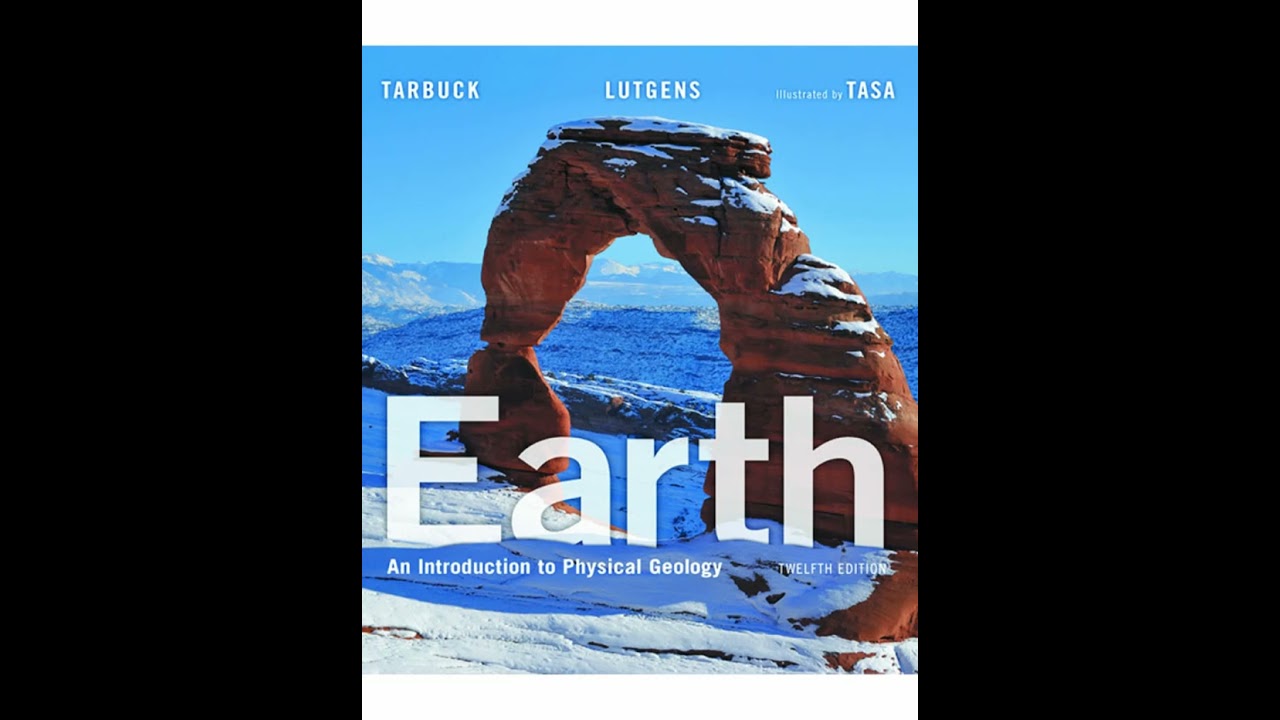
Chapter 21 of Earth: An Introduction to Physical Geology (12th Edition) investigates the complexity of global climate change, examining how Earth’s climate system functions, how scientists detect past changes, and how both natural and human factors drive today’s warming. The climate system integrates the atmosphere, hydrosphere, geosphere, biosphere, and cryosphere, with interactions across these spheres shaping conditions over time. Climate differs from weather in its long-term patterns and variability, and it strongly influences geologic processes such as weathering, flooding, and glaciation.
To understand past climates, scientists use proxy data—indirect evidence from natural archives like seafloor sediments, oxygen isotope ratios, glacial ice cores, tree rings, fossil pollen, corals, and even historical documents. These records reveal alternating “greenhouse” and “icehouse” conditions through the Phanerozoic eon, multiple ice ages during the Quaternary, and abrupt shifts like the Younger Dryas. Oxygen isotope analysis of shells and ice provides precise records of glacial expansion and retreat, while ice cores preserve atmospheric gases such as CO₂ and methane, showing their correlation with temperature. Tree-ring chronologies, pollen analysis, and coral growth bands extend climate reconstructions back thousands of years.
The atmosphere’s composition and structure underpin modern climate science. Clean dry air is mostly nitrogen (78%) and oxygen (21%), but variable gases like water vapor, carbon dioxide, ozone, and aerosols play outsized roles in absorbing, reflecting, and transmitting radiation. Pressure decreases rapidly with altitude, while temperature defines vertical layers: the weather-filled troposphere, the ozone-heated stratosphere, the mesosphere, and the thermosphere. Heating of the atmosphere is governed by solar radiation, reflection (albedo), and re-radiation of long-wave energy absorbed by greenhouse gases. The natural greenhouse effect makes Earth habitable, but human activity is intensifying it.
Natural causes of climate change include plate tectonics (shifting landmasses altering circulation), orbital variations (Milankovitch cycles of eccentricity, tilt, precession), explosive volcanism (aerosols cooling the troposphere), and solar variability (sunspot cycles). These forces explain past shifts but cannot account for modern rapid warming. Since 1750, human impacts have transformed atmospheric composition through fossil fuel combustion and deforestation, driving a sharp rise in CO₂ levels unprecedented in 650,000 years. Trace gases—methane, nitrous oxide, and CFCs—amplify warming, while aerosols have a short-lived cooling effect by reflecting sunlight, though black carbon (soot) increases warming when deposited on snow and ice.
Climate-feedback mechanisms complicate predictions. Positive feedbacks, like water vapor increase, sea ice loss, and permafrost thaw (releasing CO₂ and methane), magnify warming, while negative feedbacks, like some cloud effects, can offset it. Climate models (general circulation models) simulate global patterns, confirming that observed 20th- and 21st-century warming cannot be explained without human greenhouse gas emissions.
📘 Read full blog summaries for every chapter:
https://lastminutelecture.com
📘 Have a book recommendation? Submit your suggestion here:
https://forms.gle/y7vQQ6WHoNgKeJmh8
Thank you for being a part of our little Last Minute Lecture family!
⚠️ Disclaimer: These summaries are created for educational and entertainment purposes only. They provide transformative commentary and paraphrased overviews to help students understand key ideas from the referenced textbooks. Last Minute Lecture is not affiliated with, sponsored by, or endorsed by any textbook publisher or author. All textbook titles, names, and cover images—when shown—are used under nominative fair use solely for identification of the work being discussed. Some portions of the writing and narration are generated with AI-assisted tools to enhance accessibility and consistency. While every effort has been made to ensure accuracy, these materials are intended to supplement—not replace—official course readings, lectures, or professional study resources. Always refer to the original textbook and instructor guidance for complete and authoritative information.

Информация по комментариям в разработке