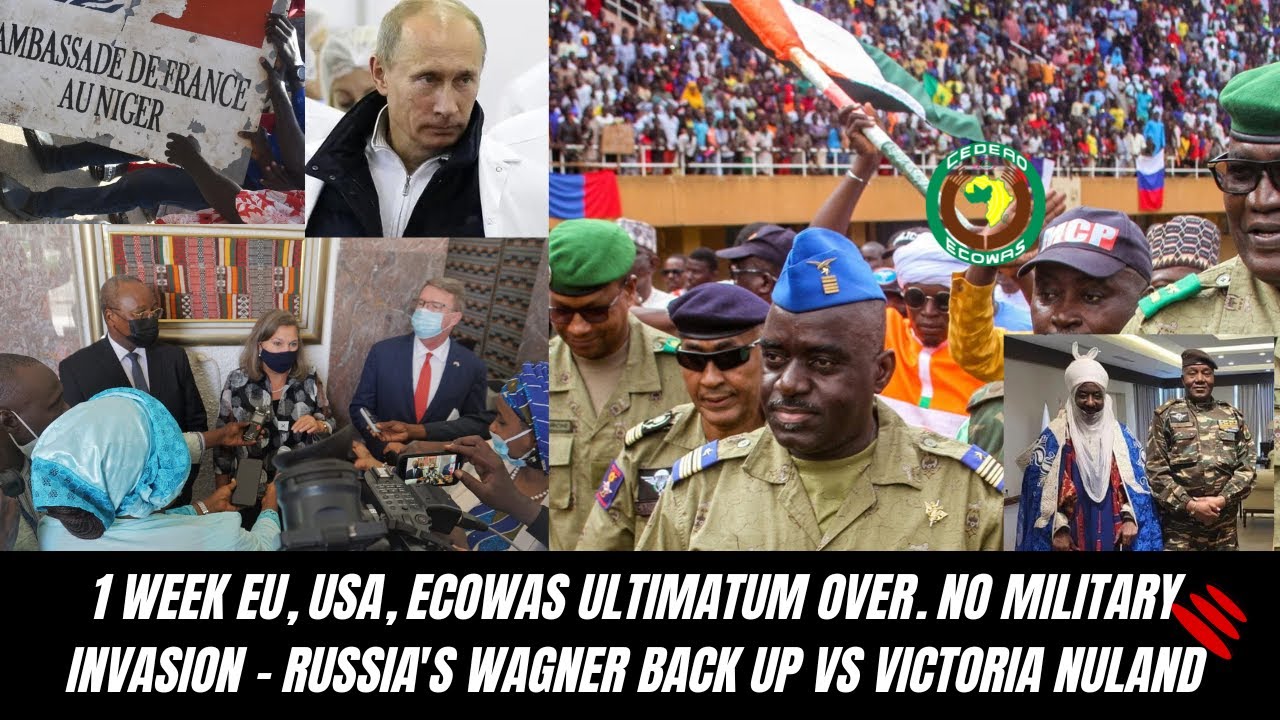
The military junta in Niger has rebuffed diplomatic attempts and mediation efforts by the United States. The initial contact between a U.S. official and the military junta was established through Acting Deputy Secretary of State, Victoria Newland. Notably, the junta's leader did not engage directly; instead, they dispatched another general for negotiations. However, the stubborn disposition often associated with military personnel prevailed, leading to the rejection of all overtures. They declined to establish a timeline for returning to democratic governance and dismissed pleas to avoid Russian engagement, despite their awareness of the risks posed by involving Wagner forces in Niger.
Their focus remains unwavering: retaining power. This highlights the crucial importance of proactive U.S. communication prior to coup attempts, condemning oppressive regimes disguised as civilian authorities. Such regimes, with their repressive tactics against opposition and disregard for human rights, have eroded faith in democracy across Africa. The lack of tangible democratic benefits exacerbates this issue—people cannot fully embrace a system that fails to provide good governance, employment opportunities, or security. Consequently, a thirst for change, whether through military intervention or other means, emerges as an attempt to escape the status quo.
However, it's important to clarify that forcibly seizing control of a government is condemnable and regressive. Such actions represent a symptom of underlying issues, a cause-and-effect scenario. Robust governance in countries where military coups have historically occurred could mitigate the impulse for such takeovers. Therefore, the United States should reevaluate its approach to Africa. For instance, examining the flawed elections in Mali and Guinea reveals discrepancies. These events, where constitutional courts endorsed questionable elections, ultimately led to military takeovers.
The United States' double standards are evident to many Africans, eroding its credibility across the continent. Discrepancies between their domestic and international responses are apparent; the vigorous response to the Capitol invasion stands in contrast to their milder stance on African leaders violating democratic norms. While Newland stated the withdrawal of aid, including military assistance, to a military government, these actions barely faze these military leaders, who prioritize retaining power above all else.
The lack of strong condemnation from the U.S. during Nigeria's controversial presidential election reflects a pattern. Despite the approval of technological measures, Nigeria's electoral commission abandoned these safeguards, leading to alleged manipulation in favor of a particular candidate and party. The U.S. government, aware of these concerns through observers, both local and international, refrained from condemning the election, even extending congratulations. This perceived complacency indirectly supports a political coup, which may precede a military coup in the future—a process observed in Guinea, Mali, and potentially Niger.
While the validity of the Nigerian election's outcome remains uncertain, the survival of the incumbent leader through a previous coup attempt raises questions. This narrative underscores the need for consistent international engagement to foster stable democracies across Africa.
The United States must earnestly reevaluate their approach to foreign policy in Africa; otherwise, their relevance continues to diminish. A growing number of individuals no longer take their stance seriously. The effectiveness of engagement goes beyond monetary aid. Consider Niger as an example – despite assistance from the EU, US, and other nations, the country's condition remains unchanged. Poverty persists, streets are dusty, and the dividends of democracy seem elusive. At this rate, progress may take centuries. Such circumstances lead people to believe in self-empowerment, diminishing the significance of U.S. influence. This is a key reason why many African nations turn towards Russia, perceiving equitable treatment from them. For instance, Traore's comments underscore how Russia offers assistance without imposing conditions, in contrast to Western nations.

Информация по комментариям в разработке