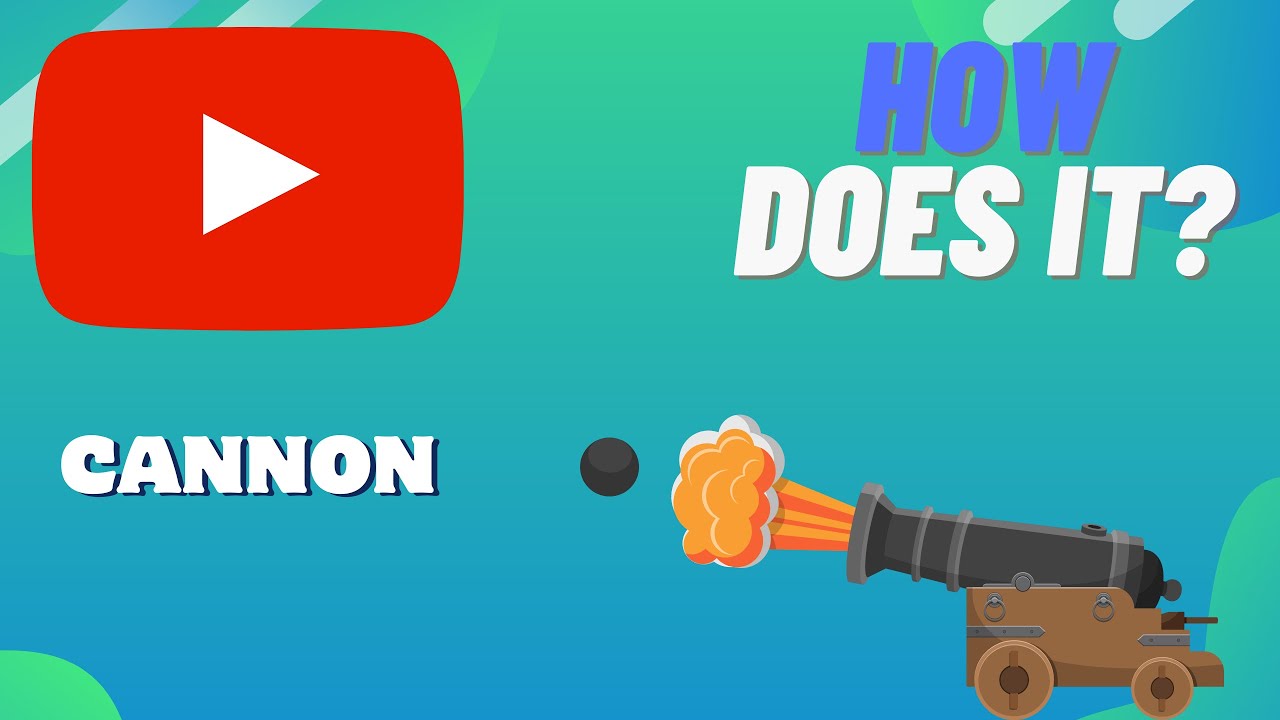
A cannon is a type of artillery weapon that uses explosive force to launch a projectile over long distances. The basic principle relies on rapidly expanding gases from an explosive charge to propel the projectile through a barrel and toward a target. Although cannons have evolved over centuries, their fundamental operation remains the same.
A cannon consists of several key components. The barrel is a long, hollow tube that guides the projectile and ensures accuracy. The projectile, often a cannonball or shell, is the ammunition launched from the cannon. The propellant, traditionally gunpowder, generates the energy needed to fire the projectile. The breech is the rear part of the barrel where the propellant is placed, while the muzzle is the front opening through which the projectile exits. The ignition system triggers the explosion of the propellant, which may involve a fuse, flint, or a modern electrical primer.
The process begins with loading, where the projectile and propellant charge are placed into the cannon. Early cannons required manual loading, often using tools like a ramrod to tightly pack the charge and projectile into the barrel. Modern cannons simplify this with cartridges that combine the propellant and projectile in a single unit.
Once loaded, the cannon is aimed at the target. Adjustments to elevation control the vertical angle, while azimuth adjustments determine the horizontal direction. Proper aiming ensures that the projectile follows a ballistic trajectory to reach its target.
When the cannon is fired, the propellant is ignited, creating rapidly expanding gases. These high-pressure gases push against the projectile, propelling it forward through the barrel at high speed. The tight fit of the projectile ensures that the explosive energy is used efficiently, directing maximum force behind the projectile.
As the projectile leaves the barrel, it follows a ballistic trajectory influenced by factors like the cannon’s angle, the projectile’s weight, and the force of the propellant. In modern designs, some projectiles include fins, explosive warheads, or guidance systems for greater accuracy and versatility.
Firing a cannon produces a significant backward force called recoil. Early cannons managed recoil by being mounted on wheeled platforms that rolled backward after firing. Modern cannons use recoil-absorbing mechanisms such as hydraulic dampers or springs, which stabilize the weapon and allow for quicker, more precise follow-up shots.
In summary, a cannon operates by igniting a propellant to generate explosive force that launches a projectile through a barrel. The process involves loading, aiming, firing, and managing recoil. Over time, advances in materials, engineering, and technology have made cannons more powerful, accurate, and versatile, serving roles in warfare, sports, and scientific exploration.
#education #learning #knowledge #fyp #school #how

Информация по комментариям в разработке