#heritage #indonesia #oralhistory #localtraditions #tanimbar #maluku
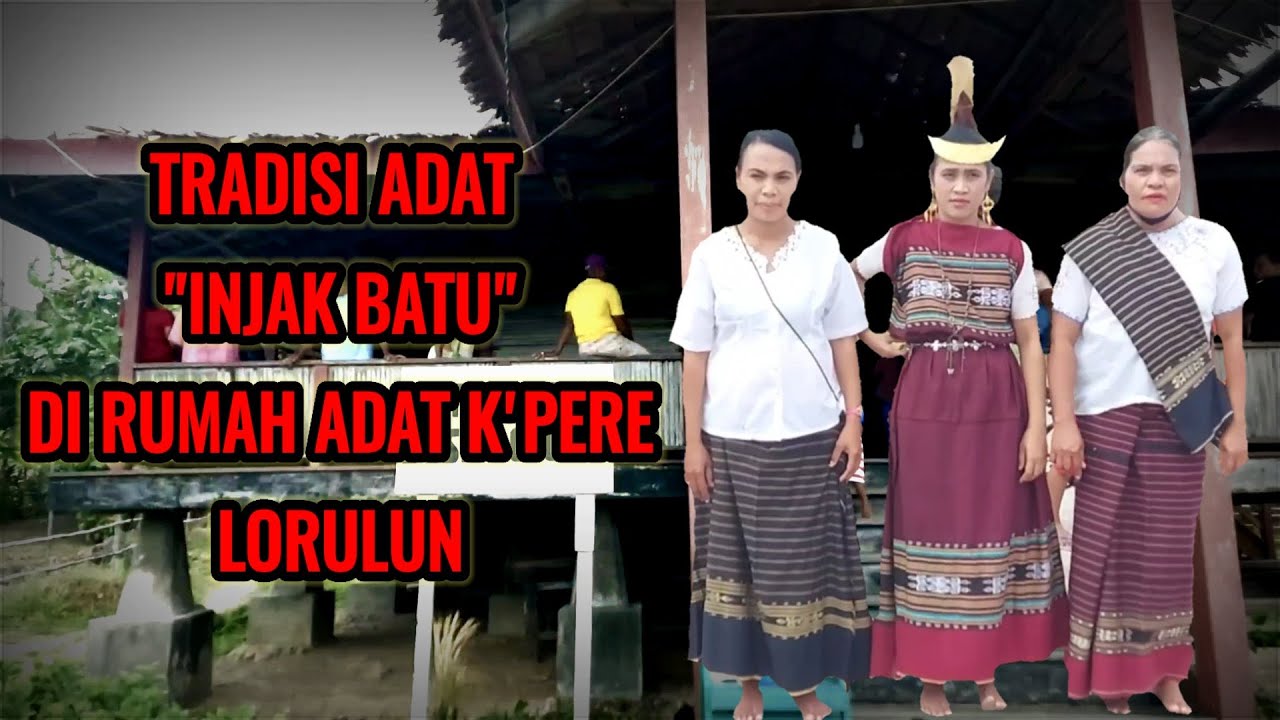
The traditional house of Loluran was established when the village of Lorulun was first formed in a different place, nearby Amtufu Old Village. It was moved to its current location in 1930. The size of the house was originally 6x8 m. It has three floors: the lower floor and the middle floor are a meeting place and the upper floor is a storage place for traditional objects. The house faces east and is parallel to the church. This house was built on what was the highest location in the past, called Dendang Silae. In 1970, the house was enlarged. Additions were made to the front, left, and right sides as more and more people came to the traditional house for their respective needs.
According to customary rules, guests must enter through the front door and exit from the side door. When someone is allowed to enter the traditional house, they have been accepted as a family member in Lorulan Village.
There are at least four parts to a traditional house: the house itself, the wall (lutur), the pedestal stone, and the kitchen. This traditional house has many traditional objects, including elephant tusks, wuri, bine, lili, suru, soso, tutuk, lolori, tibal, botiana, lufu, kukusi, tetekan, and some objects that cannot be shown to the public.
The interview features: Firminus Torim Tubun, a local community member.
Credits:
Director: Rinaldi Ad
Executive Producer: Multia Zahara, Ahmad Zaki
Drone: Fauzan Azhima
Interviewer: M. Afif Hasibuan
Editor, Colourist, DOP: Rinaldi Ad
The full metadata for this oral history interview can be found in the Maritime Asia Heritage Survey database under record (MAHS-IDN-MLK-TMB-WTM-S-010-OH-003).
The Maritime Asia Heritage Survey is based at Kyoto University’s Center for Southeast Asian Studies, under the direction of Professor R. Michael Feener. The MAHS has field survey teams working across multiple countries contributing to the ongoing development of an open-access online archive. Our growing dataset of archaeological sites and historical artifacts from the Maldives, Indonesia, and other countries of the region can be accessed at: https://maritimeasiaheritage.cseas.ky...
Follow us on:
Facebook: / maritimeasiaheritagesurvey
Instagram: / maritimeasiaheritagesurvey
Twitter (X): / asiasurvey
LinkedIn: / maritime-asia-heritage-survey


















Информация по комментариям в разработке