This Video is Property of Richard Chalklin!
2160p 4K HD!
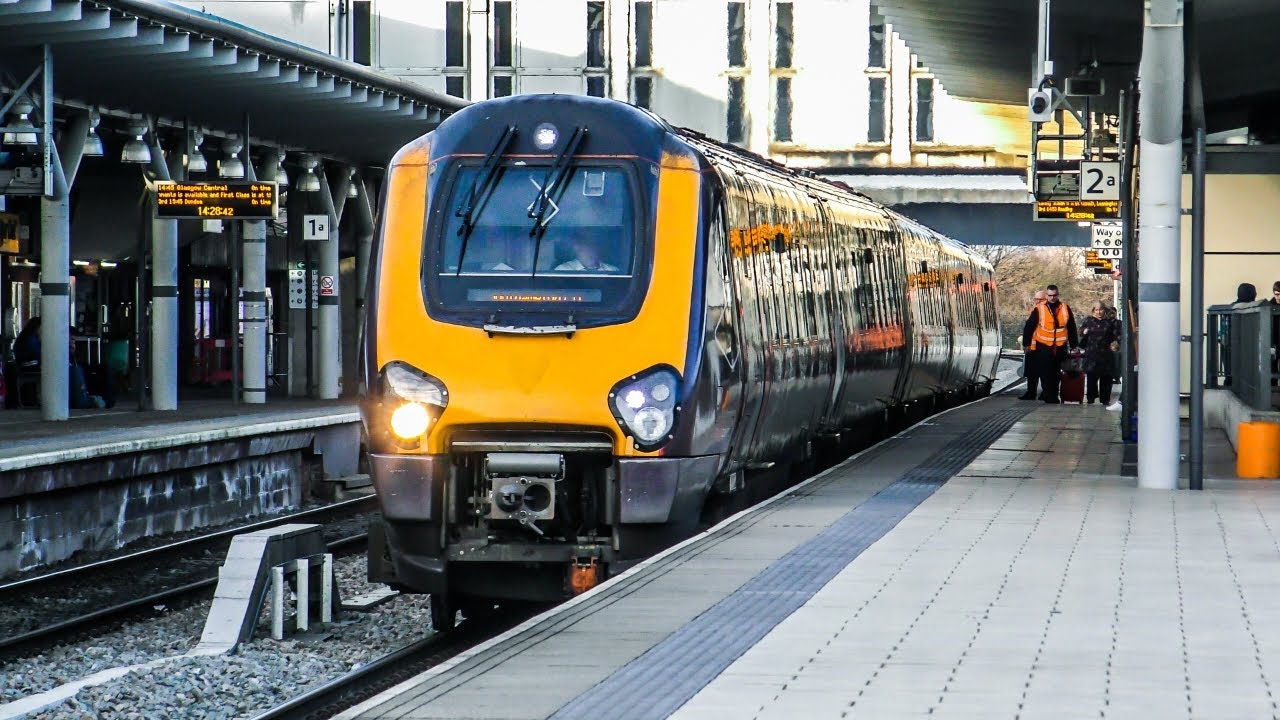
A cold visit to Derby station on the Midland Mainline on Saturday 14th December 2019.
Derby info:
Derby railway station (also known as Derby Midland) is a main line railway station serving the city of Derby in Derbyshire England. Owned by Network Rail and managed by East Midlands Railway, the station is also used by CrossCountry services and two daily Northern services.
It lies 127 miles 68 chains (205.8 km) north of London St Pancras. It is situated to the south-east of Derby city centre, and is close to the west bank of the River Derwent.
Overview:
The decision by the Midland Railway to have its headquarters in Derby made the town a busy node of the rail network. First opened in 1839, it was at the time one of the largest stations in the country, and was unusual for being shared by more than one company. Until its closure in 1990, Derby Railway Works, consisting of major carriage and locomotive workshops, as well as the Research Division in the Railway Technical Centre were housed there.
The station is an interchange point between the Midland Main Line from London St Pancras to Leeds and long-distance services on the Cross-Country route from Aberdeen through Birmingham New Street to Penzance or Bournemouth (the zero milepost on the latter route is at the south end of platform 1). Until the mid-twentieth century, the station was also served by through trains from Manchester and Glasgow to London.
Local services from Nottingham to Matlock along the Derwent Valley Line serve the station, as well as local and semi-fast services to Stoke-on-Trent, Crewe, Birmingham and Cardiff Central.
Derby station has six platforms in regular use, connected by a footbridge which is used as an exit to Pride Park and a car park.
In 2018, the station was remodelled and re-signalled as part of a major upgrade programme. A bay platform was removed and a new island platform built on the site of the former goods lines and carriage sidings. At the same time, the remaining platforms were straightened. The updated design has separated the London and Birmingham lines allowing more movements to pass through the station and has increased line speed through all the platforms. There is a service platform numbered as platform 7 which was used for passenger services during the initial phase of the project but is not used in regular service.
History:
After the building of the Stockton and Darlington Railway in 1825, a number of ambitious projects for long-distance lines between cities had been mooted. Among these was a line between London and Edinburgh, for both goods and passengers, via Bedford and Leeds, passing in between Carlisle and Newcastle.
Meanwhile, a number of short lines were built for specific purposes. Among these were the Mansfield and Pinxton and the Leicester and Swannington. The Mansfield and Pinxton was a feeder for a canal and was a wagonway, but these short lines were pivotal in later events. Possibly the longest was the Cromford and High Peak Railway, opened in 1833, to connect the Cromford Canal with the Peak Forest Canal. It attracted interest because it provided access to Manchester through the Peak District of Derbyshire, even today an obstacle to transport.
In the 1830s, lines were already in progress between Bristol and London and from each to Birmingham and thence to Liverpool and Manchester, and their promoters were looking ahead. Three schemes came to the fore for the East Midlands. The Midland Grand Junction Railway would connect Birmingham with Sheffield and Derby, with a branch to Nottingham and another branch from Sheffield to Manchester. There would also be a line to the East Coast at Goole.
Services:
East Midlands Railway operates a twice-hourly service over the Midland Main Line southbound to London St Pancras via Leicester and northbound to Sheffield, while CrossCountry runs long-distance inter-regional trains to Newcastle and Edinburgh Waverley northbound and to Plymouth via Bristol Temple Meads and to Reading (both via Birmingham New Street) southbound. The Edinburgh to Plymouth route runs via Leeds; the Newcastle to Reading trains operate via Doncaster and the Thames Valley line through Oxford. Certain Plymouth trains are extended to/from Penzance. There are also limited through services to Aberdeen, Dundee, Bournemouth, Glasgow Central and Guildford. CrossCountry also operates the Nottingham to Birmingham and Cardiff Central regional service.
Other local routes are operated by EMR, with hourly frequencies on the Nottingham - Matlock Derwent Valley Line and the Derby - Crewe via Stoke-on-Trent lines. Northern Rail also operates a single return service between Nottingham & Sheffield through here for route knowledge retention purposes (southbound early morning, returning north in the evening), although only the northbound service actually calls here.
#train #trains #derby

Информация по комментариям в разработке