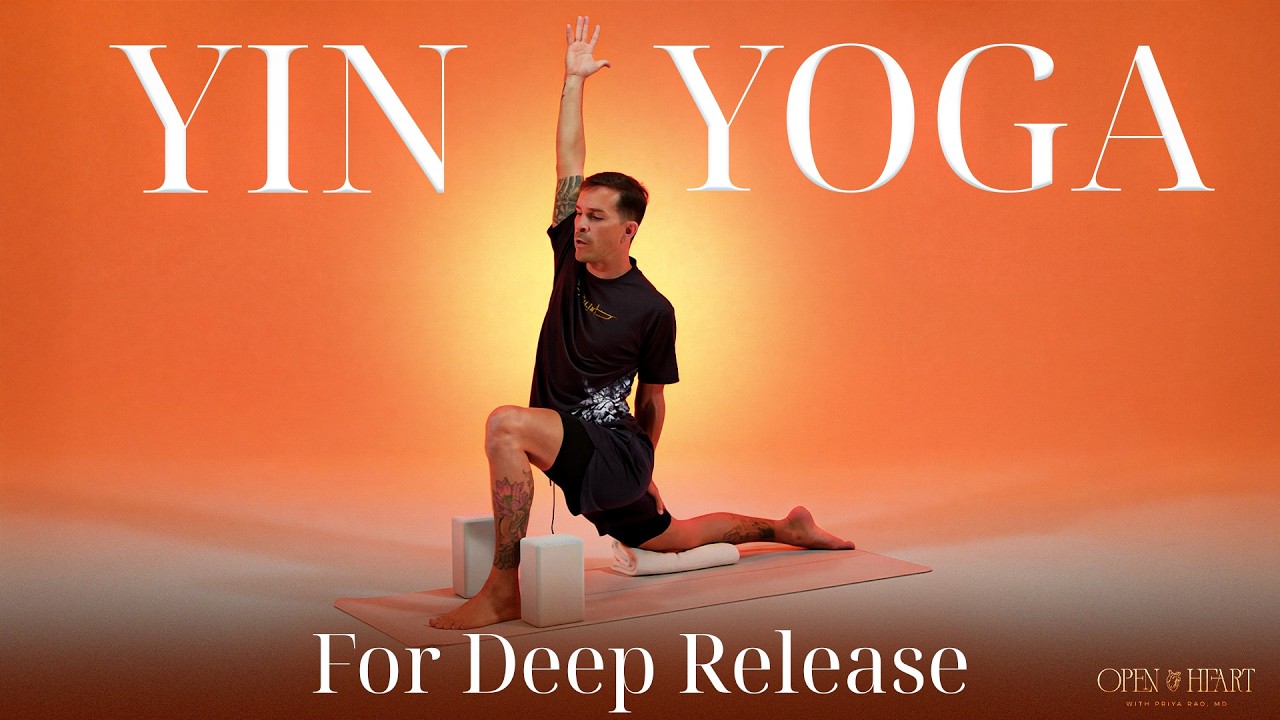
ABOUT THIS YIN YOGA SERIES
This Yin Yoga series was created to help you soften into the deeper layers of your body, fascia, and energy system. Each practice is organized by energy center (chakra), offering a gentle way to work with the physical, emotional, and subtle spaces that are asking for attention. We move through 15 postures, each with variations so you can meet yourself exactly as you are — without force, without striving.
This practice is part of a wider conversation with yoga instructor Daniel Castro on Open Heart, where we explore the body as a living memory field and the ways stillness can unlock healing, intuition, and emotional release. You can watch the full interview here: • The Truth My Body Was Trying to Tell Me
Rather than following a rigid sequence, this series invites intuition. Your body already carries its own intelligence. Trust it.
⸻
HOW TO USE THIS SERIES
1. Choose 4–6 postures
Let your intuition lead.
You can:
• Select one posture per chakra for a full-system reset
or
• Stay with one energy center if something feels tender, activated, or simply present
There is no right way — only what feels true in your body today.
2. Hold each posture long enough to reach the fascia
• Beginners: 1–2 minutes (fascia release begins around 90 seconds)
• Traditional Yin: 3–5 minutes
Soften into the hold. Let the effort fall away. Give your fascia space to unwind at its own pace.
3. Repeat on both sides
For unilateral shapes (twists, hip openers, side-body work), repeat on the opposite side to restore balance.
4. Listen closely to your body
Yin is a quiet conversation.
Find the place where sensation is present but your nervous system remains steady — the space between ease and effort, where healing can happen without strain.
5. Expect more than a physical release
As fascia unwinds, you may notice:
• Emotions rising
• Old memories surfacing
• Energy shifting
• Waves of relief or opening
⸻
WALKTHROUGH POSE-BY-POSE
00:00 Opening / Settle In
00:04:44 Toe Stretch
00:05:56 Ankle Stretch
00:07:38 Squat
00:11:16 Frog Pose
00:14:34 Dragon Pose
00:18:29 Swan Pose
00:20:44 Shoelace
00:22:46 Square / Double Pigeon
00:26:15 Angel Wings
00:27:50 Sphinx Pose
00:30:43 Supported Half Bridge
00:33:12 Fish Pose
00:35:19 Open Wing Pose
00:40:56 Bananasana
⸻
Fascia is a living, sensory matrix — a held archive of tension, stress patterns, and the emotional residue we never had words for. When the body softens and the fascia begins to release, those imprints can surface. This is normal. Often, it’s deeply healing, a quiet invitation into integrative healing and consciousness-awareness.
To explore how fascia, emotion, and energy intersect, you can listen to the companion Open Heart conversation with Priya Rao, MD — where science meets soul and the subtle body meets modern medicine.
⸻
You can return to this series 1–2 times per week, depending on what your body and energy system need. Yin is gentle but profound. With consistency, it supports long-term fascial, emotional, and energetic release. Even a single posture a day can shift your nervous system.
Above all, let intuition guide you:
If your body feels tight, tender, emotionally heavy, or energetically stagnant, it may be asking for Yin.
If you feel overstretched, depleted, or tired, rest is the wiser choice.
⸻
CONNECT
Yoga Instructor — Daniel Castro
IG: @nilahasta
Email: [email protected]
Podcast Host — Priya Rao, MD
IG: @dr.kothapalli
Podcast IG: @openheartthepod
Website: openheartpodcast.com
⸻
MEDICAL DISCLAIMER
This video is for educational purposes only and is not a substitute for professional medical advice, diagnosis, or treatment. Always consult your physician before beginning any new exercise practice. Move at your own pace and adapt based on your personal health.

Информация по комментариям в разработке