www.friantwater.org
https://aso.jpl.nasa.gov
Infrared technology to measure snowpack gains momentum
Knowing just how much water is in “the freezer” is getting easier.
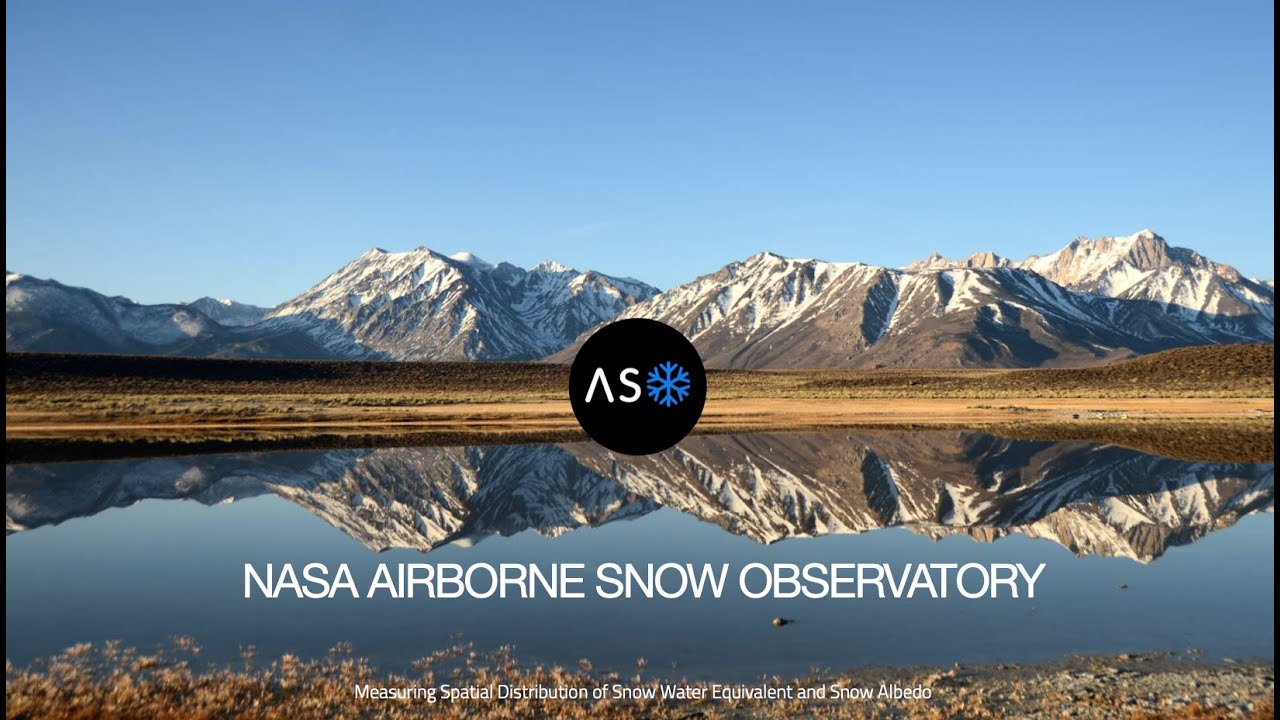
The “freezer” is the Sierra snowpack, an area that provides up to one-third of California’s water as it melts during the spring and summer months. The technology is a type of snow survey using Infrared radar deployed from the sky developed by the Airborne Snow Observatory (ASO) at NASA’s Jet Propulsion Laboratory in Southern California.
And, it is having a profound impact in California.
“ASO, together with field surveys and modeling determine how much volume of snow there is,” says Jeff Payne, Director of Water Policy for Friant Water Authority, an early adopter of the program. “It also takes a spectral view and shows how much energy the snow is absorbing. ASO can tell you if it’s about to run off and predicts early spikes in runoffs. (The technology) gives you a more precise measurement,” said Jeff Payne.
“We have a more accurate scientific knowledge of what’s existing in “the freezer (the Sierra snowpack),” says Kent Stephens, a farmer in the Delano-Earlimart Irrigation District. “This is a game-changer.”
Snow surveys typically involve manually pushing a tube down through the snowpack and extracting a core of snow to measure density, volume and retrieving other water-related data. But the pilot project, spearheaded by Friant Water Authority, maps water density using LiDAR infrared radar from the sky.
Here’s how it works:
Initially created to search for water on Mars, ASO deploys infrared lasers and radar to map and decode California’s snowpack and offers a better tool in managing California’s often uncertain water supply. The technology was featured during the Jan. 23-25 Mid-Pacific Region Water Users’ Conference in Reno.
From the sky using infrared radar, ASO has the ability to take measurements in every square meter of the watershed. The result: more precise volume and density measurements of snow and water that helps growers make key crop decisions.
“The strongest champion of the technology is the Department of Water Resources. They know it enhances outputs and precision. The big benefit is that it provides better data,” says Payne.
Payne says ASO technology benefits farmers in two ways: First through better and more accurate forecasts. “In dry years,” he says, “it helps forecasters in making allocations. In wet years, it helps Friant do what it does best. Knowing exactly how much groundwater there is helps forecast better allocations and aids local farmers.”
Payne is not alone in praising the technology as a bellwether for future water measurements and allocations. “Having used this technology, it is hard to imagine a future without it,” says Dave Rizzardo, Chief of Snow Surveys and Water Supply Forecasting, Department of Water Resources.
Says Wes Monier, Chief Hydrologist at Turlock Irrigation District: “What you‘ve done is created new reservoir space and water supply without any impacts to the current physical or environmental paradigms.”
“ASO provides invaluable information that is not otherwise available, most importantly information about the rate of melt that provides a real opportunity to optimize reservoir operations for water supply, flood control, and instream requirements,” says Steve Haugen, Watermaster, Kings River Water Association.
Friant Water Authority, which delivers water to about one million acres of Central Valley farmland, hopes the technology will expand in the years ahead.
# #

Информация по комментариям в разработке