Breaking News One - NASA has discovered eighth planet in distant star system
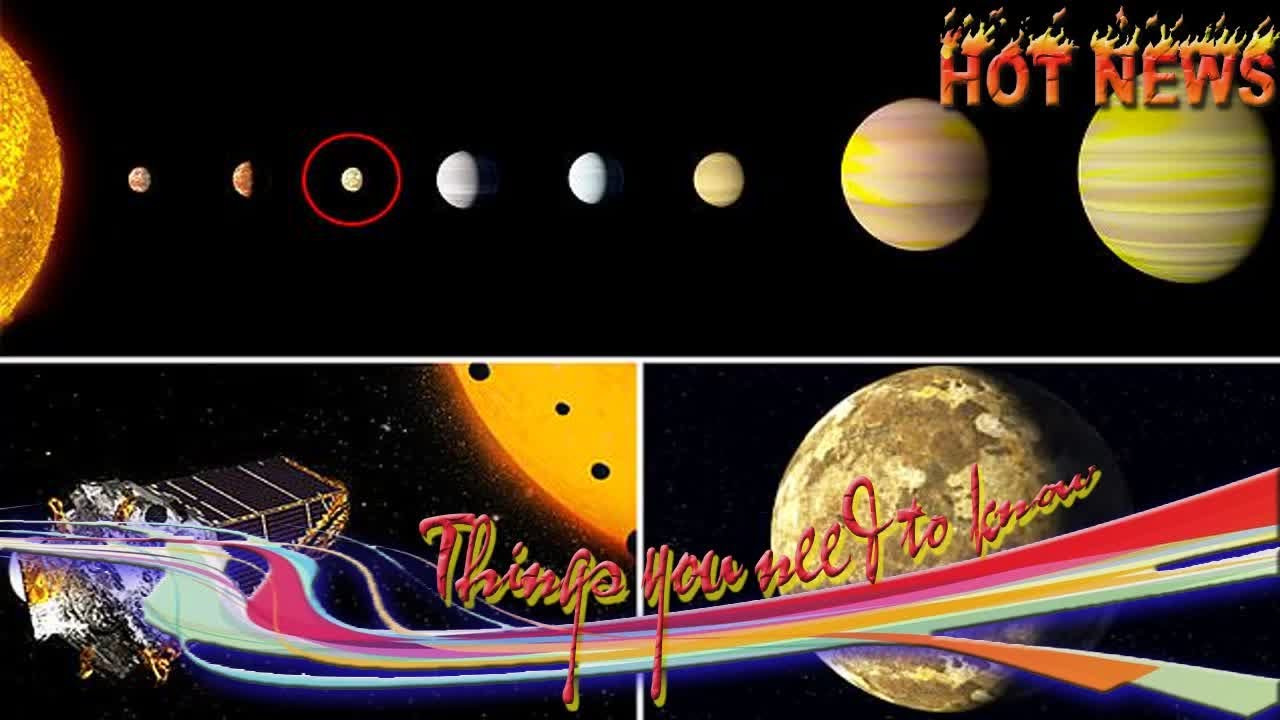
NASA's Kepler space telescope has discovered an eighth planet in a distant star system called Kepler 90 - the first time a faraway star has been found to have the same number of planets orbiting it as our own sun.Although the Kepler 90 solar system is not new, the eighth planet, Kepler 90i, is, after it was found using AI software in a groundbreaking project between Google and NASA.The discovery of a system similar to our own raises hopes of finding alien life elsewhere in the universe.The Kepler-90 planets have a similar configuration to our solar system, with small planets orbiting close to their star and the larger planets found farther away.According to NASA, this confirms for the first time that distant star systems can be home to 'families as large as our own.' The new planet, estimated to be about 30 percent larger than Earth, is 'not a place you'd like to visit,' said Andrew Vanderburg, astronomer and NASA Sagan Postdoctoral Fellow at The University of Texas, Austin.'It is probably rocky, and doesn’t have a thick atmosphere'.And, temperatures at the surface are 'scorching.' According to Vanderburg, the average surface temperature is likely around 800 degrees Fahrenheit.The Kepler planet hunting satellite has been searching the stars for distant worlds using Google's AI system, which used machine learning to 'find' planets in the Kepler data with up to 96 percent accuracy.Neural networks can be trained on huge amounts of data to determine the difference between different objects with great accuracy, the team explained in the teleconference.Much like an AI can learn to spot the difference between cats and dogs, it can spot the difference between patterns associated with planets, and other types of patterns in the cosmos that could be false positives.'After showing our model 15,000 signals, the neural network learned how to distinguish patterns from actual planets from patterns that are caused by other objects,' said Christopher Shallue, senior software engineer at Google AI in Mountain View, California.He worked on the system as part of his '20 per cent time' at the company, where employees are allowed to work on anything they want.'We used our model to identify two new planets from a set of 670 stars,' Shallue explained.'One of these two planets is called Kepler 80g.'The planet we are focusing on today is called Kepler 90i, which is the eighth planet in its star system.' 'This is a really exciting discovery, and we consider it to be a success,' in the use of neural networks in the search for distant worlds, the expert explained.How AI spotted Kepler 90i: The measured brightness of a star decreases ever so slightly when an orbiting planet blocks some of the light.The Kepler space telescope observed the brightness of 200,000 stars for 4 years to hunt for these characteristic signals caused by transiting planets The star system sits roughly 2,545 light-years from Earth in the constellation Draco, and of the new planets found, Kepler 90i is t
Source: http://www.dailymail.co.uk/sciencetec...

Информация по комментариям в разработке