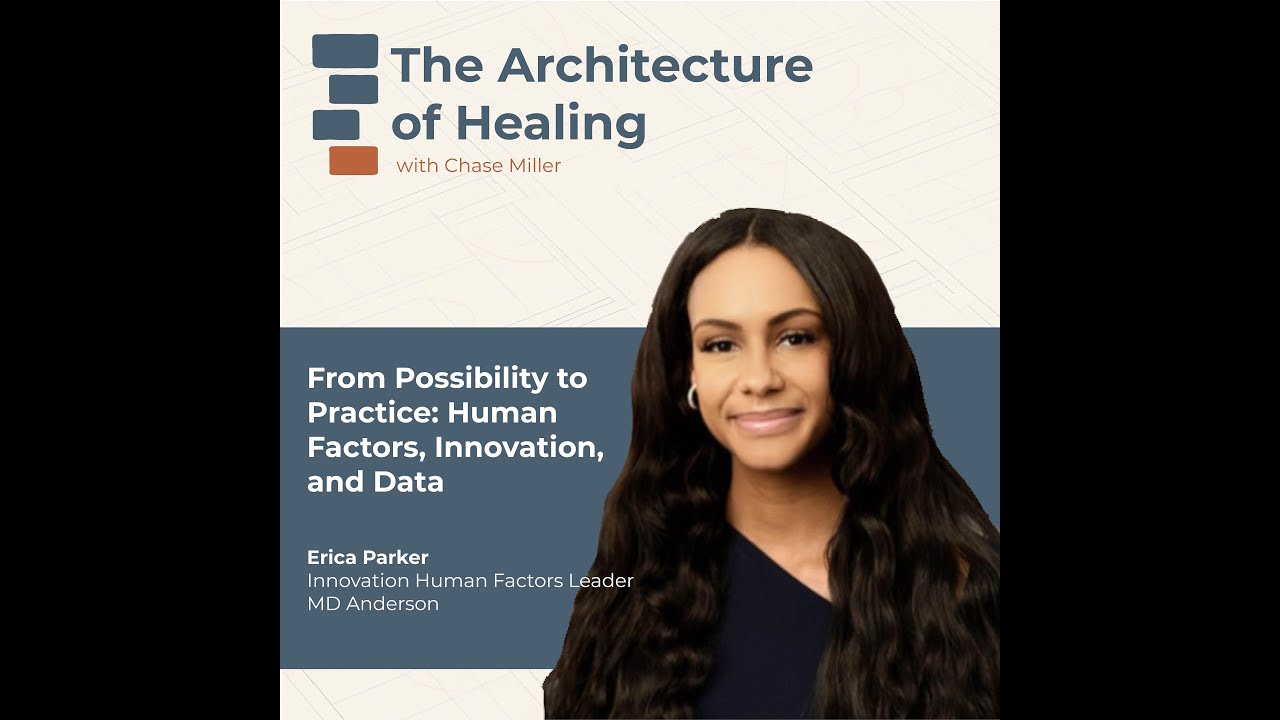
Healthcare innovation is moving faster than ever, but speed doesn’t always equal progress. In this episode, Chase Miller sits down with Erica Parker, a human factors leader whose career spans healthcare architecture, product design, and enterprise innovation at Memorial Sloan Kettering and MD Anderson. Together, they explore how human factors and human-centered design help healthcare organizations evaluate emerging technologies, reduce risk, and implement AI in ways that truly improve patient and staff experience.
This conversation challenges the assumption that more technology is always better—and offers a grounded framework for leaders navigating the future of healthcare innovation.
Key Topics Covered
What human factors really means in healthcare—and why it’s often misunderstood
Lessons from speculative design and the Breaking Through competition
Why many “innovative” healthcare technologies fail to scale
The difference between radical, disruptive, incremental, and adjacent innovation
How AI can unintentionally increase cognitive load and operational risk
Why education, staffing, and workflow readiness matter as much as technology
Governance, intake, and lifecycle management of AI in healthcare systems
Evaluating vendors, pilots, and emerging tools responsibly
The risks of automating human connection out of healthcare
Why ambient listening, AI agents, and automation require clearer expectations
The future of healthcare data—and what patient ownership could unlock
Key Takeaways
Just because a technology can do something doesn’t mean it should—especially in high-reliability healthcare environments.
Human factors bridges the gap between innovation and safe, effective implementation.
Constraints drive better innovation—incremental improvements often create the greatest day-to-day impact.
AI must be evaluated at a systems level, not as isolated tools.
Education gaps can undermine even the best-designed technology.
Healthcare’s future depends on governance, readiness, and trust—not hype.
Memorable Quotes
“Just because the technology can do something doesn’t mean that’s the right direction to go.”
“Innovation isn’t about shiny tools—it’s about improving safety, performance, and satisfaction.”
“Sometimes the problem isn’t the product. It’s education.”
“The future of healthcare is data—and eventually, patients will own it.”
About the Guest
Erica is a human factors leader with a background in healthcare architecture, product design, and enterprise innovation. She has worked at Perkins Eastman, Memorial Sloan Kettering Cancer Center, and currently supports AI, operational intelligence, and human-technology interaction at MD Anderson, focusing on safety, performance, and scalable innovation.
Connect with Erica - / elparchitecture
Breaking Through Competition - Aroma
Breaking Through Competition - G.I.S.M.O.
About the Podcast
The Architecture of Healing explores the intersection of healthcare strategy, design, operations, and experience—examining how environments, systems, and decisions shape care delivery and healing.
www.thearchitectureofhealing.com
Connect with Chase - www.linkedin.com/in/chase-h-miller/

Информация по комментариям в разработке