(29 Dec 2016) In a child care centre in Belgrade, a drawing of a Christmas tree is dotted with colourful paper stickers where young migrants have written down their New Year wishes.
Samir, a 16-year-old from Afghanistan, points to his wish written in English on a red circle.
"I want to go to London," the teenager said.
His parents are in Afghanistan, but he says he can speak English and wants to go.
Samir is part of a group of young migrants who were placed temporarily at the government-run centre in the Serbian capital after they were spotted roaming the streets on their own.
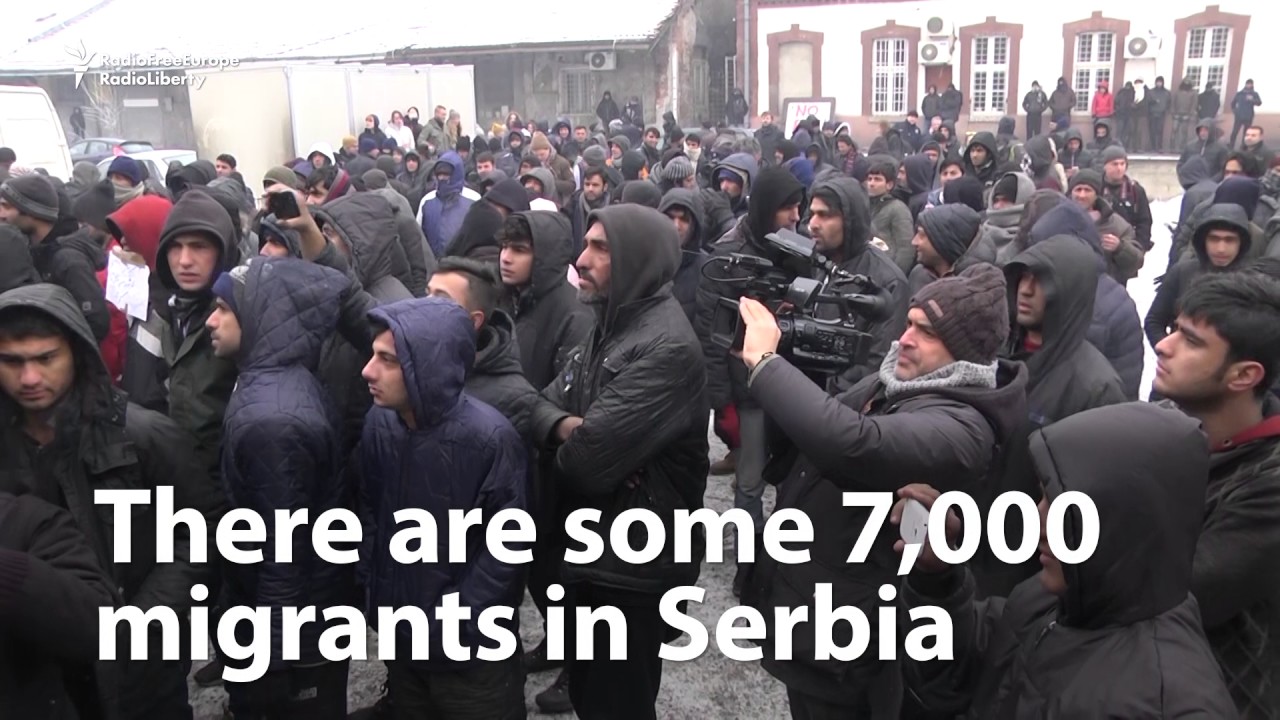
Minors make up about 40 percent of the thousands of migrants in Serbia seeking ways to cross the heavily guarded borders of neighbouring European Union nations Croatia or Hungary, according to the United Nations Children's Fund.
Youth travelling alone or in small groups try to avoid detection and offers of aid because they hope to earn money once they reach Europe, but instead find hardship and cold sleeping in makeshift shelters or parks.
Experts said unaccompanied teenagers are particularly at risk because of their age, lack of physical strength and inexperience.
They face enormous physical and mental strain.
Dragan Rolovic, the Belgrade child care centre chief, says the common dominator in all the children is uncertainty.
The priority is therefore to offer psychological support.
Some minors in central Belgrade huddle at a former customs warehouse next to the city's bus station.
It's a rubbish-strewn complex, but the improvised fires allow them to escape the sub-zero temperatures for a while.
Noman, a 15-year-old from Afghanistan, said he has tried twice to cross into Croatia. Police stopped him at the border both times and sent him back.
"I want to go forward to Croatia and Italy," said Noman, who left Afghanistan nine months ago because "people are fighting and killing each other."
Authorities have tried to find the youths' families, either back in their home countries or along the routes taken by migrants hoping to reach Europe.
"Can you even imagine in what sort of condition someone can be after travelling for months, on foot, in crowded vehicles, thousands of kilometres? They reach Belgrade and then they spend weeks and months in the open, these are situations we can't imagine," said Tatjana Ristic, who works with Save the Children in Serbia.
Save the Children and other groups work with migrants outside government facilities in a small hub called "Miksaliste" in the downtown area.
One room in "Miksaliste" is reserved for children to draw, read or play. A large drawing depicts police with dogs guarding a border behind barbed wire.
Some of the minors have set off with their families, but ended up separated either by chance, or by smugglers who divide families to control them, aid workers say.
Teenage migrants also are sent away from home by parents who want them to reach western Europe so they eventually can bring the rest of the family over, or earn enough money to support relatives who stayed behind.
These children - usually from Afghanistan or Pakistan - face additional pressure to succeed at any price, said Michel Saint-Lot, UNICEF representative in Serbia.
Saint-Lot recalled a 16-year-old from Afghanistan who tried to kill himself after his parents refused to let him come back home.
"A kid is sent on a mission ... he felt that he was failing, he failed his family, he failed himself," Saint-Lot said. "The burden on those kids is enormous."
Find out more about AP Archive: http://www.aparchive.com/HowWeWork
Twitter: / ap_archive
Facebook: / aparchives
Instagram: / apnews
You can license this story through AP Archive: http://www.aparchive.com/metadata/you...








Информация по комментариям в разработке