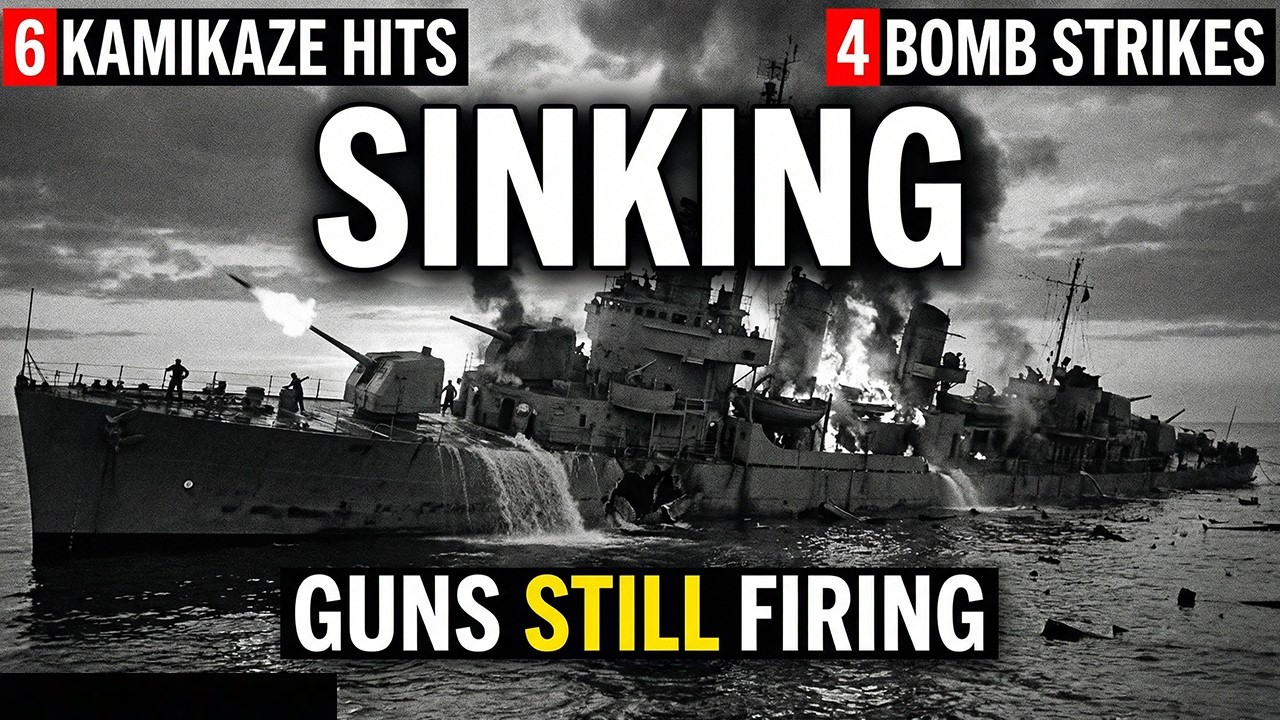
On May 3, 1945, the USS Aaron Ward faced the most intense kamikaze attack of the Pacific War. Assigned to the deadliest radar picket station off Okinawa, this destroyer was struck by six suicide aircraft and four heavy bombs in just thirty minutes. With 45 men dead, 49 wounded, and the ship flooding and on fire, one sailor discovered a desperate trick that prevented a catastrophic ammunition explosion that would have killed everyone aboard.
This is the story of Steward First Class Carl Clark, an African American sailor whose heroism was ignored for 67 years due to racial prejudice. While the ship was sinking, Clark entered a superheated ammunition handling room where shells were cooking off and seconds from detonation. Using a fire-control technique he had taught himself, he prevented the magazine from exploding and saved 300 lives.
But the Navy buried his story. The recognition he deserved was denied because of the color of his skin. It took until 2012—67 years after the battle—for the truth to finally emerge.
This documentary reveals the minute-by-minute battle aboard the Aaron Ward, the engineering tricks that kept a sinking ship fighting, and the injustice that denied a hero his rightful place in history. From the first radar contact to the desperate nighttime tow to safety, witness one of the most remarkable survival stories of World War Two.
The guns never stopped firing. The ship refused to sink. And one man's courage changed everything.
TIMESTAMPS
0:00 - Introduction: The Ship That Wouldn't Die
1:23 - May 3, 1945: Radar Picket Station Ten
3:45 - The Calm Before the Storm
6:12 - Radar Contact: 25 Kamikazes Inbound
8:34 - General Quarters: The Crew Prepares
10:56 - First Wave: Shooting Down the Divine Wind
13:28 - Bomb Strike: The After Engine Room Destroyed
15:41 - First Kamikaze Hit: The Superstructure Burns
17:59 - Dead in the Water: Losing Steering and Power
20:15 - The Ammunition Crisis: Shells Begin Cooking Off
22:47 - Carl Clark's Desperate Stand in the Fire
25:33 - Multiple Kamikaze Strikes: The Ship Breaks Apart
27:08 - The Tow to Safety: 50 Miles of Terror
28:42 - The Casualty Count: 45 Dead, 49 Wounded
29:15 - The Injustice: 67 Years of Silence
#worldwar2 #ww2history #ww2 #wwii
SOURCES AND REFERENCES:
Becton, F. Julian, and Joseph Morschauser III. "The Ship That Would Not Die: USS Laffey DD-724 in World War II, Korea, and Vietnam." Naval Institute Press, 1980.
Cressman, Robert J. "The Official Chronology of the U.S. Navy in World War II." Naval Historical Center, Department of the Navy, 1999.
Davis, Russell. "USS Aaron Ward (DM-34): Action Report - Kamikaze Attack, 3 May 1945." National Archives and Records Administration, College Park, Maryland, 1945.
Feifer, George. "The Battle of Okinawa: The Blood and the Bomb." Lyons Press, 2001.
Hornfischer, James D. "The Fleet at Flood Tide: America at Total War in the Pacific, 1944-1945." Bantam Books, 2016.
Morison, Samuel Eliot. "History of United States Naval Operations in World War II, Volume XIV: Victory in the Pacific, 1945." Little, Brown and Company, 1960.
Naval History and Heritage Command. "Dictionary of American Naval Fighting Ships: USS Aaron Ward (DM-34)." Department of the Navy, Washington, D.C., 2018.
Rielly, Robin L. "Kamikaze Attacks of World War II: A Complete History of Japanese Suicide Strikes on American Ships, by Aircraft and Other Means." McFarland & Company, 2010.

Информация по комментариям в разработке