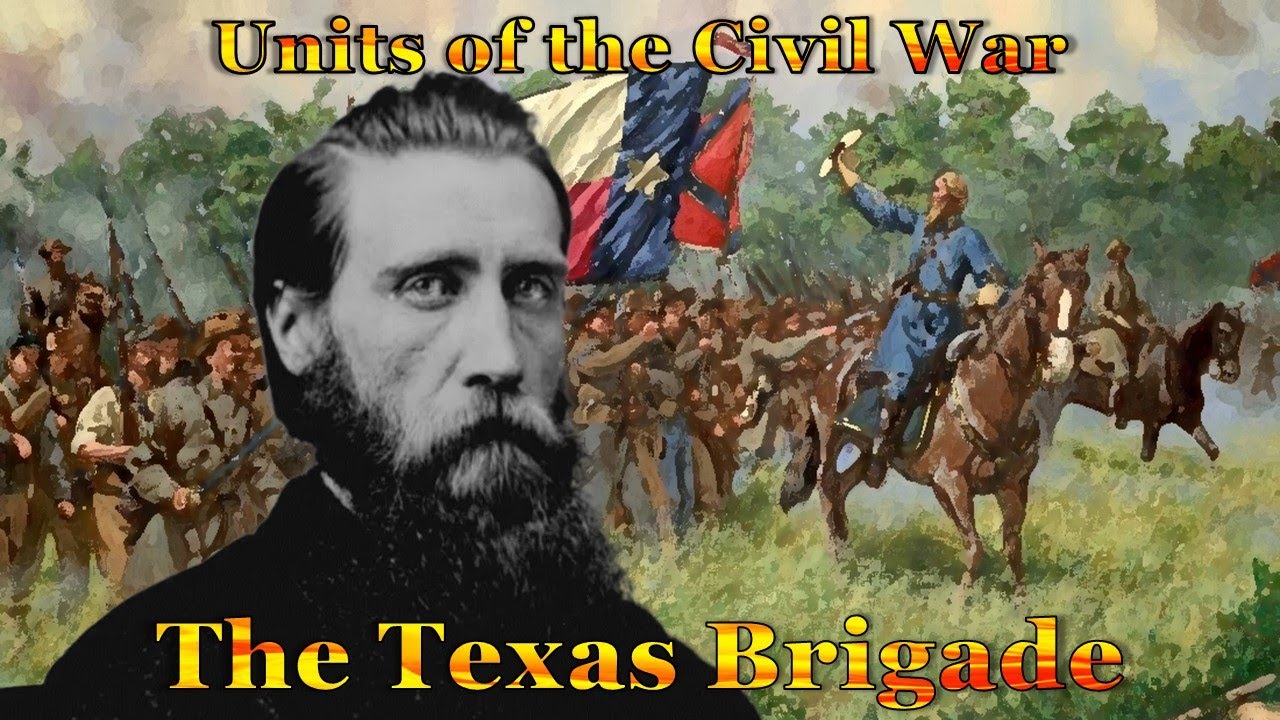
The American Civil War saw the rise of many legendary military units, but few earned the reputation for audacity and courage quite like the Texas Brigade. This elite infantry formation, comprised primarily of Texans, left an indelible mark on the Eastern Theater, fighting alongside Robert E. Lee's Army of Northern Virginia throughout the conflict. Their story is one of unwavering dedication, relentless attacks, and ultimately, tragic sacrifice.
The Texas Brigade officially formed on October 22, 1861, in Richmond, Virginia. Initially commanded by Brigadier General Louis T. Wigfall, it consisted of the 1st, 4th, and 5th Texas Infantry Regiments. These men, hailing from diverse backgrounds across the vast state, were united by a fierce sense of Southern pride and a willingness to defend their newly formed Confederacy.
The brigade's early days were marked by hardships. Many arrived poorly equipped, some even lacking basic weapons. Yet, their training under the stern but respected leadership of Colonel John Bell Hood instilled a formidable discipline and unwavering fighting spirit.
The Texas Brigade's first taste of combat came at the Battle of Eltham's Landing in May 1862. Thrust into the thick of the fighting, they charged Union positions with ferocious determination, earning praise for their valor even in the face of heavy losses. This baptism by fire set the stage for their future exploits.
Throughout the war, the Texas Brigade participated in nearly every major battle of the Eastern Theater, from the Seven Days Battles to Antietam and Fredericksburg. Their courage and tenacity became legendary, with their fearless charges often turning the tide of battle.
At Gaines' Mill, they spearheaded a crucial assault, capturing Union artillery and breaking their lines. At Second Manassas, their unwavering resolve against overwhelming odds helped secure a Confederate victory. And at Sharpsburg (Antietam), despite suffering crippling losses, they held their ground against repeated Union attacks, earning the respect of their enemies.
The brigade's leadership played a crucial role in their success. John Bell Hood, eventually rising to the rank of Lieutenant General, became synonymous with the unit's daring tactics and aggressive spirit. Other commanders like Jerome B. Robertson and James J. Archer also proved their mettle, leading their men through countless charges and enduring heavy casualties.
The Battle of Gettysburg, July 1st-3rd, 1863, etched the Texas Brigade's name into the annals of American military history. While their accomplishments were ultimately overshadowed by the Confederate defeat, their bravery and sacrifice remain deeply admired. Let's delve into their actions during the battle, phase by phase, and consider the tragic cost of their valor.
The Texas Brigade was initially held in reserve. However, the Confederates' afternoon attack on Union positions on McPherson's Ridge faltered. Sensing an opportunity, General Longstreet ordered the brigade, under Brigadier General Jerome B. Robertson, to assault the left flank of the Union line.
They charged with their famed Southern yell, overrunning the 20th Maine and capturing key ground. However, facing intense artillery fire and flanking Union counterattacks, their advance stalled. They ultimately held their ground until darkness ended the day's fighting.
This day saw the most significant action for the Texas Brigade. Positioned near Devil's Den, they were tasked with spearheading the assault on Little Round Top, a strategic Union position. General Hood, now commanding the brigade, led the charge.
The Texans reached Devil's Den, a rocky battlefield, where they engaged in brutal hand-to-hand combat with the 20th Massachusetts. The fighting was ferocious, dubbed "a hell on earth" by survivors. The Texans initially routed the Union troops but were pinned down by heavy fire from Little Round Top and flanking Union forces.

Информация по комментариям в разработке