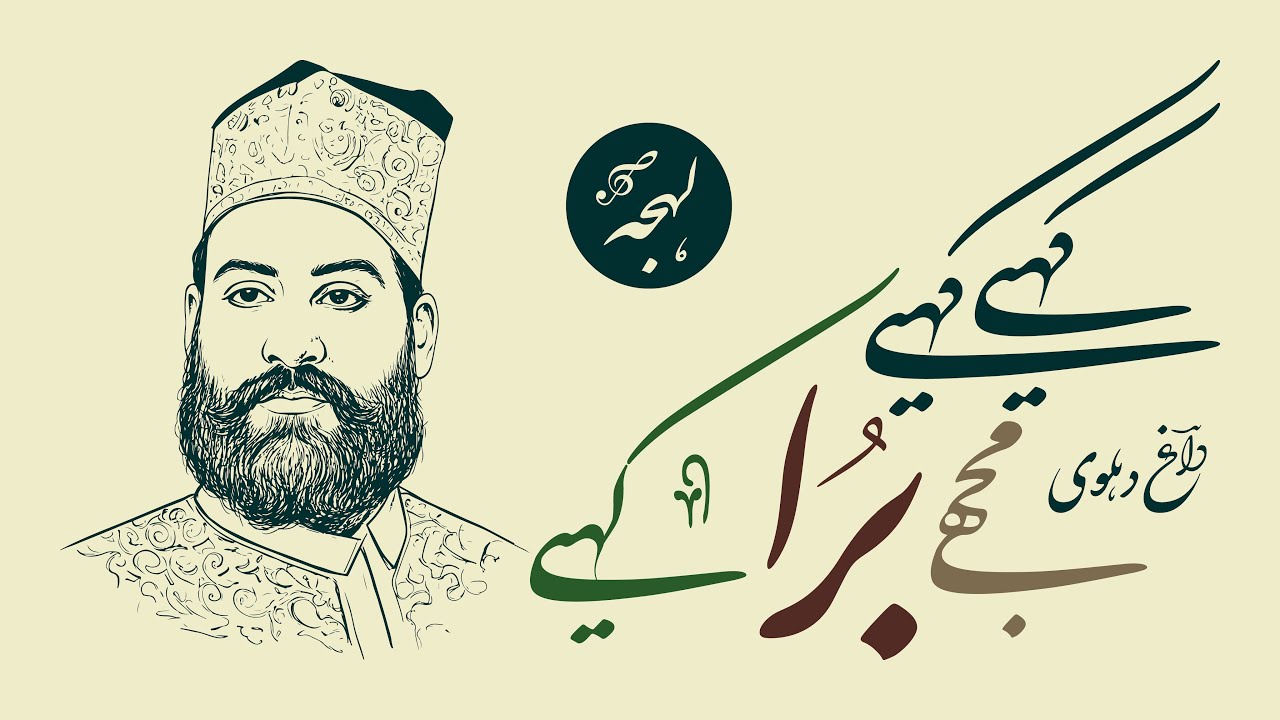
Classic Urdu Poetry by DAGH DEHLVI. Recited by Raheel Farooq.
Na Rawa Kahiye Na Saza Kahiye
Kahiye Kahiye Mujhe Bura Kahiye
Famous Urdu Ghazal by Nawab Mirza Khan Daagh Dehlvi
What do you love most about this old shayari classic? Let us know in the comments!
_____
LEHJA
Lehja is a celebration of the timeless art and beauty of Urdu literature, especially poetry. As the largest online media library of Urdu classics, it brings the masterpieces of the greatest Urdu writers to life through eloquent readings and recitations in the voice of Raheel Farooq, enhanced by the soothing melodies of the sitar. Upholding the highest standards of Urdu accent and pronunciation, Lehja is also known for its aesthetic calligraphy, tasteful selections and the subtle art of heart-touching performance, ensuring that every video delivers an unforgettable cultural, emotional and spiritual experience to you. Whether you are a lover of Urdu Adab, an admirer of fine art or someone exploring the best of the Urdu language, Lehja cordially welcomes you to a world of peace, poise and purity.
LINKS
Subscribe: / @urdu
Support: / urdu
Shop: https://www.amazon.com/shop/urdu (affiliate commissions)
BUSINESS
Elevate your brand with professional Urdu voice over, translation, writing and consultation services. Partner with us to achieve your business goals. Reach out to us at info@urdupro.com.
LEGAL
The rights to music, images and literature (unless in the public domain) belong to their respective creators. For any concerns, please contact info@urdugah.com. All voiceovers, videos, branding and publications are copyrighted by Raheel Farooq.
_____
DAGH DEHLVI
Nawab Mirza Khan Dagh Dehlavi (1831–1905) was one of the last great voices of classical Urdu poetry, born within the royal walls of Delhi’s Red Fort and raised under the shadow of Mughal grace. Life took many turns after the death of his stepfather, Prince Mirza Mohammad Sultan, and the eventual fall of Delhi in 1857. From the comfort of Rampur to the cultural crossroads of Lucknow, Patna, Calcutta, and Hyderabad, Dagh’s journey was as textured as his verse. A disciple of the celebrated Zauq and a mentor to many, Dagh refined the ghazal into an intimate art of conversation—rich in idiom, tender in emotion, and often laced with wit and warmth. He brought the delicacy of Lucknow and the dignity of Delhi together, while keeping his language rooted in everyday speech. Steering love poetry away from lofty abstractions, Dagh turned it into a deeply human—and at times sensuous—expression. His four divaans, a collection of letters, and a long narrative poem remain as luminous testaments to a poet who cherished beauty in its simplest, most heartfelt form.
_____
Full Text of the Urdu Ghazal in Roman Transliteration (Courtesy: Rekhta):
nā-ravā kahiye nā-sazā kahiye
kahiye kahiye mujhe burā kahiye
tujh ko bad-ahd o bevafā kahiye
aise jhūTe ko aur kyā kahiye
dard dil kā na kahiye yā kahiye
jab vo pūchhe mizāj kyā kahiye
phir na rukiye jo mudda.ā kahiye
ek ke ba.ad dūsrā kahiye
aap ab merā muñh na khulvā.eñ
ye na kahiye ki mudda.ā kahiye
vo mujhe qatl kar ke kahte haiñ
māntā hī na thā ye kyā kahiye
dil meñ rakhne kī baat hai ġham-e-ishq
is ko hargiz na barmalā kahiye
tujh ko achchhā kahā hai kis kis ne
kahne vāloñ ko aur kyā kahiye
vo bhī sun leñge ye kabhī na kabhī
hāl-e-dil sab se jā-ba-jā kahiye
mujh ko kahiye burā na ġhair ke saath
jo ho kahnā judā judā kahiye
intihā ishq kī ḳhudā jaane
dam-e-āḳhir ko ibtidā kahiye
mere matlab se kyā ġharaz matlab
aap apnā to mudda.ā kahiye
aisī kashtī kā Dūbnā achchhā
ki jo dushman ko nāḳhudā kahiye
sabr furqat meñ aa hī jaatā hai
par use der-āshnā kahiye
aa ga.ī aap ko masīhā.ī
marne vāloñ ko marhabā kahiye
aap kā ḳhair-ḳhvāh mere sivā
hai koī aur dūsrā kahiye
haath rakh kar vo apne kānoñ par
mujh se kahte haiñ mājrā kahiye
hosh jaate rahe raqīboñ ke
'dāġh' ko aur bā-vafā kahiye
#Urdu #Poetry #Literature




![Daagh Dehlvi Poetry - Hum Dekhne Walon Ki Nazar Dekh Rahe Hain - LEHJA [Urdu Poetry Channel]](https://i.ytimg.com/vi/ZEhyC3UT-Vg/maxresdefault.jpg)





![NOOH NARVI - Kahin Barhte Barhte Na Barh Jaye Jhagra - LEHJA [Urdu Poetry Channel]](https://i.ytimg.com/vi/36cGHjxOtfc/maxresdefault.jpg)
Информация по комментариям в разработке