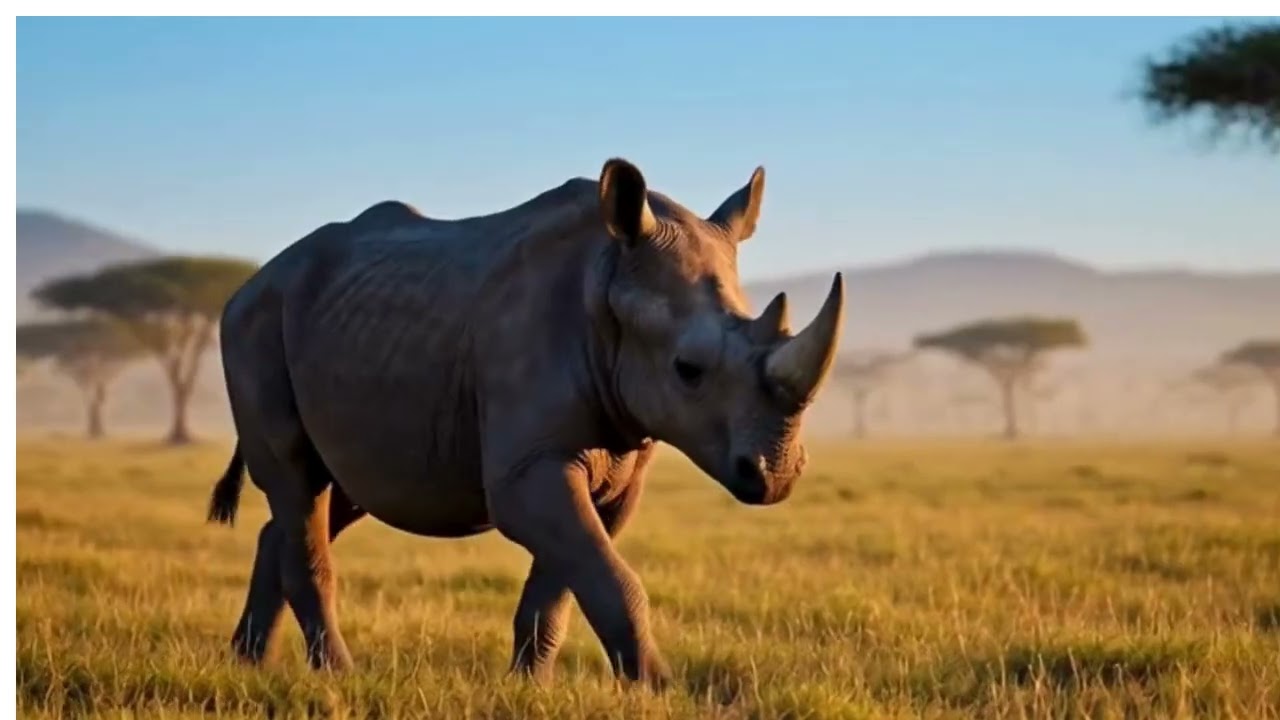
It looks like something from another age. Armored skin. A powerful horn. And the strength of a charging truck. But this isn’t a creature from the past. It’s very much alive — roaming the wild landscapes of Africa and Asia. This is the adventure of the rhinoceros. Rhinos are among the largest land mammals on Earth, second only to elephants. For millions of years, they’ve survived predators, climate shifts, and changing landscapes. Today, we’ll explore:
• How rhinos are built for survival
• The surprising sensitivity behind their tough appearance
• Their daily life on the savanna and in the forest
• And the challenges threatening their future.
This is the rhino adventure. A fully grown rhino can weigh over two tons. Its thick skin, sometimes compared to armor plating, can be nearly two inches thick. But it’s not just tough — it’s flexible, allowing the rhino to move with surprising agility. And then there’s the horn. Made of keratin — the same material as human hair and nails — a rhino’s horn can grow over three feet long. It’s used for defense, dominance, and digging for water or roots. Despite their size, rhinos can run up to 30 miles per hour.
In the wild, power is protection. Rhinos may not have the best eyesight — but they don’t need it. Their sense of smell is extraordinary. They can detect other animals, predators, or potential mates from great distances. Their large, swiveling ears constantly scan the environment for danger. Rhinos communicate using vocal sounds — from grunts and snorts to high-pitched squeals. They also mark territory using scent trails. Behind that rugged exterior is an animal deeply aware of its surroundings. Rhinos spend much of their day grazing on grasses or browsing shrubs and leaves. Some species, like the white rhino, prefer open savannas. Others, like the Indian rhinoceros, thrive in grasslands and riverine forests. Mud wallows are essential. Rolling in mud helps regulate body temperature and protects their skin from insects and sunburn. Though often solitary, rhinos are not entirely antisocial. Females raise calves alone, forming strong bonds that last for years. In a harsh environment, even the strongest animals rely on instinct and routine. Despite surviving for millions of years, rhinos now face their greatest threat — humans. Poaching for their horns has drastically reduced populations across Africa and Asia. Habitat loss further limits their ability to roam and reproduce. But there is hope. Conservation programs, anti-poaching patrols, and wildlife reserves are working tirelessly to protect them. In some regions, rhino populations are slowly recovering. Their survival depends on continued global effort. The rhino’s adventure is one of resilience. Ancient strength in a modern world. Power balanced by vulnerability. From solitary grazers to charging defenders, rhinos remain one of Earth’s most extraordinary animals. If you enjoyed this journey into the wild, like this video, subscribe for more wildlife documentaries, and share this story. Because protecting the wild means protecting the giants who walk within it.

















Информация по комментариям в разработке