(25 Oct 2023)
RESTRICTION SUMMARY:
ASSOCIATED PRESS
Xochimilco, Mexico - 23 October 2023
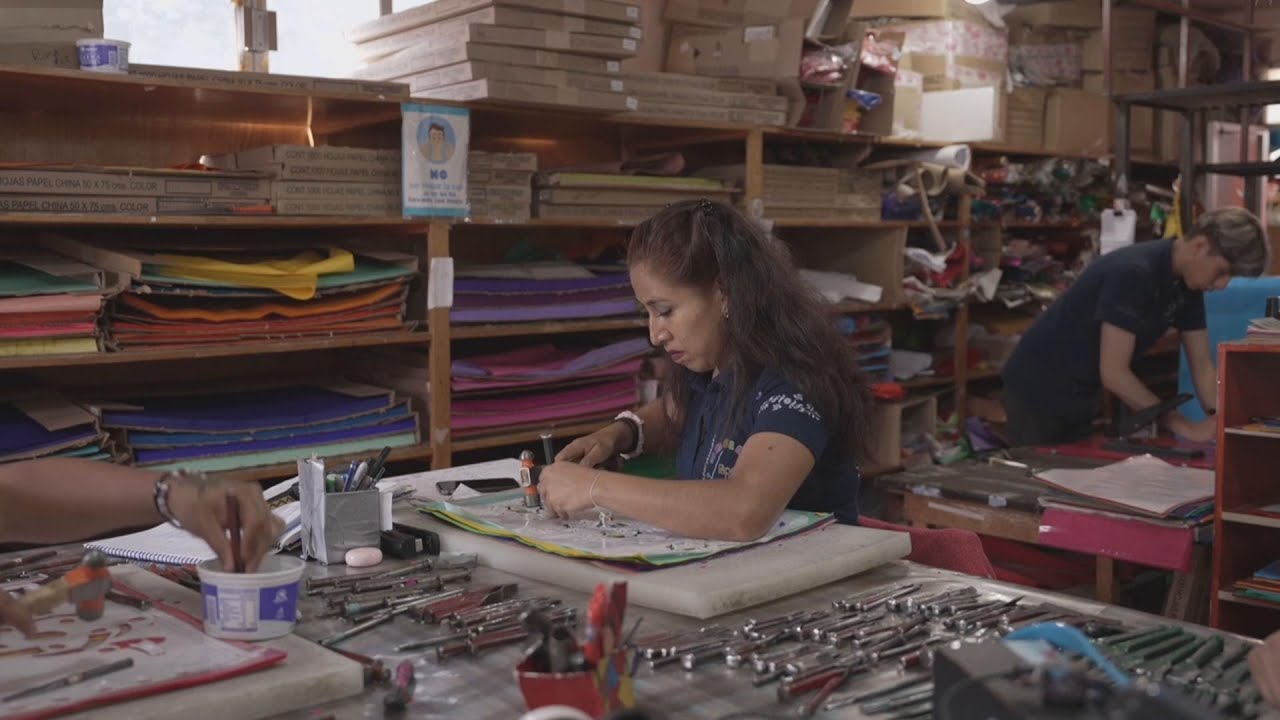
1. Various of artisan cutting skull shape from paper for Day of the Dead
2. Paper pieces falling on the floor
3. Artisan cutting skull shape from paper for Day of the Dead
4. Chisel cutting through paper
5. SOUNDBITE (Spanish) Yuridia Torres Alfaro, workshop owner:
"To craft the paper gives me joy and enthusiasm. Sometimes, when I sit down to work, because of the production deadlines, I only have a certain amount of time. Some decorations take more time, others less, but it's like sculpting a work of art, and at the end, when I see it done, I see that it looks good, and it gives me a lot of pride."
6. Paper cut-out decorations workshop
7. Various artisan working
8. Chisel cutting through the paper
9. Skeleton paper cut-out decorations hanging on the street
10. Various of Wendy Castillo, entrepreneur, selling paper cut-out decorations to a client
11. Day of the Dead local fair stands
12. Wendy Castillo organizing paper cut-out decorations in her stand
13. SOUNDBITE (Spanish) Wendy Castillo, entrepreneur:
"For me, cut-out paper means Mexico. It is the most traditional thing in our country. It also represents November, my favourite month because it is when our ancestors visit us."
14. Various of local entrepreneurs at a paper cut-out decorations stand
15. SOUNDBITE (Spanish) Guadalupe Ramirez, dancer:
"The Lovers, they are very Mexican. The bread, the "bread of the dead," the drunk skeleton, you can find them all on the paper cut-out decorations. It's a very unique thing that we (Mexicans) have."
16. Various of local entrepreneur selling paper cut-out decorations
17. Skull on a paper cut-out decoration
STORYLINE:
In Mexico, the only thing one can hear inside a traditional paper cut-out decorations workshop is the sharp sound of hammers on chisels.
Armed with their tools and a handful of patience, Mexican artisans who still craft them the traditional way slowly carve out decorated skulls out of thin layers of colorful tissue paper.
Second-generation paper cutter Yuriria Torres Alfaro still makes stencils in her family's workshop in Xochimilco, on the rural southern edge of Mexico City.
While other manufacturers use longer-lasting plastic sheets, laser cutters, or pre-made stencils, her team does each step by hand.
Teaching others while preserving this family tradition is her greatest pride and responsibility.
"It's like sculpting an artwork, and at the end, when I see it done and that it looks good, it gives me a lot of pride," said Torres Alfaro.
Begun in the 1800s, experts say 'papel picado' using tissue paper is a continuation of a far older pre-Hispanic tradition of painting ceremonial figures on paper made of fig bark sheets.
The key part is the stencil: its design designates the pieces to be cut out, leaving an intricate, airy web of paper that is sometimes strung from buildings or across streets.
More commonly, it is hung above Day of the Dead altars that Mexican families use to commemorate and commune with deceased relatives.
In the offering, the motion of the patterned cutout paper stands for air, while food stands for Earth, candles for fire, and water is present in a glass.
In October, most Mexicans take the streets to search for the perfect decorations to welcome back their dead to the land of the living.
Paper cut-out figures vary in shape and dimension, with many representing traditional Mexican characters such as the 'Catrina', the elegant skull, or the Lovers.
AP Video shot by Fernanda Pesce
Find out more about AP Archive: http://www.aparchive.com/HowWeWork
Twitter: / ap_archive
Facebook: / aparchives
Instagram: / apnews
You can license this story through AP Archive: http://www.aparchive.com/metadata/you...

Информация по комментариям в разработке