Marathi talkshow of Q&A with Maharashtrians and Marathi speakers around the world.
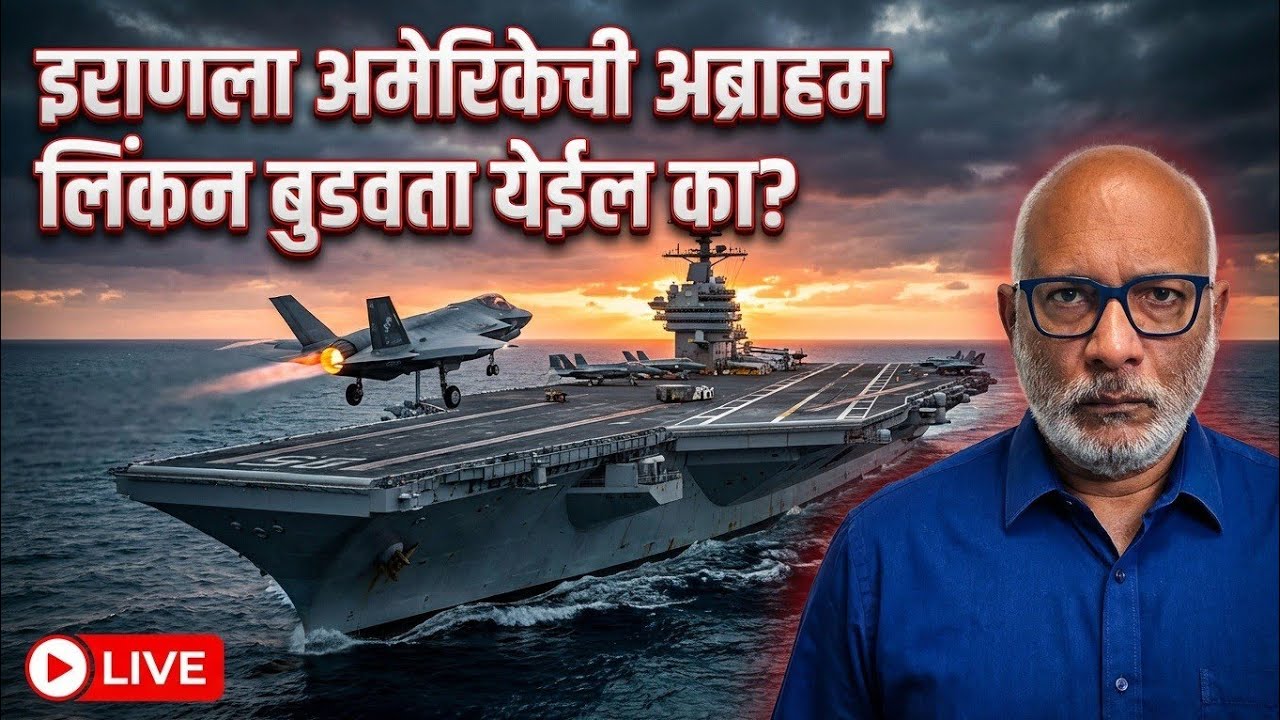
The aircraft carrier is one of the strongest symbols of modern military power. It is not just a ship that sails across the ocean. It is a floating airbase, a moving airport, and in many ways, a small city that can travel anywhere in the world. Among all nations, the United States operates the largest and most advanced fleet of aircraft carriers. Today, the U.S. Navy has eleven active nuclear-powered aircraft carriers, more than any other country. These ships allow the United States to project power across the globe without depending on foreign land bases. Wherever there is open ocean, an American carrier can operate.
The American fleet includes ten Nimitz-class carriers and one newer Ford-class carrier. The Nimitz-class ships have formed the backbone of U.S. naval strength for decades. They have served in wars, regional conflicts, and peacekeeping missions in many parts of the world. The newest and most advanced ship is the USS Gerald R. Ford, which represents a major step forward in design and technology. It is currently the largest aircraft carrier ever built.
The USS Gerald R. Ford is about 337 meters long, roughly the length of three football fields placed end to end. It weighs more than 100,000 tons and can travel at speeds above 30 knots, or around 55 kilometers per hour. The ship is powered by two advanced nuclear reactors. These reactors provide enormous energy and allow the ship to operate for many years without refueling. Unlike older carriers that used steam-powered systems to launch aircraft, the Ford-class uses an electromagnetic launch system known as EMALS. This modern technology launches aircraft more smoothly and efficiently, reduces wear on equipment, and allows more flights per day. The ship is designed to serve for about fifty years.
A carrier like the Ford can carry around seventy-five aircraft, effectively becoming a floating air force. Its air wing usually includes fighter jets, stealth aircraft, early warning planes, electronic warfare jets, helicopters, and increasingly unmanned drones. These aircraft perform many missions, including air defense, strike operations, reconnaissance, and anti-submarine warfare. In simple terms, the carrier brings the power of a full military airbase into the middle of the ocean.
Life aboard an aircraft carrier is demanding but highly organized. A ship like the USS Gerald R. Ford carries between 4,500 and 5,000 people. About 2,600 sailors operate the ship itself, while more than 1,800 personnel are part of the air wing. This number of people is similar to the population of a small town. Space is limited, and most sailors share small sleeping areas with stacked bunks. Privacy is minimal, but daily routines are structured carefully. The ship includes multiple dining areas serving thousands of meals each day, a medical center, gyms, chapels, and recreation spaces. Long deployments can last for months, so maintaining morale is very important. Teamwork, discipline, and routine help sailors adjust to life at sea.
One of the most impressive features of American carriers is nuclear propulsion. Because of their reactors, these ships do not need frequent refueling like conventional vessels. This gives them almost unlimited range. However, they still require food, aviation fuel for aircraft, spare parts, and other supplies. Supply ships meet the carrier group regularly, usually every one or two weeks, to deliver what is needed. The carrier also produces its own fresh water by converting seawater through desalination systems. Feeding nearly five thousand people is a massive task. A carrier can serve more than fifteen thousand meals per day. Careful planning ensures that enough food and supplies are available throughout a deployment.
Sailors aboard aircraft carriers are paid according to their rank and years of service. In addition to base pay, they receive extra allowances such as sea pay, housing benefits, food allowances, healthcare, and retirement plans. Service on a carrier can be challenging, with long periods away from home and demanding work schedules. However, it also provides stable employment and long-term benefits.
Historically, aircraft carriers have faced serious threats. During World War II, the United States lost several carriers in combat. Naval warfare at that time was intense, and carriers were major targets. Since 1945, however, no U.S. aircraft carrier has been sunk by enemy action. For more than eighty years, American carriers have operated without a combat loss. This record reflects advances in technology, strategy, and defensive systems.
#marathilivestream #marathiyoutuber #marathivideo











Информация по комментариям в разработке