If you have ever heard of Arva, Ontario there was likely some referrence to the mill. This village is known for the Arva Flour Mill and millstore. Today, we explore the history of the Mill, believed to be North America’s oldest continuously operating water powered commercial flour mill.
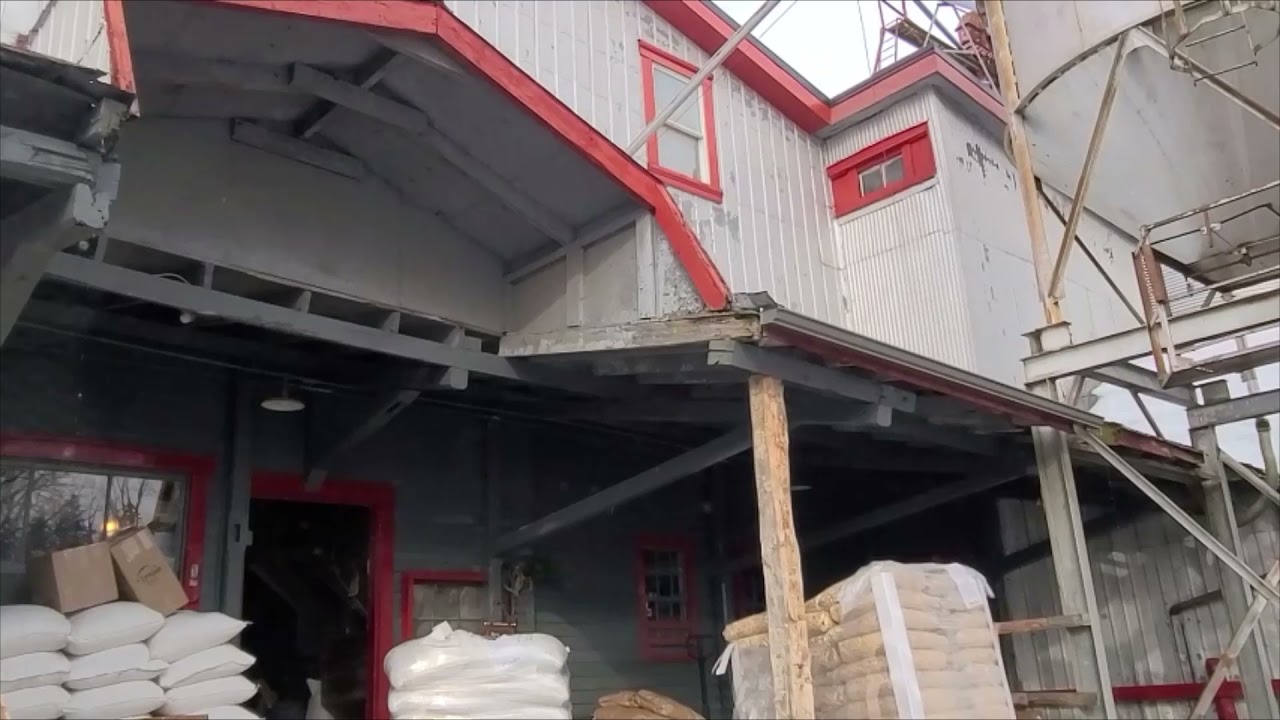
The Arva Flour Mill was established in 1819, the mill, originally was named St.Johns Mill, built by the originl settlers to the area. This historic building, remains today and serves as a reminder of how this village had found its start.
Selected due to the fresh water stream and abundant timber resources. Not to mention its proximity to the quickly growing London, Ontario. Arva, or St. Johns as it was called became a prime location for a settlement. At that time this area had not been given a registered name, so locals referred to it as St.Johns, due to the prominent church St.Johns of the Divine.
Situated on Medway creek surrounded by dense forest, Arva became a stop on the road between Lucan and London. After construction of the mill a man made pond, known as "the mill pond", was created when Medway Creek was dammed for the mills power. Very little was recorded on the mill first 4o years. in fact, The first concrete record I was able to find was the the mill was recorded in 1857, noting that Wm. Saunby, ran the grist-mill, but little else is mentioned.
The next reference to the mill was made when purchased by Jacob Hawkins in 1869 for $5075 and renamed the Jacob Hawkins flouring mill. By 1880, Arva was home to 260 residents. The manufacturing industries were represented by James and Wm. Wyatt and G. Allen, wagon-makers, and Jacob Hawkins's flouring-mill.
In the early 1900's Arva was only one of many water powered mills along the area rivers and streams. While those mills are now merely historic facts, Arva mill has survived over or 2 centuries for a variety of reasons.
The primary reason being that, In 1907 the mill agreed to a contract with McCormicks Bakery, they would provide the soft wheat flour the bakery needed in exchange for a job security and a steady income. This agreement was beneficial to all and last an outstanding 78 years, creating jobs and enticing residents to the area.
Secondary, was the major upgrade, switching from the original stones to a roller, designed to crush the grain quicker and finer, and more efficiently, making this mill a leader in production with their modern technique, leading to a number of other mills in the area closing as they could no longer compete. Ironically, failure to upgrade would leave the Arva mill in the same boat in the future.
Hawkins operated the mill until 1912, when the mill was sold to H Templeton and Clarence Scott. Clarence married Templetons daughter and began the legacy of this mill being owned and operated by the four generations of the Scott family. Still operating with the antique Goldie and McCulloch roller mills, which had been built in Galt, Ontario, the mill continues to produce some of the best flour by a dam mill.
However, progress became all about speed and effieciency, something the Arva mill did not offer. Soon the large contracts from McCormicks were gone. But the millers at Arva new they haad a niche. The lower speed of the rollers keep the temperatures down, maintaining the artisan style while preserving the nutrience. In addition to the benefits of adding no preservatives, supporting local farmers and community.
In small towns community, is the key, they support the industry, in turn the industry supports the community. The mill continues to support their community, and has given back in many ways. Creating jobs, buying local, even a rock concert. On July 7, 2007, the Arva flour mill hosted a free concert, providing the mill as a stage for the Canadian rock band The White Stripes as part of their Canadian tour. This show was a success and in still talked about today, as are many memorable events in small towns.
Today, the mill operates in the same way as it did in the early 1900s with half the mill still running on water power. It operates with no computers, they merely rely on the tone of the mill and their experience, much like the first millers. A visit to the mill and the sound of the water powered turbines will remind you that history is still alive and well in Ontario's. With Arva still home to a furniture store, a tack shop, a post office, and two churches, The MillHouse remains and offers local, natural and organic foods, including flour ground at the mill.

Информация по комментариям в разработке