Today, I want to take you on a journey that’s a little different from our usual content, but one that I think is incredibly important for anyone interested in criminal justice, policing, and community relations.
As many of you know, I’m a retired Fort Worth police officer with over two decades of experience in law enforcement. I also hold two master’s degrees—one in Business Management and one in Criminology—and I currently serve as an adjunct professor in Criminal Justice at a Dallas area university while also instructing at four Dallas area police academies.
But today’s episode isn’t just about my perspective. It’s about something I’ve been thinking about for a while: the barbershop.
Now, you might be wondering—what does a barbershop have to do with policing? Everything, actually.
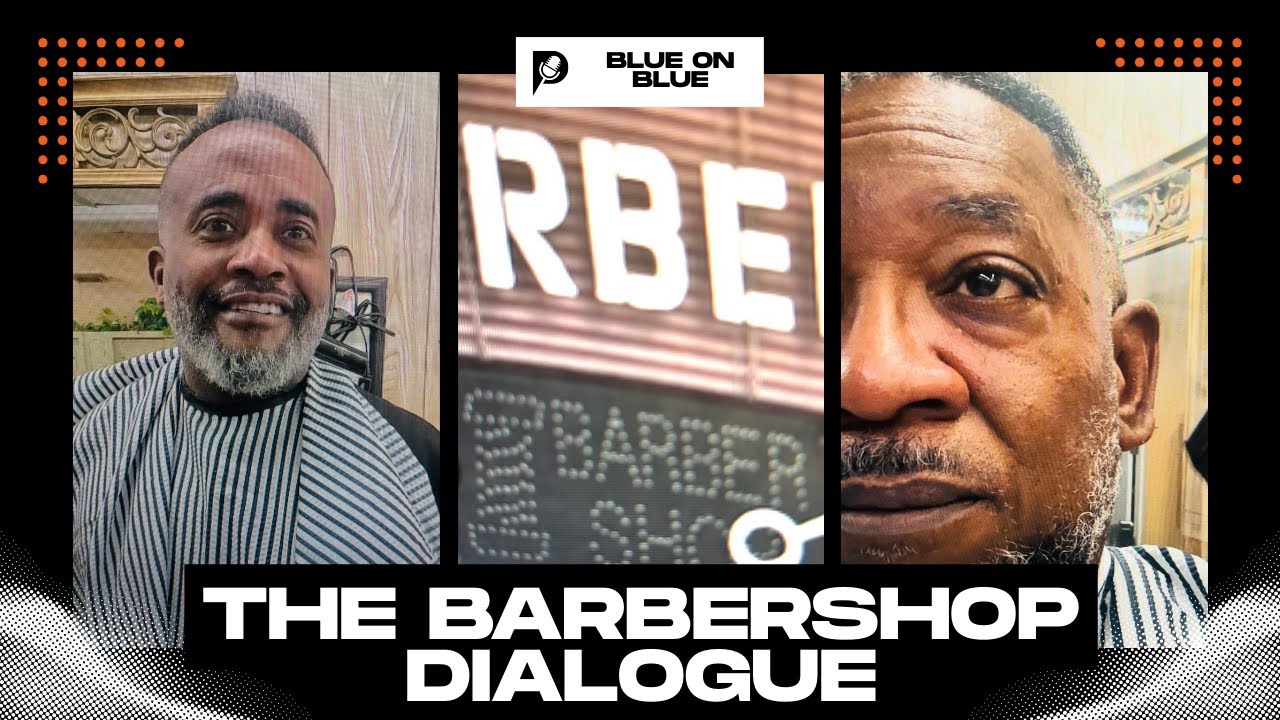
You see, I’ve been going to the same barber, Paul, for years now. And every time I’m there, I’m reminded of something powerful: the barbershop is more than just a place to get a haircut. It’s a cultural hub, a safe space, and a community gathering spot where real, unfiltered conversations happen.
I’ve been joking with Paul for months about interviewing him about policing. He always laughs it off and says “maybe in the future.” But today, as I walked into his shop and saw all the different people there—people from all walks of life, all backgrounds, all perspectives—it hit me. I need to do an episode about this.
The barbershop represents something crucial that we often talk about in law enforcement training: community connection. It’s where people come to be themselves, to share their experiences, to laugh, to debate, and to support one another.
In my research, I came across some powerful insights about barbershop culture, particularly within the Black community. Historians and scholars describe the barbershop as “private spaces in the public sphere for Black men”—places where they can “celebrate their sense of blackness and escape society’s false depictions of blackness.” One poem I found even calls the barbershop “the Black Church,” noting it as a place where people find “purpose, guidance, community, and acceptance.”
This resonates deeply with me as someone who’s dedicated their career to both law enforcement and education. Because if we want to truly understand community policing, if we want to build trust and bridge divides, we need to understand these spaces where community happens organically.
So in today’s episode, I’m taking you into the barbershop. Paul graciously allowed me to film while he and his fellow barbers were conducting business, and I want to share with you why these spaces matter, what conversations happen here, and how understanding barbershop culture can make us all better—whether we’re police officers, students of criminal justice, or community members.
This isn’t just about haircuts, folks. It’s about humanity, connection, and the conversations that shape our communities.
So sit back, relax, and let’s talk about the barbershop.

Информация по комментариям в разработке